John Manuel, Raman M, Ryan Keith
Professor of Ophthalmology, Al Azhar Medical College, Thodupuzha; Consulatant MGDM Hospital, Kangazha and LLM Hospital, Kidangoor, Kottayam, Kerala, India.
Professor of Parasitology, Madras Veterinary College, Tamil Nadu Veterinary and Animal Sciences University (TANUVAS), Chennai, India.
Indian J Ophthalmol. 2017 Nov;65(11):1228-1232. doi: 10.4103/ijo.IJO_411_17.
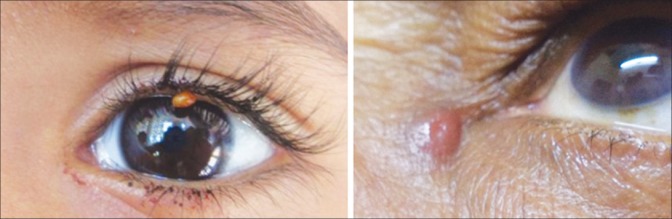
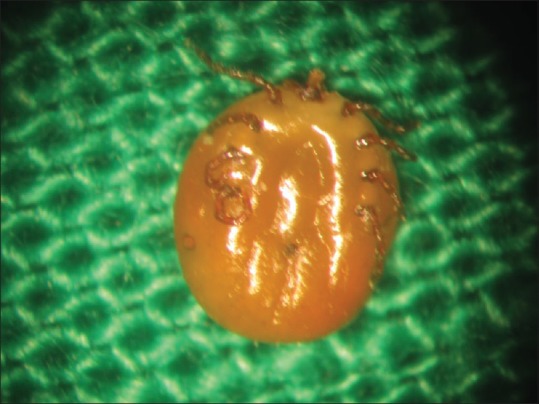
Ticks are tiny crawling bugs in the spider family that feed by sucking blood from animals. They are second only to mosquitoes as vectors of human disease, both infectious and toxic. Infected ticks spread over a hundred diseases, some of which are fatal if undetected. They spread the spirochete (which multiplies in the insect's gut) with a subsequent bite to the next host. We describe the only reported cases of peri ocular tick bite from India that presented to us within a span of 3 days and its management. Due suspicion and magnification of the lesions revealed the ticks which otherwise masqueraded as small skin tags/moles on gross examination. The ticks were firmly latched on to the skin and careful removal prevented incarceration of the mouth parts. Rickettsial diseases that were believed to have disappeared from India are reemerging and their presence has recently been documented in at least 11 states in the country. Among vector borne diseases, the most common, Lyme disease, also known as the great mimicker, can present with rheumatoid arthritis, fibromyalgia, depression, attention deficit hyperactivity disorder, multiple sclerosis, chronic fatigue syndrome, cardiac manifestations, encephalitis, and mental illness, to name some of the many associations. Common ocular symptoms and signs include conjunctivitis, keratitis, uveitis, and retinitis. Early detection and treatment of tick borne diseases is important to prevent multi system complications that can develop later in life.
蜱虫是蜘蛛家族中的微小爬行昆虫,以吸食动物血液为生。作为人类疾病(包括传染性疾病和中毒性疾病)的传播媒介,它们仅次于蚊子。受感染的蜱虫传播一百多种疾病,其中一些如果未被发现会致命。它们传播螺旋体(在昆虫肠道内繁殖),随后叮咬下一个宿主。我们描述了在3天内就诊于我们医院的印度仅有的几例眼周蜱虫叮咬病例及其处理情况。由于对病变的高度怀疑和放大检查,发现了蜱虫,而在肉眼检查时它们原本伪装成小的皮肤赘生物/痣。蜱虫紧紧附着在皮肤上,小心移除可防止口器嵌顿。据信已从印度消失的立克次体病正在重新出现,最近该国至少11个邦都有其存在的记录。在媒介传播疾病中,最常见的莱姆病,也被称为“伟大的模仿者”,可表现为类风湿性关节炎、纤维肌痛、抑郁症、注意力缺陷多动障碍、多发性硬化症、慢性疲劳综合征、心脏表现、脑炎和精神疾病等众多关联病症中的一些。常见的眼部症状和体征包括结膜炎、角膜炎、葡萄膜炎和视网膜炎。早期发现和治疗蜱虫传播疾病对于预防后期可能出现的多系统并发症很重要。