State Key Laboratory of New Ceramics and Fine Processing, School of Materials Science and Engineering, Tsinghua University, 100084, Beijing, China.
Beijing Computational Science Research Center, 100193, Beijing, China.
Nat Commun. 2017 Nov 14;8(1):1490. doi: 10.1038/s41467-017-01521-4.
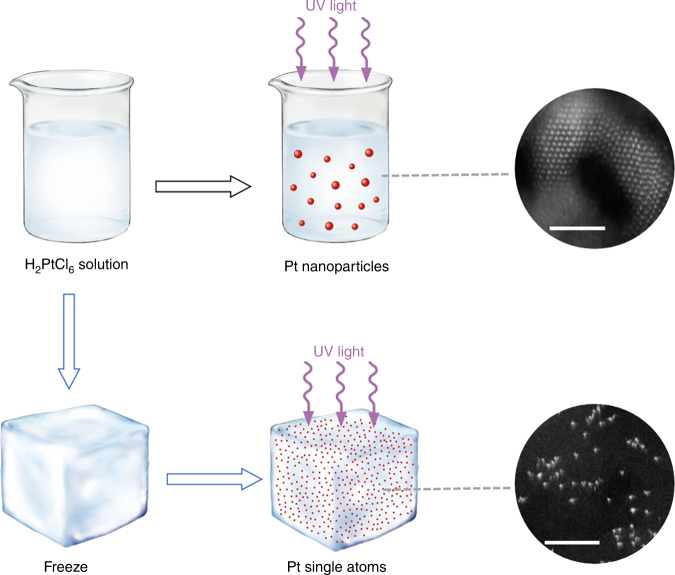
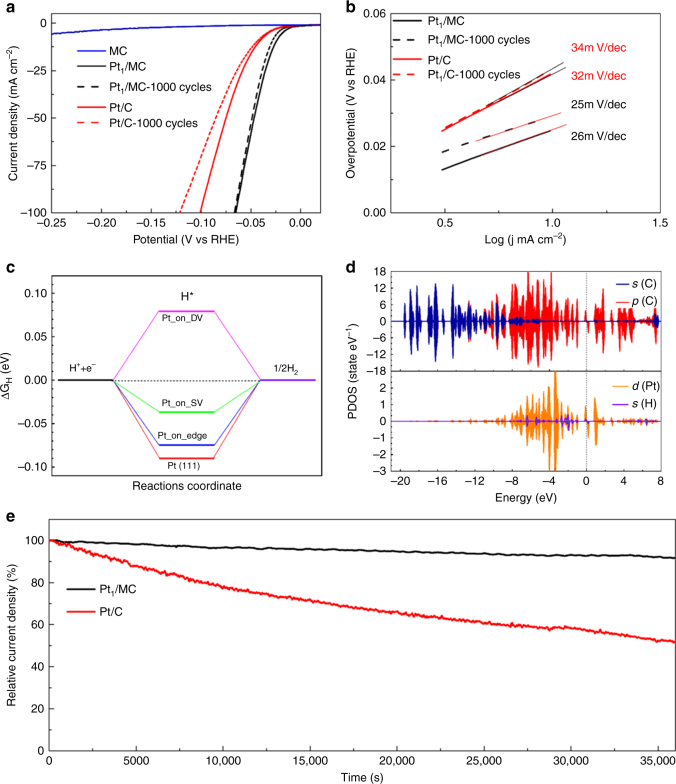
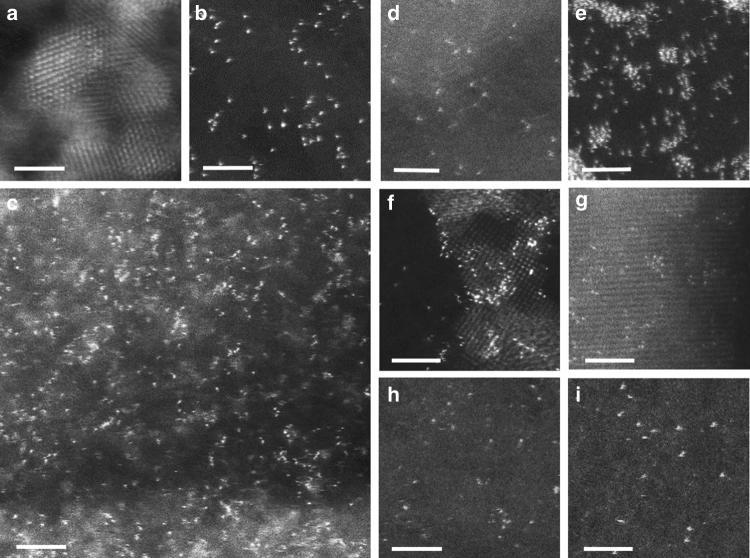
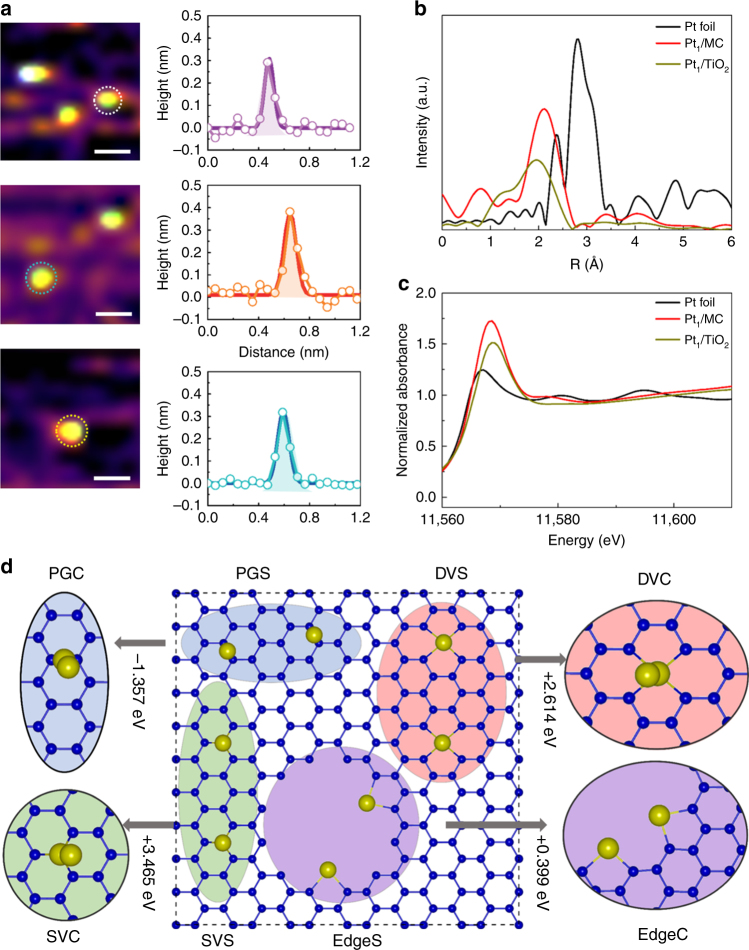
Photochemical solution-phase reactions have been widely applied for the syntheses of nanocrystals. In particular, tuning of the nucleation and growth of solids has been a major area of focus. Here we demonstrate a facile approach to generate atomically dispersed platinum via photochemical reduction of frozen chloroplatinic acid solution using ultraviolet light. Using this iced-photochemical reduction, the aggregation of atoms is prevented, and single atoms are successfully stabilized. The platinum atoms are deposited on various substrates, including mesoporous carbon, graphene, carbon nanotubes, titanium dioxide nanoparticles, and zinc oxide nanowires. The atomically dispersed platinum on mesoporous carbon exhibits efficient catalytic activity for the electrochemical hydrogen evolution reaction, with an overpotential of only 65 mV at a current density of 100 mA cm and long-time durability (>10 h), superior to state-of-the-art platinum/carbon. This iced-photochemical reduction may be extended to other single atoms, for example gold and silver, as demonstrated in this study.
光化学溶液相反应已被广泛应用于纳米晶体的合成。特别是,对固体成核和生长的调控一直是主要的研究方向。在此,我们展示了一种简便的方法,通过使用紫外光对冷冻的氯铂酸溶液进行光化学还原,生成原子分散的铂。通过这种冰态光化学还原,可以防止原子聚集,并成功稳定单原子。铂原子被沉积在各种基底上,包括介孔碳、石墨烯、碳纳米管、二氧化钛纳米粒子和氧化锌纳米线。在介孔碳上的原子分散的铂在电化学析氢反应中表现出高效的催化活性,在 100 mA cm 的电流密度下仅需 65 mV 的过电势,并且具有长时间的耐久性(>10 小时),优于最先进的铂/碳催化剂。如本研究所示,这种冰态光化学还原方法可能会扩展到其他单原子,例如金和银。