Medical Faculty and University Hospital Carl Gustav Carus, UCC Section Medical Systems Biology, TU Dresden, 01307, Dresden, Germany.
German Cancer Consortium (DKTK), OncoRay-National Center for Radiation Research in Oncology, Medical Faculty and University Hospital Carl Gustav Carus, TU Dresden, Dresden and German Cancer Research Center (DKFZ), 69120, Heidelberg, Germany.
Nat Commun. 2017 Nov 13;8(1):1463. doi: 10.1038/s41467-017-01688-w.
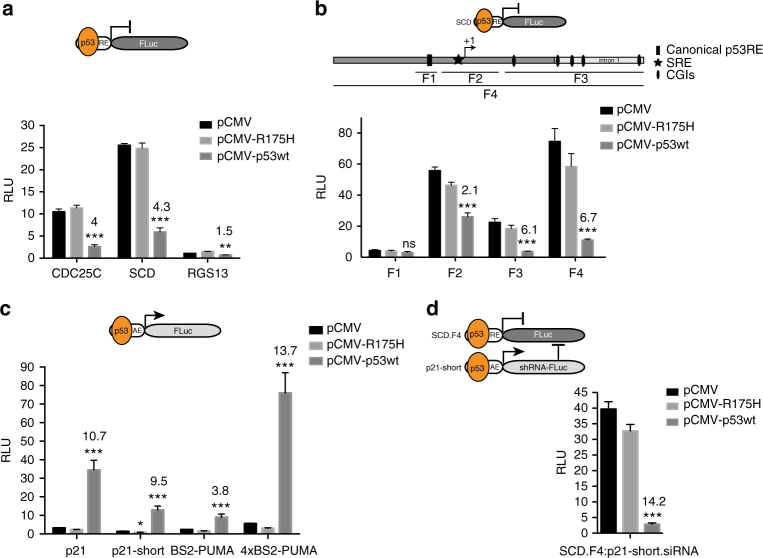
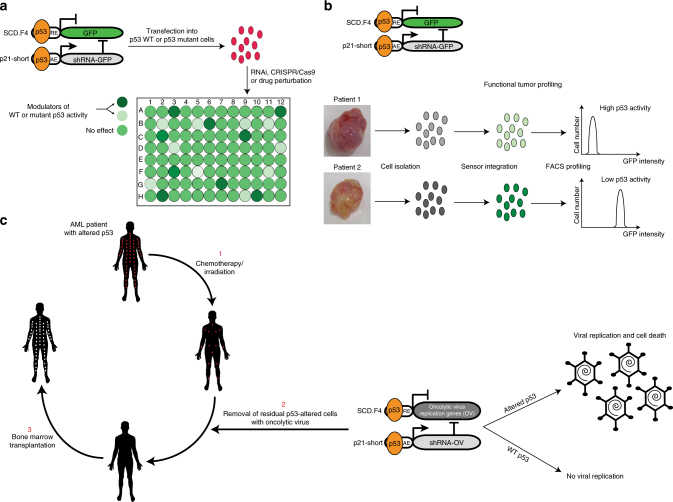
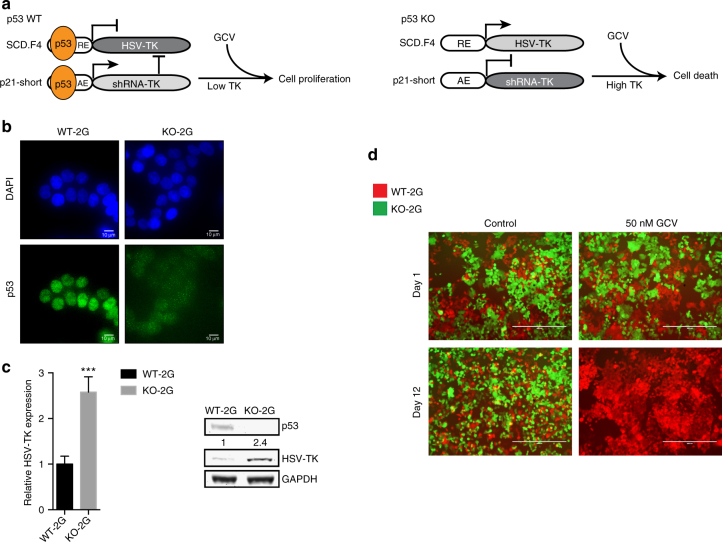
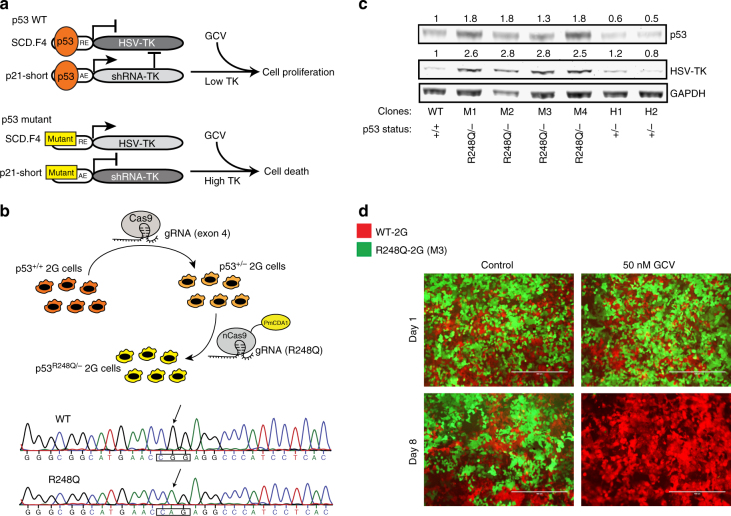
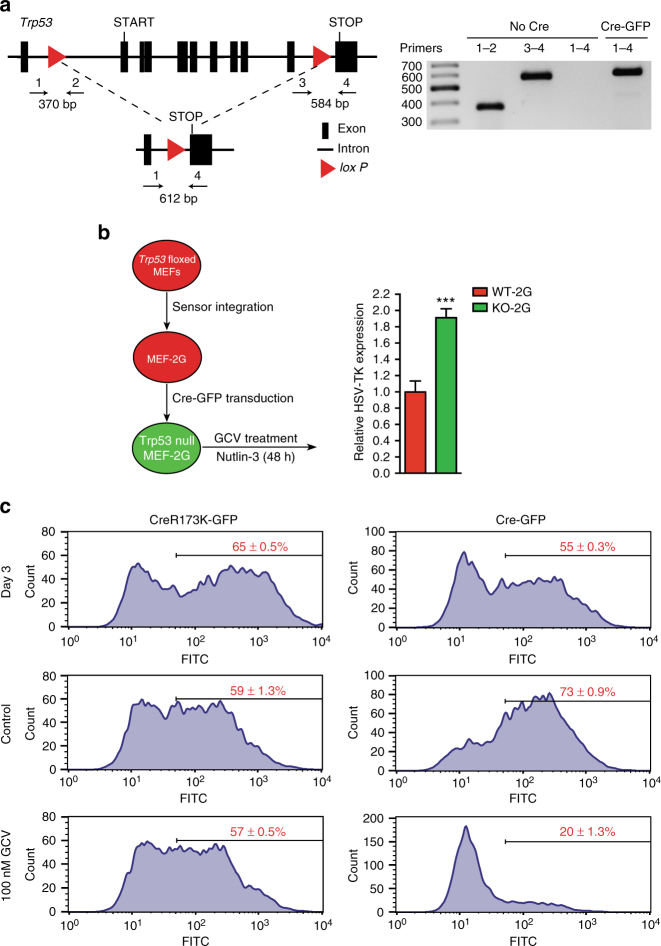
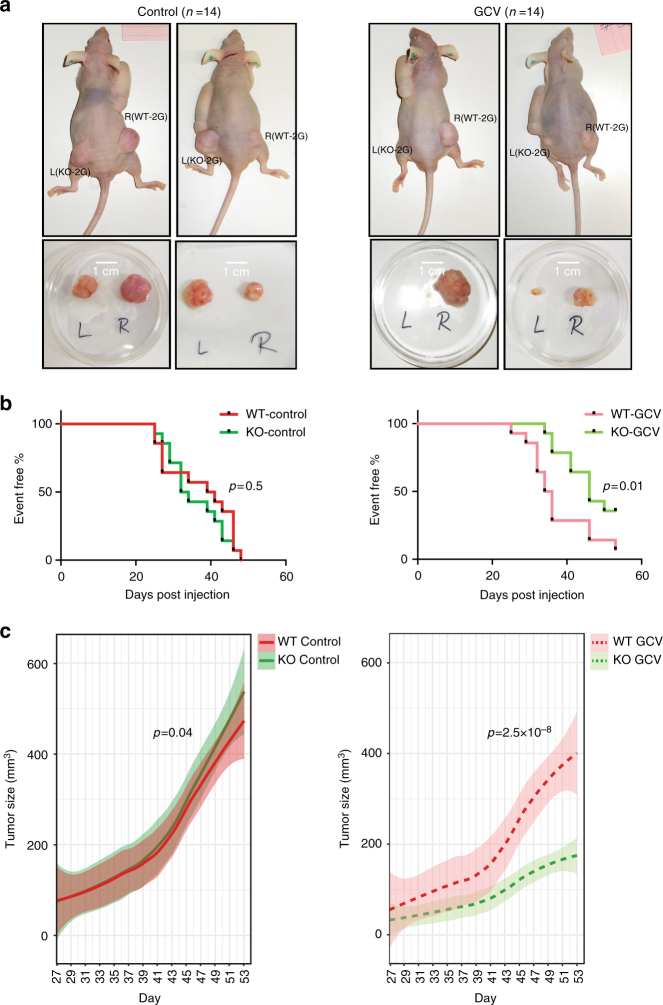
The TP53 gene fulfills a central role in protecting cells from genetic insult. Given this crucial role it might be surprising that p53 itself is not essential for cell survival. Indeed, TP53 is the single most mutated gene across different cancer types. Thus, both a theoretical and a question of significant practical applicability arise: can cells be programmed to make TP53 an essential gene? Here we present a genetic p53 sensor, in which the loss of p53 is coupled to the rise of HSV-TK expression. We show that the sensor can distinguish both p53 knockout and cells expressing a common TP53 cancer mutation from otherwise isogenic TP53 wild-type cells. Importantly, the system is sensitive enough to specifically target TP53 loss-of-function cells with the HSV-TK pro-drug Ganciclovir both in vitro and in vivo. Our work opens new ways to programming cell intrinsic transformation protection systems that rely on endogenous components.
TP53 基因在保护细胞免受遗传损伤方面起着核心作用。鉴于其关键作用,p53 本身对于细胞存活并非必需可能会让人感到惊讶。事实上,TP53 是不同癌症类型中突变最多的单一基因。因此,既存在理论上的问题,也存在重大实际应用的问题:能否对细胞进行编程使 TP53 成为必需基因?在这里,我们提出了一种遗传 p53 传感器,其中 p53 的缺失与 HSV-TK 表达的上升相关联。我们表明,该传感器能够区分 p53 敲除细胞和表达常见 TP53 癌症突变的细胞与其他同基因 TP53 野生型细胞。重要的是,该系统足够灵敏,能够使用 HSV-TK 前药更昔洛韦在体外和体内特异性靶向 TP53 失活功能细胞。我们的工作为依赖内源性成分的细胞内在转化保护系统的编程开辟了新途径。