Syed Sana, Schober Joseph, Blanco Alexandra, Zustiak Silviya Petrova
Department of Biomedical Engineering, Saint Louis University, Saint Louis, Missouri, United States of America.
Department of Pharmaceutical Sciences, Southern Illinois University Edwardsville, Edwardsville, Illinois, United States of America.
PLoS One. 2017 Nov 14;12(11):e0187853. doi: 10.1371/journal.pone.0187853. eCollection 2017.
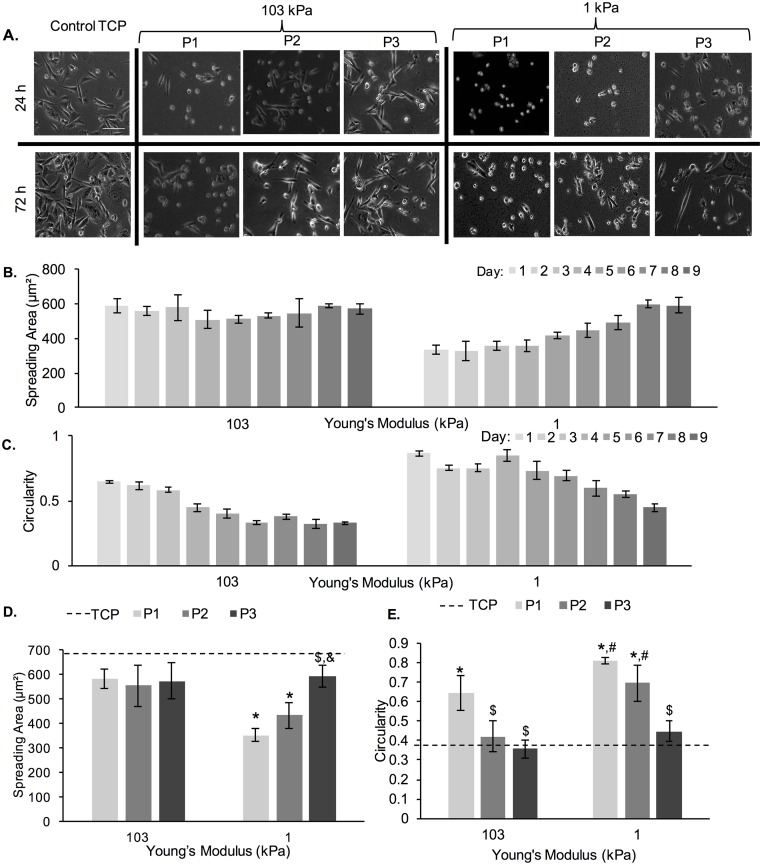
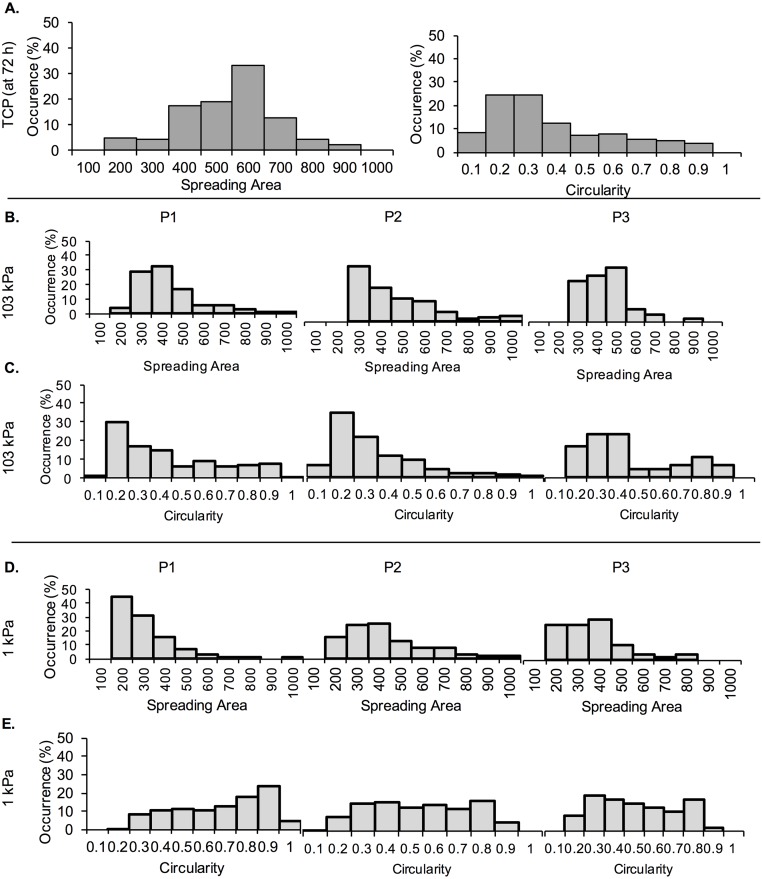
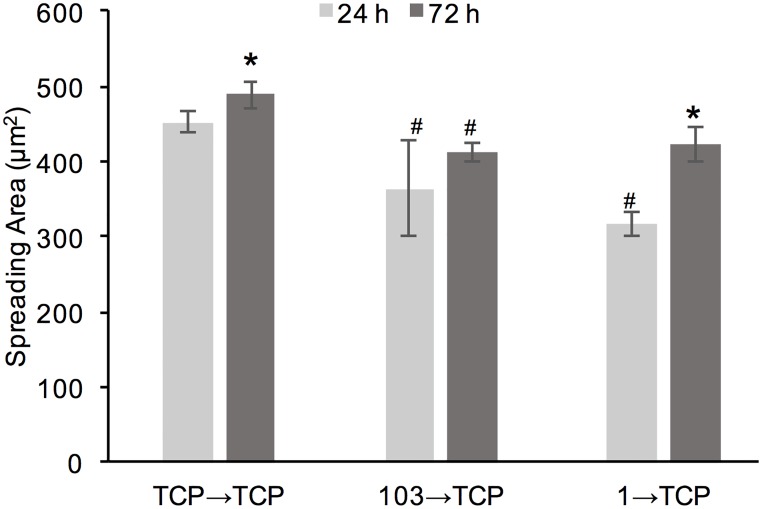
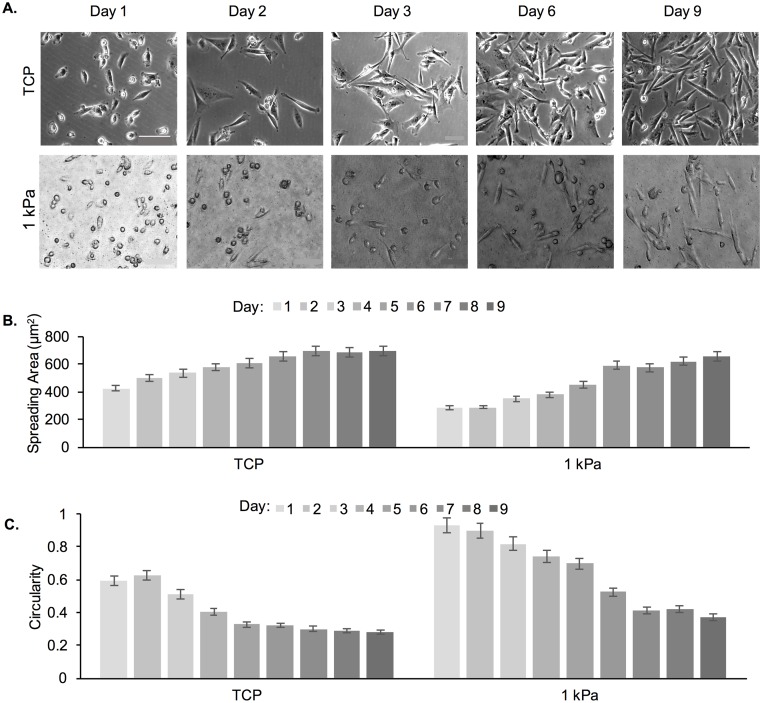
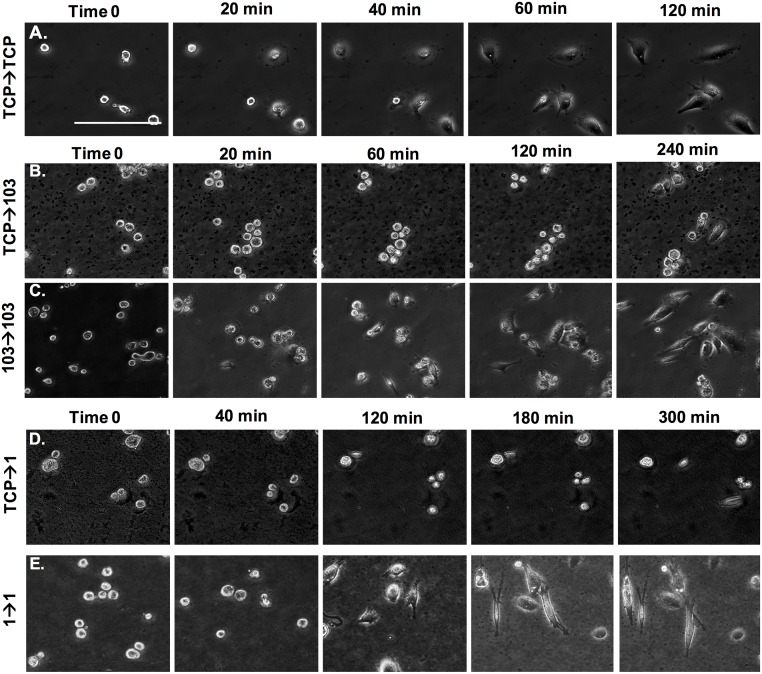
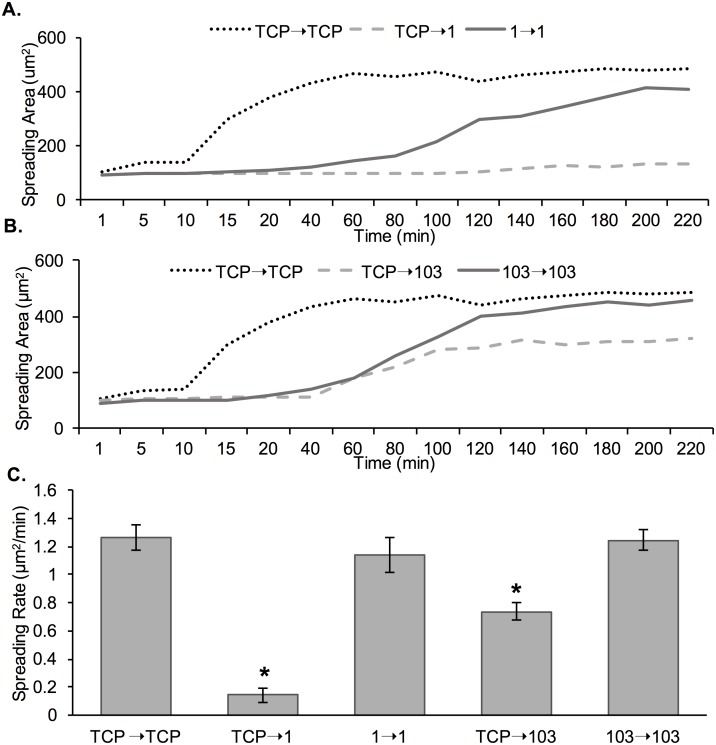
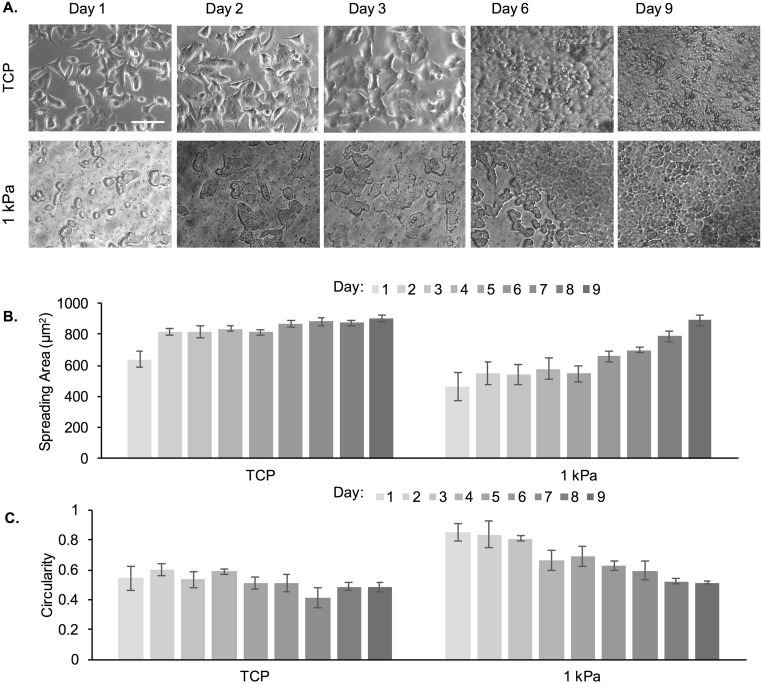
Standard tissue culture practices involve propagating cells on tissue culture polystyrene (TCP) dishes, which are flat, 2-dimensional (2D) and orders of magnitude stiffer than most tissues in the body. Such simplified conditions lead to phenotypical cell changes and altered cell behaviors. Hence, much research has been focused on developing novel biomaterials and culture conditions that more closely emulate in vivo cell microenvironments. In particular, biomaterial stiffness has emerged as a key property that greatly affects cell behaviors such as adhesion, morphology, proliferation and motility among others. Here we ask whether cells that have been conditioned to TCP, would still show significant dependence on substrate stiffness if they are first pre-adapted to a more physiologically relevant environment. We used two commonly utilized breast cancer cell lines, namely MDA-MB-231 and MCF-7, and examined the effect of prolonged cell culturing on polyacrylamide substrates of varying compliance. We followed changes in cell adhesion, proliferation, shape factor, spreading area and spreading rate. After pre-adaptation, we noted diminished differences in cell behaviors when comparing between soft (1 kPa) and stiff (103 kPa) gels as well as rigid TCP control. Prolonged culturing of cells on complaint substrates further influenced responses of pre-adapted cells when transferred back to TCP. Our results have implications for the study of stiffness-dependent cell behaviors and indicate that cell pre-adaptation to the substrate needs consideration.
标准的组织培养方法包括在组织培养聚苯乙烯(TCP)培养皿上培养细胞,这种培养皿是扁平的二维(2D)结构,其硬度比体内大多数组织大几个数量级。这种简化的条件会导致细胞表型变化和细胞行为改变。因此,许多研究都集中在开发能够更紧密模拟体内细胞微环境的新型生物材料和培养条件上。特别是,生物材料的硬度已成为一个关键特性,它极大地影响细胞行为,如粘附、形态、增殖和运动等。在这里,我们要问的是,如果先将适应TCP的细胞预适应到更生理相关的环境中,它们是否仍会对底物硬度表现出显著的依赖性。我们使用了两种常用的乳腺癌细胞系,即MDA-MB-231和MCF-7,并研究了在不同顺应性的聚丙烯酰胺底物上长时间培养细胞的效果。我们跟踪了细胞粘附、增殖、形状因子、铺展面积和铺展速率的变化。预适应后,我们注意到在比较软凝胶(1 kPa)和硬凝胶(103 kPa)以及刚性TCP对照时,细胞行为的差异减小。在顺应性底物上长时间培养细胞,当再转移回TCP时,会进一步影响预适应细胞的反应。我们的结果对研究硬度依赖性细胞行为具有启示意义,并表明需要考虑细胞对底物的预适应。