Institute of Cancer and Genomic Sciences and Centre for Human Virology, College of Medical and Dental Sciences, University of Birmingham, Edgbaston, Birmingham B15 2TT, UK.
Molecular Genetics of Cancer Division, The Walter and Eliza Hall Institute for Medical Research, Parkville, Melbourne, VIC 3052, Australia.
Viruses. 2017 Nov 13;9(11):339. doi: 10.3390/v9110339.
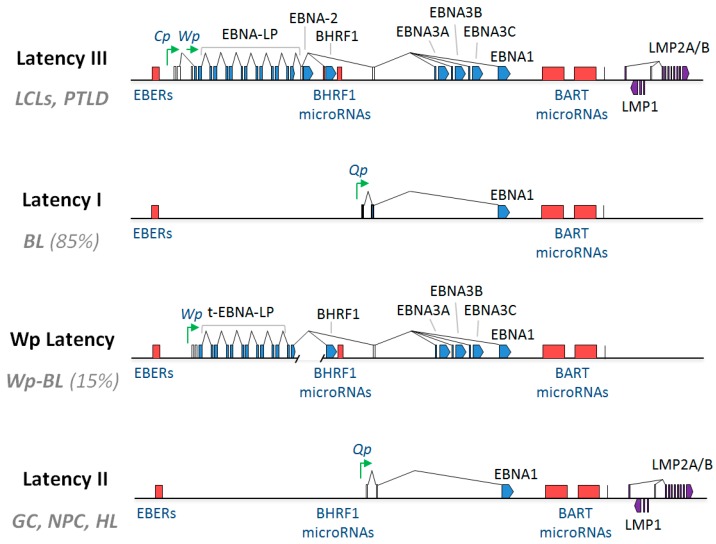
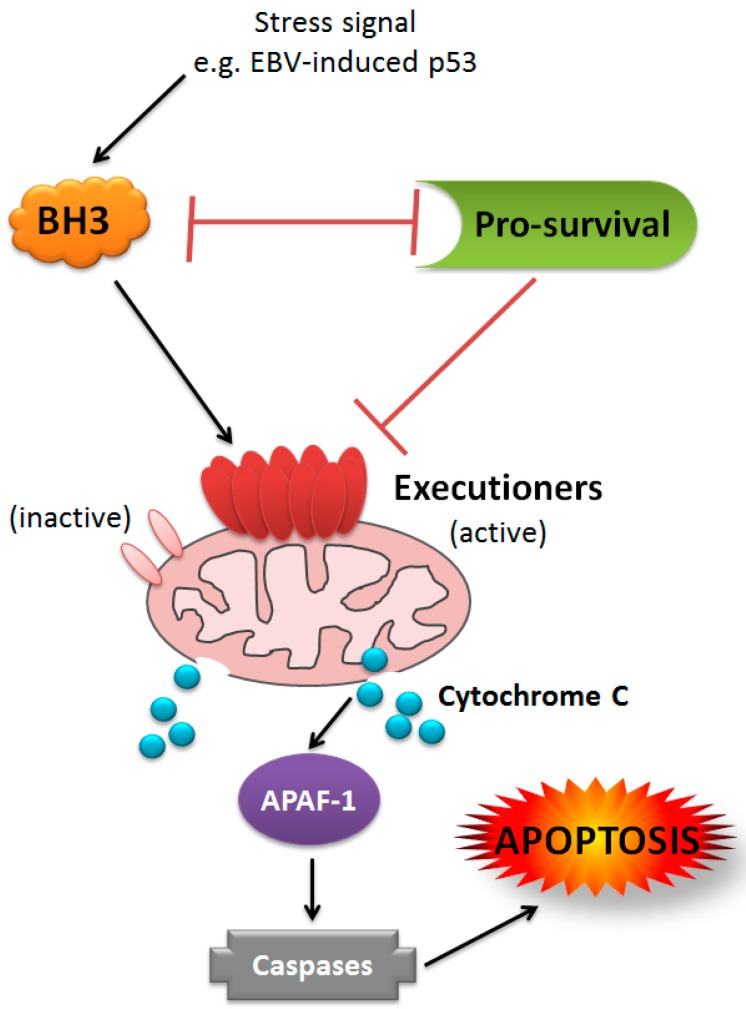
Epstein-Barr virus (EBV) was first discovered in cells from a patient with Burkitt lymphoma (BL), and is now known to be a contributory factor in 1-2% of all cancers, for which there are as yet, no EBV-targeted therapies available. Like other herpesviruses, EBV adopts a persistent latent infection in vivo and only rarely reactivates into replicative lytic cycle. Although latency is associated with restricted patterns of gene expression, genes are never expressed in isolation; always in groups. Here, we discuss (1) the ways in which the latent genes of EBV are known to modulate cell death, (2) how these mechanisms relate to growth transformation and lymphomagenesis, and (3) how EBV genes cooperate to coordinately regulate key cell death pathways in BL and lymphoblastoid cell lines (LCLs). Since manipulation of the cell death machinery is critical in EBV pathogenesis, understanding the mechanisms that underpin EBV regulation of apoptosis therefore provides opportunities for novel therapeutic interventions.
EB 病毒(EBV)最初是在伯基特淋巴瘤(BL)患者的细胞中发现的,现在已知是所有癌症的 1-2%的促成因素,而目前尚无针对 EBV 的靶向治疗方法。与其他疱疹病毒一样,EBV 在体内采用持续潜伏感染,很少重新激活复制性裂解周期。尽管潜伏期与受限的基因表达模式相关,但基因从不单独表达;总是成群结队地表达。在这里,我们讨论了 EBV 的潜伏基因已知的(1)调节细胞死亡的方式,(2)这些机制与生长转化和淋巴瘤发生的关系,以及(3) EBV 基因如何协同调节 BL 和淋巴母细胞系(LCL)中的关键细胞死亡途径。由于细胞死亡机制的操纵在 EBV 发病机制中至关重要,因此了解 EBV 调节细胞凋亡的机制为新型治疗干预提供了机会。