Fan Hengwei, Yi Wanwan, Wang Chenxing, Wang Jisheng
Department of Hepatobiliary Surgery, The 2nd Affiliated Hospital & Yuying Children's Hospital, Wenzhou Medical University, Zhejiang 325027, China.
Department of Nuclear Medicine, Shanghai Tenth People's Hospital, Tongji University, Shanghai 200072, China.
Oncotarget. 2017 Jul 31;8(47):82643-82660. doi: 10.18632/oncotarget.19740. eCollection 2017 Oct 10.
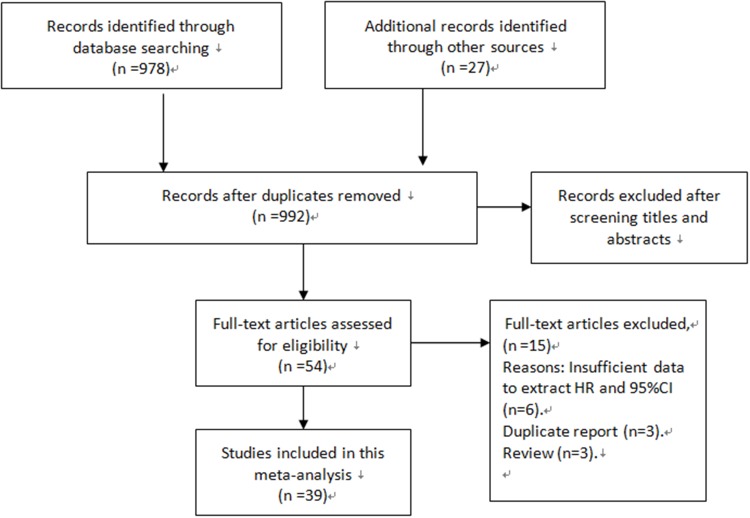
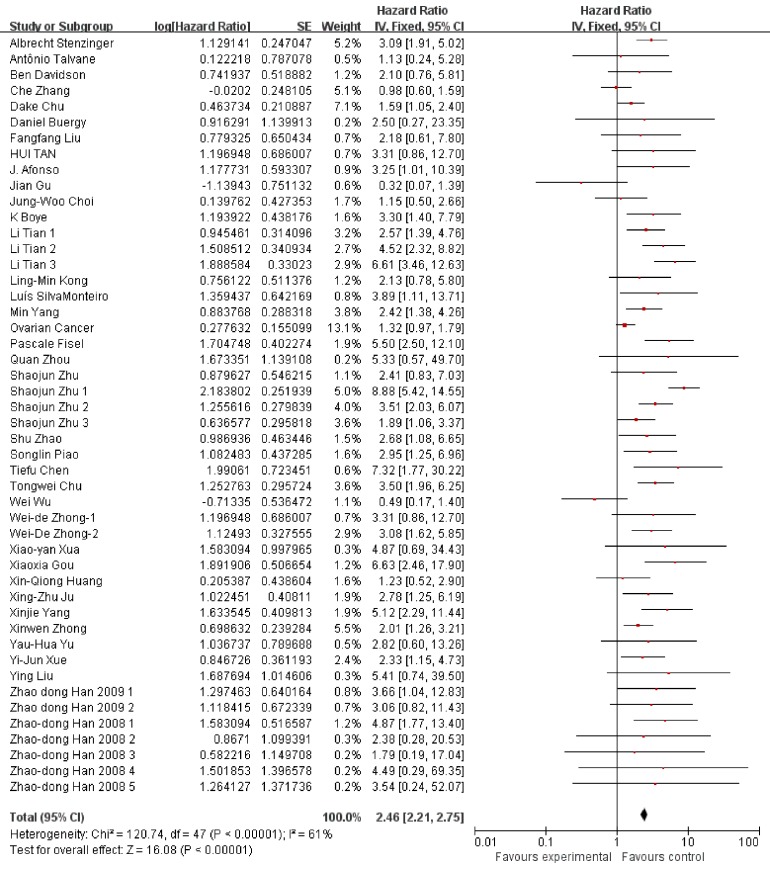
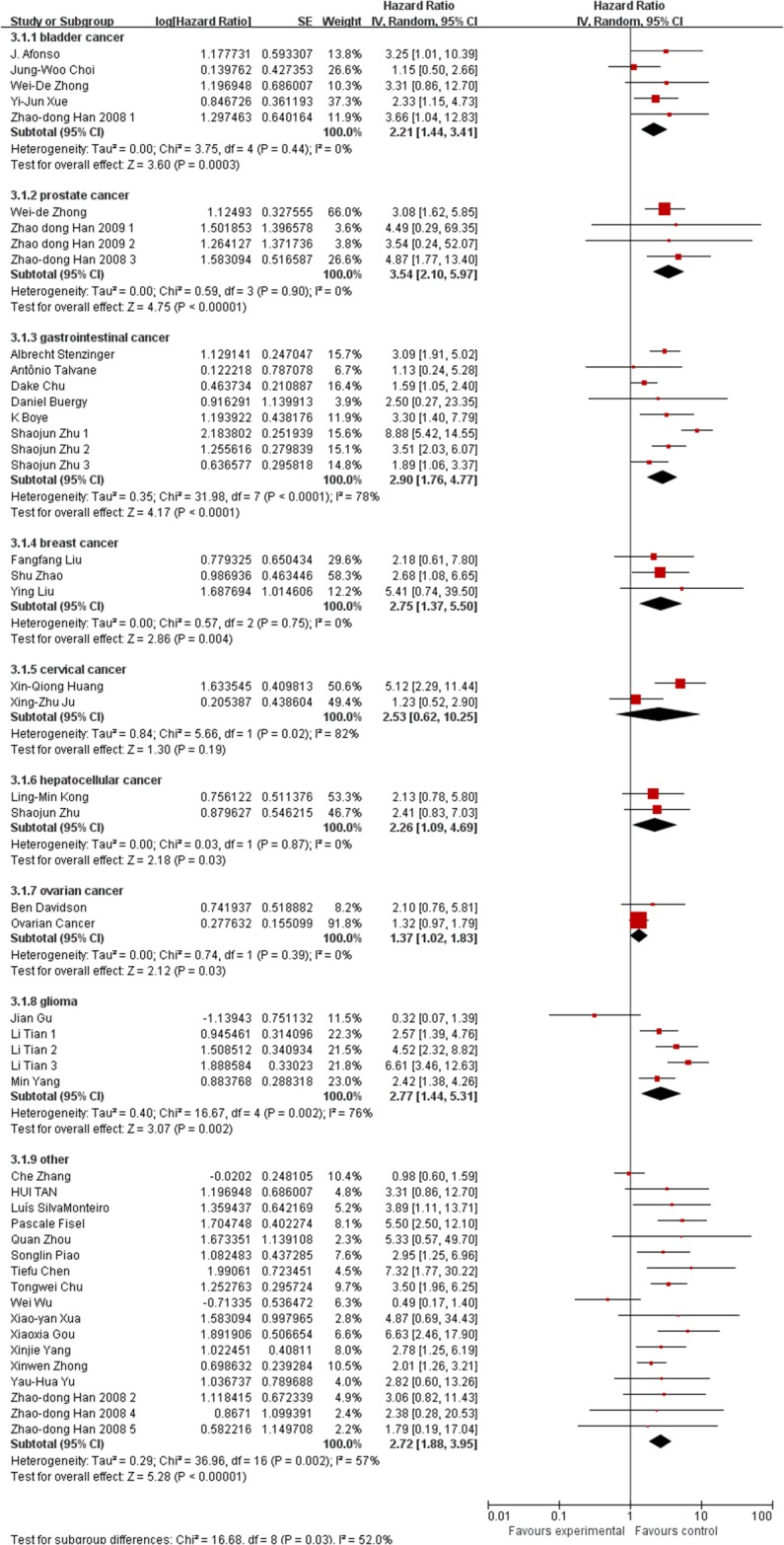
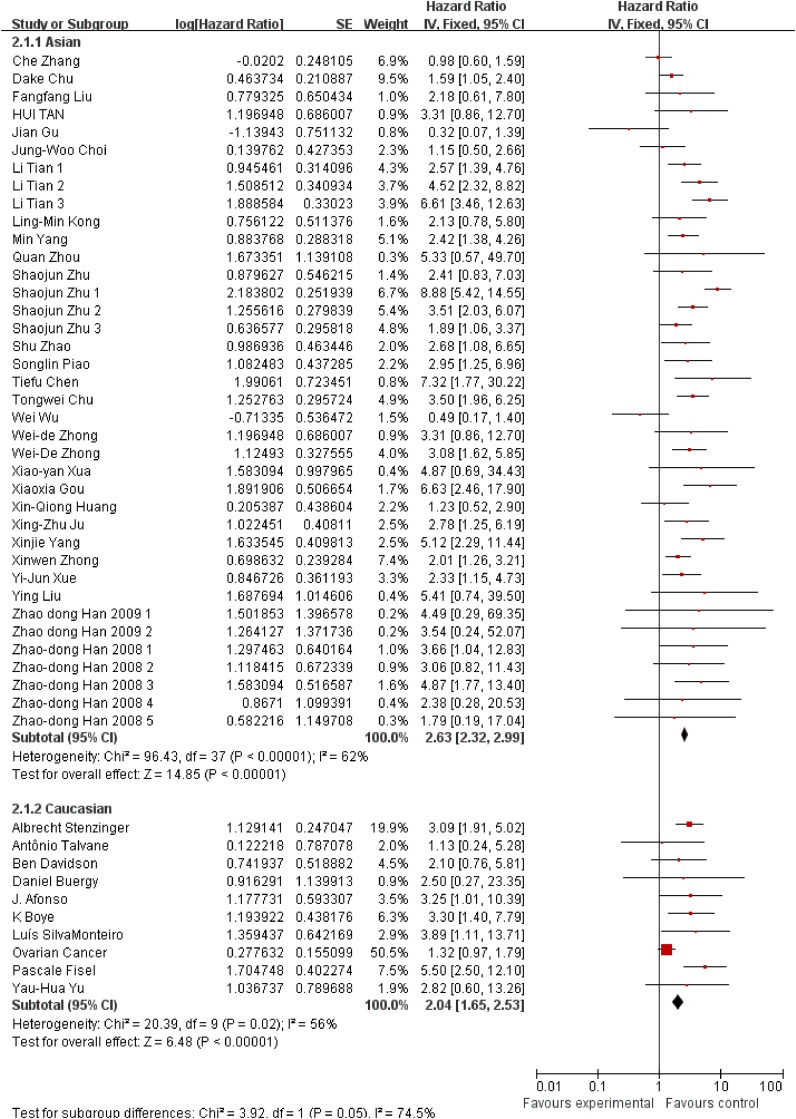
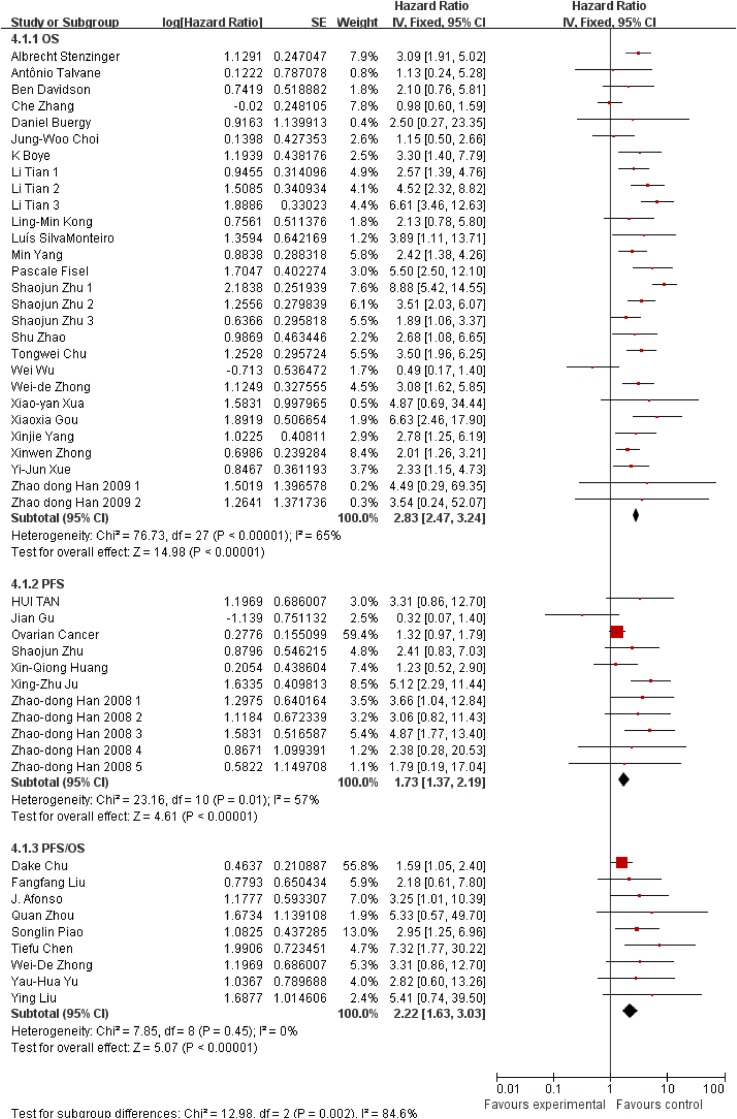
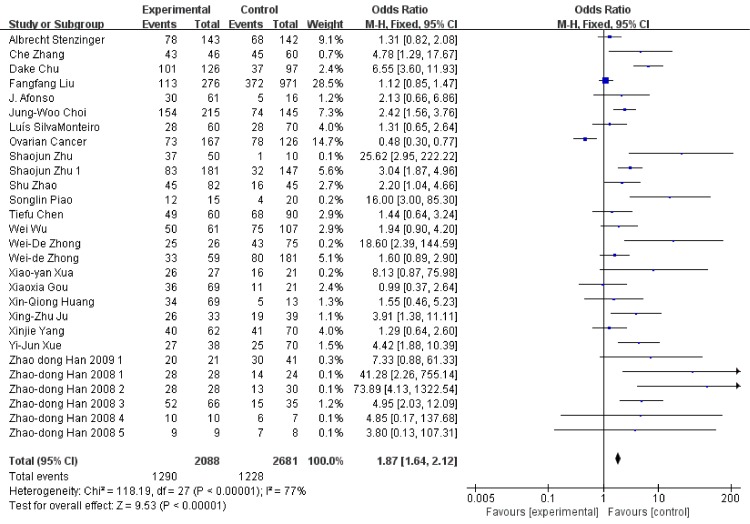
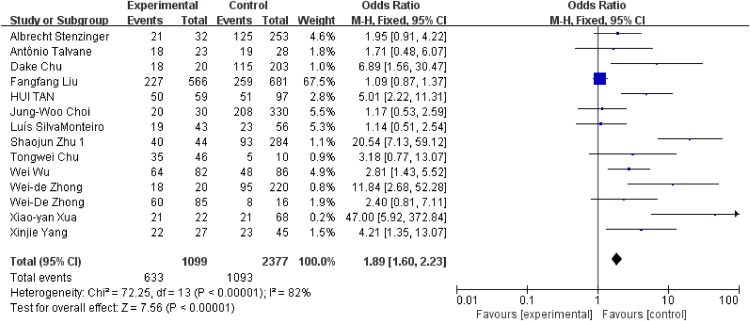
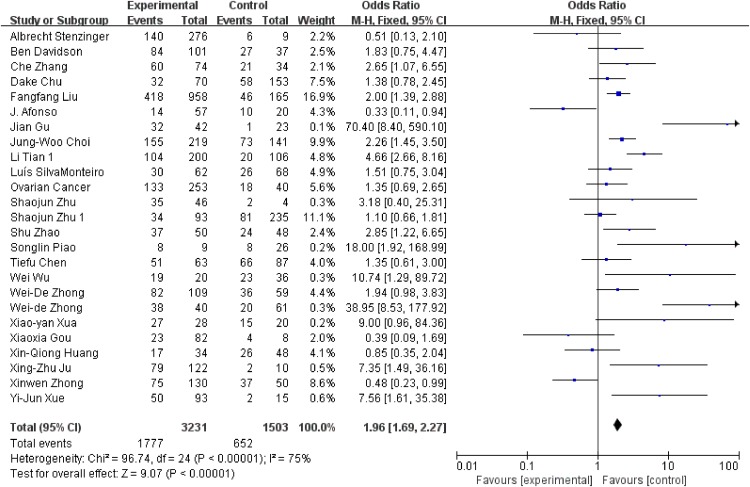
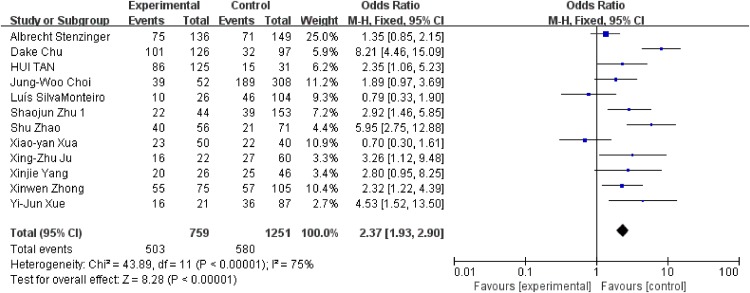
Extracellular matrix metalloproteinase inducer (EMMPRIN) has been reported to be associated with tumor formation and invasion in many studies. However, the clinicopathological significance and prognosis of EMMPRIN in cancer patients remains inconclusive. Therefore, we conducted a meta-analysis to assess the predictive potential of EMMPRIN in various cancers. By searching Pubmed, Cochrane library database and web of science comprehensively, 39studies with 5739 cases were included in our meta-analysis. The results indicated that EMMPRIN overexpression was significantly associated with poor outcome of cancers (HR=2.46, 95% CI: 2.21-2.75, P<0.0001). In addition, a significant relation was found between EMMPRIN overexpression and clinicopathological features, such as tumor stage (T3+T4/ T1+T2, OR=1.87, 95% CI:1.64-2.12, P<0.0001), tumor differentiation (poor/ well+ moderate, OR=1.09, 95% CI:1.60-2.23, P<0.0001), clinical stage (III+IV /I +II, OR=1.96, 95% CI:1.69-2.27, P<0.0001) and nodal metastasis (positive/negative, OR=2.37, 95% CI:1.93-2.90, P<0.0001). However, the expression of EMMRIN was not significantly associated with tumor stage in cervical cancer (OR=1.35, 95%CI: 0.73-2.48, P=0.33). In conclusion, EMMPRIN overxepression is significantly associated with clinicopathological characteristics and prognosis of cancers. Thus, EMMPRIN may be regarded as a promising bio-marker in predicting the clinical outcome of patients in cancers and could be used as the therapeutic target during clinical practices.
在许多研究中,细胞外基质金属蛋白酶诱导剂(EMMPRIN)已被报道与肿瘤形成和侵袭有关。然而,EMMPRIN在癌症患者中的临床病理意义和预后仍无定论。因此,我们进行了一项荟萃分析,以评估EMMPRIN在各种癌症中的预测潜力。通过全面检索PubMed、Cochrane图书馆数据库和科学网,我们的荟萃分析纳入了39项研究,共5739例病例。结果表明,EMMPRIN过表达与癌症患者的不良预后显著相关(HR=2.46,95%CI:2.21-2.75,P<0.0001)。此外,还发现EMMPRIN过表达与临床病理特征之间存在显著关系,如肿瘤分期(T3+T4/T1+T2,OR=1.87,95%CI:1.64-2.12,P<0.0001)、肿瘤分化(差/好+中等,OR=1.09,95%CI:1.60-2.23,P<0.0001)、临床分期(III+IV/I+II,OR=1.96,95%CI:1.69-2.27,P<0.0001)和淋巴结转移(阳性/阴性,OR=2.37,95%CI:1.93-2.90,P<0.0001)。然而,EMMRIN的表达与宫颈癌的肿瘤分期无显著相关性(OR=1.35,95%CI:0.73-2.48,P=0.33)。总之,EMMPRIN过表达与癌症的临床病理特征和预后显著相关。因此,EMMPRIN可被视为预测癌症患者临床结局的有前景的生物标志物,并可在临床实践中用作治疗靶点。