Purohit Neetu, Bhati Divya K, Gupta Shiv D, Kundu Azad S
Indian Institute of Health Management Research University.
Indian Council of Medical Research.
Cent Asian J Glob Health. 2015 Dec 22;4(2):218. doi: 10.5195/cajgh.2015.218. eCollection 2015.
Non-communicable diseases account for a significant disease burden in the South East Asia region. India is facing an increased incidence of lifestyle-related diseases, such as cardiovascular disease. Socioeconomic and lifestyle risk factors for cardiovascular disease (CVD) have been under investigated in India. This study was designed to explore risk factors contributing to the development of cardiovascular disease among Indian males.
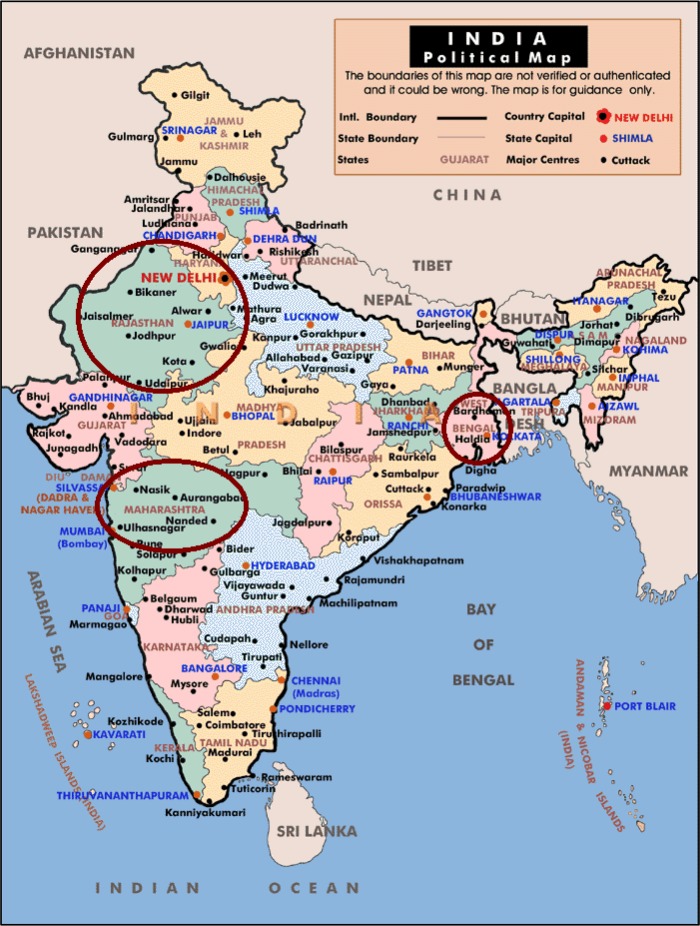
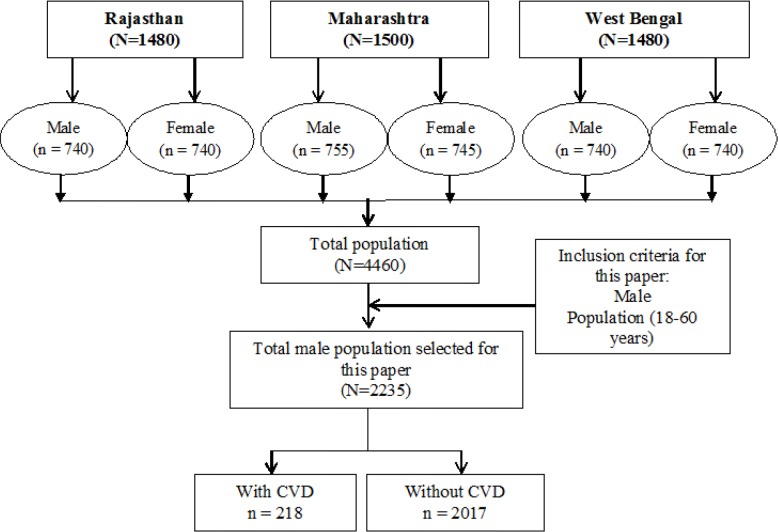
A population-based cross-sectional study was conducted among 2,235 males in the age group of 18-60 years across three states of India. A household survey was used to collect demographic and socioeconomic status information in addition to lifestyle-related attributes such as smoking, alcohol consumption, diet, and physical activity. Descriptive statistics and logistic regression were performed to identify the role of various factors that may be associated with the development of cardiovascular disease in this population.
The prevalence of cardiovascular disease among the male respondents contacted through a household survey was reported to be 9.8%. Logistic regression revealed that males with higher education and higher income were more likely to report CVD. With age as a strong predictor of CVD, the risk of CVD was found to be five times higher in the older age group. Current smokers were 1.3 times more likely to have CVD compared to those who never smoked. Those who were engaged in physical activity were less likely to have CVD; however, the adverse effects of smoking and excessive consumption of red meat showed a stronger association with CVD than the protective effects of physical activity.
In developing countries, where the increase in earning capacity and change in lifestyle has been found to be accompanied by substantial risk of heart disease for males, public health measures like health promotion programs need to be implemented to decrease CVD burden.
非传染性疾病在东南亚地区造成了重大的疾病负担。印度正面临与生活方式相关疾病发病率上升的问题,如心血管疾病。在印度,心血管疾病(CVD)的社会经济和生活方式风险因素尚未得到充分研究。本研究旨在探讨印度男性心血管疾病发生的危险因素。
在印度三个邦对2235名年龄在18至60岁之间的男性进行了一项基于人群的横断面研究。除了吸烟、饮酒、饮食和身体活动等与生活方式相关的属性外,还通过家庭调查收集了人口统计学和社会经济状况信息。进行描述性统计和逻辑回归分析,以确定可能与该人群心血管疾病发生相关的各种因素的作用。
通过家庭调查联系到的男性受访者中心血管疾病的患病率据报道为9.8%。逻辑回归显示,受过高等教育和收入较高的男性更有可能报告患有心血管疾病。年龄是心血管疾病的一个强有力的预测因素,发现老年组患心血管疾病的风险高出五倍。与从不吸烟的人相比,目前吸烟者患心血管疾病的可能性高1.3倍。从事体育活动的人患心血管疾病的可能性较小;然而,吸烟和过量食用红肉的不利影响与心血管疾病的关联比体育活动的保护作用更强。
在发展中国家,人们发现男性收入能力的提高和生活方式的改变伴随着心脏病的重大风险,需要实施健康促进计划等公共卫生措施来减轻心血管疾病负担。