Department of Biomedical Engineering, University of Michigan, Ann Arbor, MI, USA.
Department of Microbiology and Immunology, The Peter Doherty Institute for Infection and Immunity, University of Melbourne, Parkville, Vic., Australia.
Immunology. 2018 Mar;153(3):279-289. doi: 10.1111/imm.12861. Epub 2017 Dec 1.
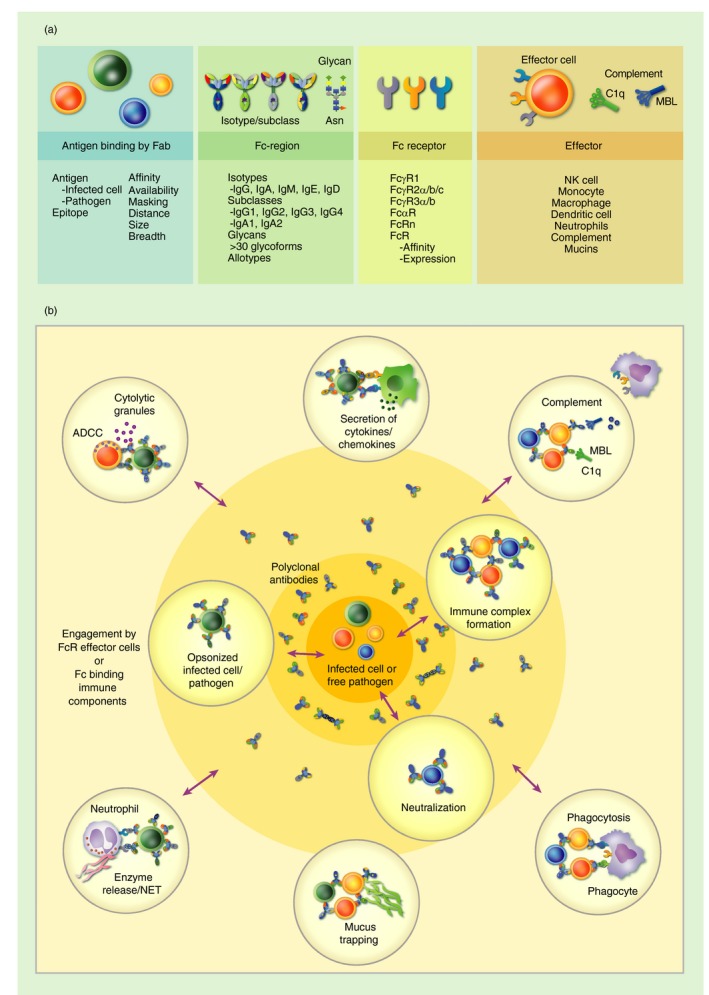
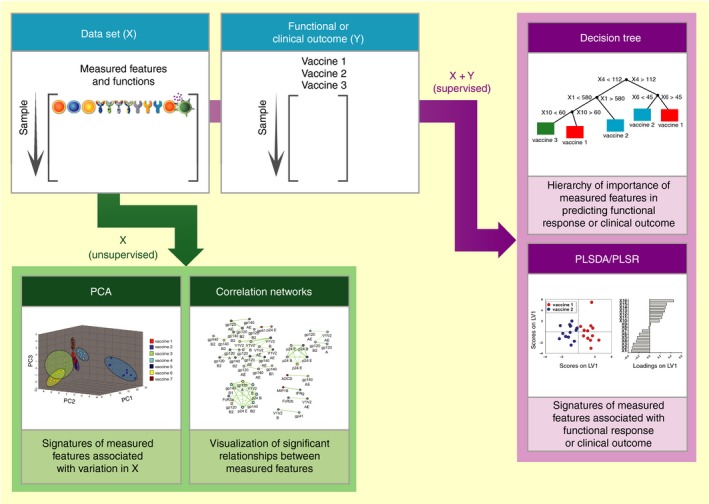
Antibodies are highly functional glycoproteins capable of providing immune protection through multiple mechanisms, including direct pathogen neutralization and the engagement of their Fc portions with surrounding effector immune cells that induce anti-pathogenic responses. Small modifications to multiple antibody biophysical features induced by vaccines can significantly alter functional immune outcomes, though it is difficult to predict which combinations confer protective immunity. In order to give insight into the highly complex and dynamic processes that drive an effective humoral immune response, here we discuss recent applications of 'Systems Serology', a new approach that uses data-driven (also called 'machine learning') computational analysis and high-throughput experimental data to infer networks of important antibody features associated with protective humoral immunity and/or Fc functional activity. This approach offers the ability to understand humoral immunity beyond single correlates of protection, assessing the relative importance of multiple biophysical modifications to antibody features with multivariate computational approaches. Systems Serology has the exciting potential to help identify novel correlates of protection from infection and may generate a more comprehensive understanding of the mechanisms behind protection, including key relationships between specific Fc functions and antibody biophysical features (e.g. antigen recognition, isotype, subclass and/or glycosylation events). Reviewed here are some of the experimental and computational technologies available for Systems Serology research and evidence that the application has broad relevance to multiple different infectious diseases including viruses, bacteria, fungi and parasites.
抗体是高度功能化的糖蛋白,能够通过多种机制提供免疫保护,包括直接中和病原体和其 Fc 部分与周围效应免疫细胞的结合,从而诱导抗病原体反应。疫苗对多种抗体生物物理特性的微小改变可以显著改变功能性免疫结果,但很难预测哪些组合能提供保护性免疫。为了深入了解驱动有效体液免疫反应的高度复杂和动态过程,我们在这里讨论了“系统血清学”的最新应用,这是一种新方法,它使用数据驱动(也称为“机器学习”)的计算分析和高通量实验数据来推断与保护性体液免疫和/或 Fc 功能活性相关的重要抗体特征网络。这种方法能够理解超越单一保护相关因素的体液免疫,通过多变量计算方法评估对抗体特征的多种生物物理修饰的相对重要性。系统血清学具有帮助识别感染的新型保护相关性的潜力,并可能更全面地了解保护背后的机制,包括特定 Fc 功能和抗体生物物理特征之间的关键关系(例如抗原识别、同种型、亚类和/或糖基化事件)。本文回顾了一些用于系统血清学研究的实验和计算技术,并提供了证据表明该应用具有广泛的相关性,适用于多种不同的传染病,包括病毒、细菌、真菌和寄生虫。