College of Life Science, University of Shi He Zi, Xin Jiang, 832000, China.
Sci Rep. 2017 Nov 16;7(1):15697. doi: 10.1038/s41598-017-14890-z.
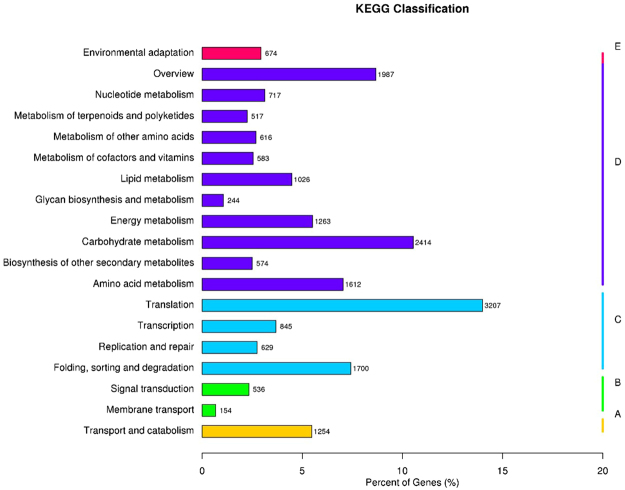
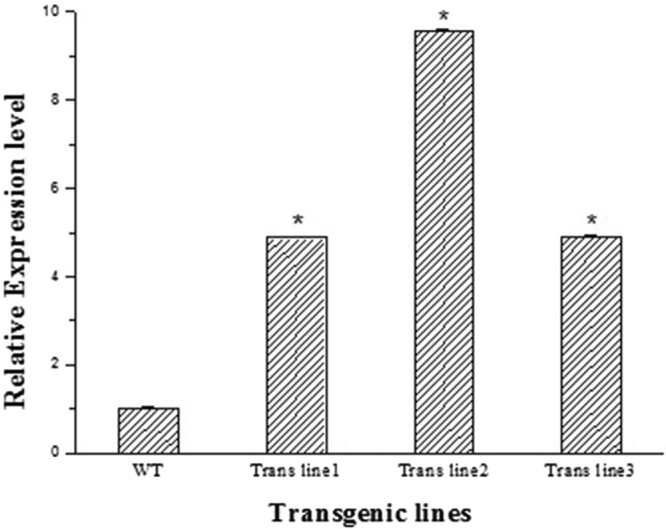
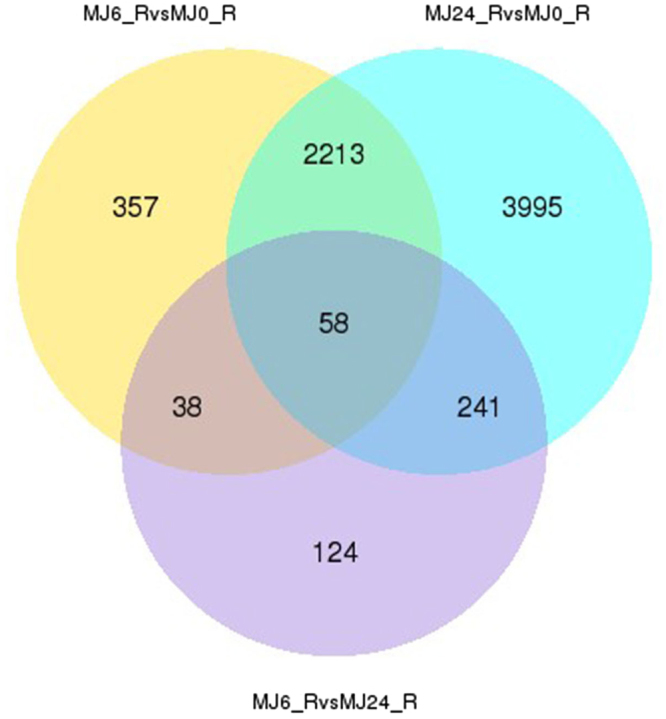
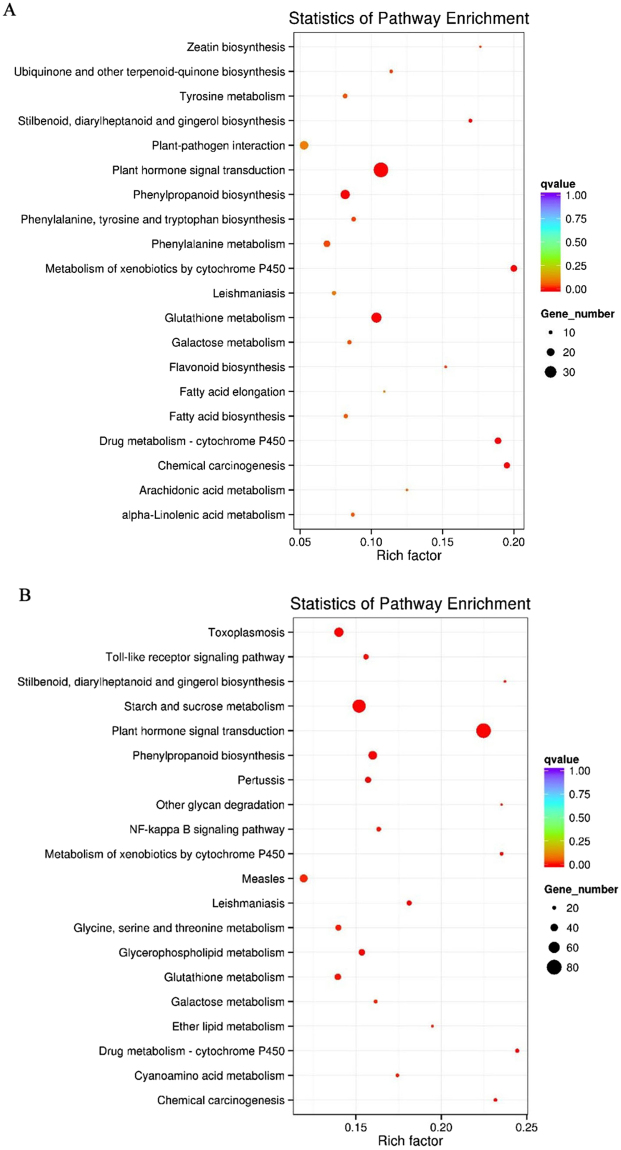
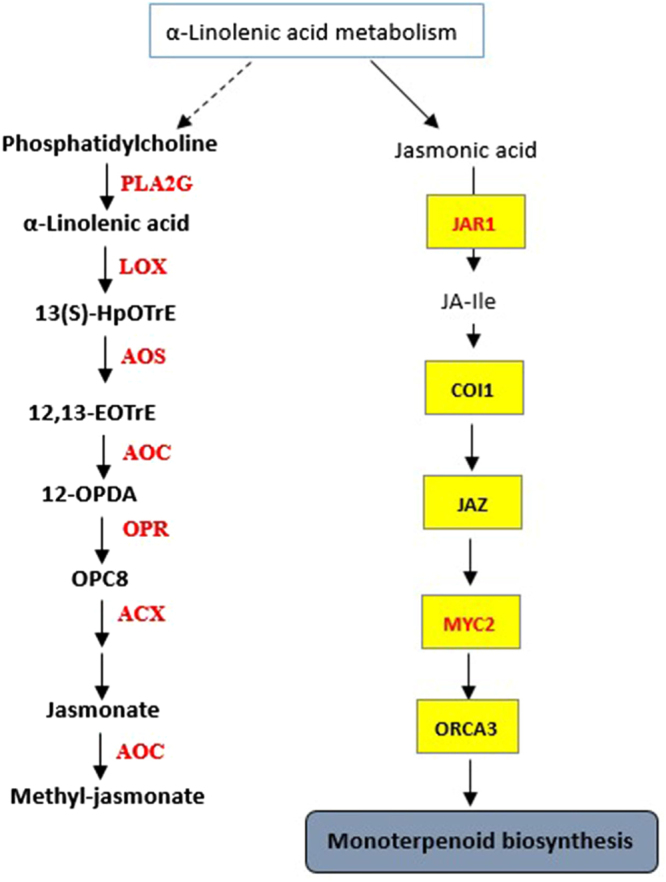
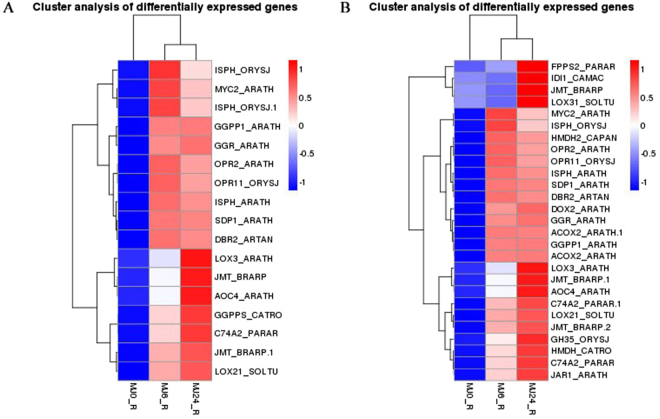
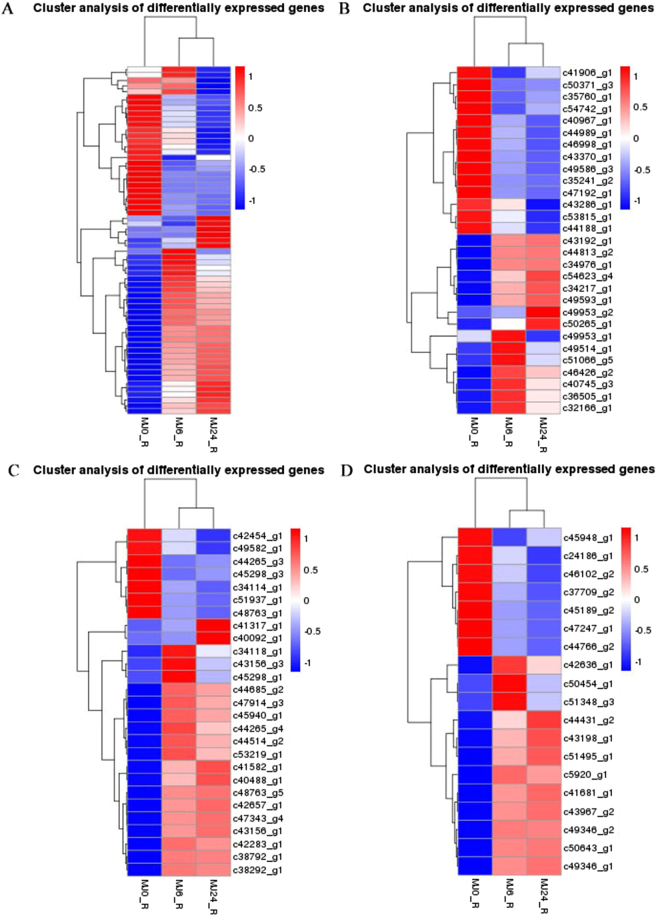
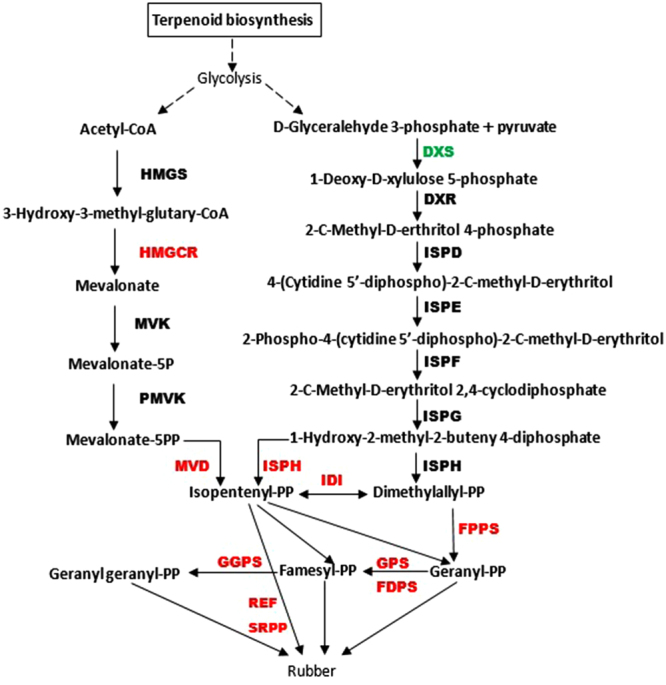
Increase in the consumption of natural rubber (NR) has necessitated the identification of alternative sources of NR. The quality of NR produced by Taraxacum koksaghyz Rodin (TKS) is comparable to that from Hevea brasiliensis (H.brasiliensis), and therefore, TKS is being considered as an alternative source of NR. Here, we sequenced the TKS root transcriptome after wild TKS seedlings were treated with methyl jasmonate (MeJA) for 0, 6, and 24 h. The clean reads generated for each experimental line were assembled into 127,833 unigenes. The Kyoto encyclopedia of genes and genomes pathway prediction suggested that methyl jasmonate regulated secondary metabolism in TKS. Differential expression analysis showed that the expression of HMGCR, FPPS, IDI, GGPPS, and REF/SRPP increased with methyl jasmonate treatment. Interestingly, differential expression analysis of the jasmonate (JA)-related transcription factors (TFs), indicated that certain genes encoding these transcription factors (namely, bHLH, MYB, AP2/EREBP, and WRKY) showed the same expression pattern in the lines treated for 6 h and 24 h. Moreover, HMGCR was up-regulated in the transgenic seedlings overexpressing DREB. We predicted that methyl jasmonate regulated secondary metabolism and affected rubber biosynthesis via the interaction of the JA-related TFs with genes associated with rubber biosynthesis in TKS.
天然橡胶(NR)消费量的增加使得人们有必要寻找 NR 的替代来源。蒲公英(Taraxacum koksaghyz Rodin,TKS)所产 NR 的质量可与巴西橡胶树(Hevea brasiliensis,H. brasiliensis)所产 NR 相媲美,因此,TKS 被视为 NR 的替代来源。在这里,我们对野生 TKS 幼苗在茉莉酸甲酯(MeJA)处理 0、6 和 24 h 后进行了 TKS 根转录组测序。为每个实验品系生成的清洁读取序列被组装成 127833 个非编码基因。京都基因与基因组百科全书途径预测表明,茉莉酸甲酯调控了 TKS 中的次生代谢。差异表达分析表明,HMGCR、FPPS、IDI、GGPPS 和 REF/SRPP 的表达随茉莉酸甲酯处理而增加。有趣的是,茉莉酸(JA)相关转录因子(TF)的差异表达分析表明,某些编码这些转录因子的基因(即 bHLH、MYB、AP2/EREBP 和 WRKY)在处理 6 h 和 24 h 的品系中表现出相同的表达模式。此外,DREB 过表达的转基因幼苗中 HMGCR 上调。我们预测,茉莉酸甲酯通过 JA 相关 TF 与与 TKS 中橡胶生物合成相关基因的相互作用,调节次生代谢并影响橡胶生物合成。