Vahedian Mostafa, Khanjani Narges, Mirzaee Moghaddameh, Koolivand Ali
PhD Candidate, Neurology Research Center, Kerman University of Medical Sciences, Kerman, Iran.
Associate Professor, Environmental Health Engineering Research Center, Kerman University of Medical Sciences, Kerman, Iran.
ARYA Atheroscler. 2017 May;13(3):117-134.
Outdoor air pollution has been considered as one of the most serious health concerns over the last decade. This study aimed to investigate the association between ambient air pollution and cardiovascular hospital admissions.
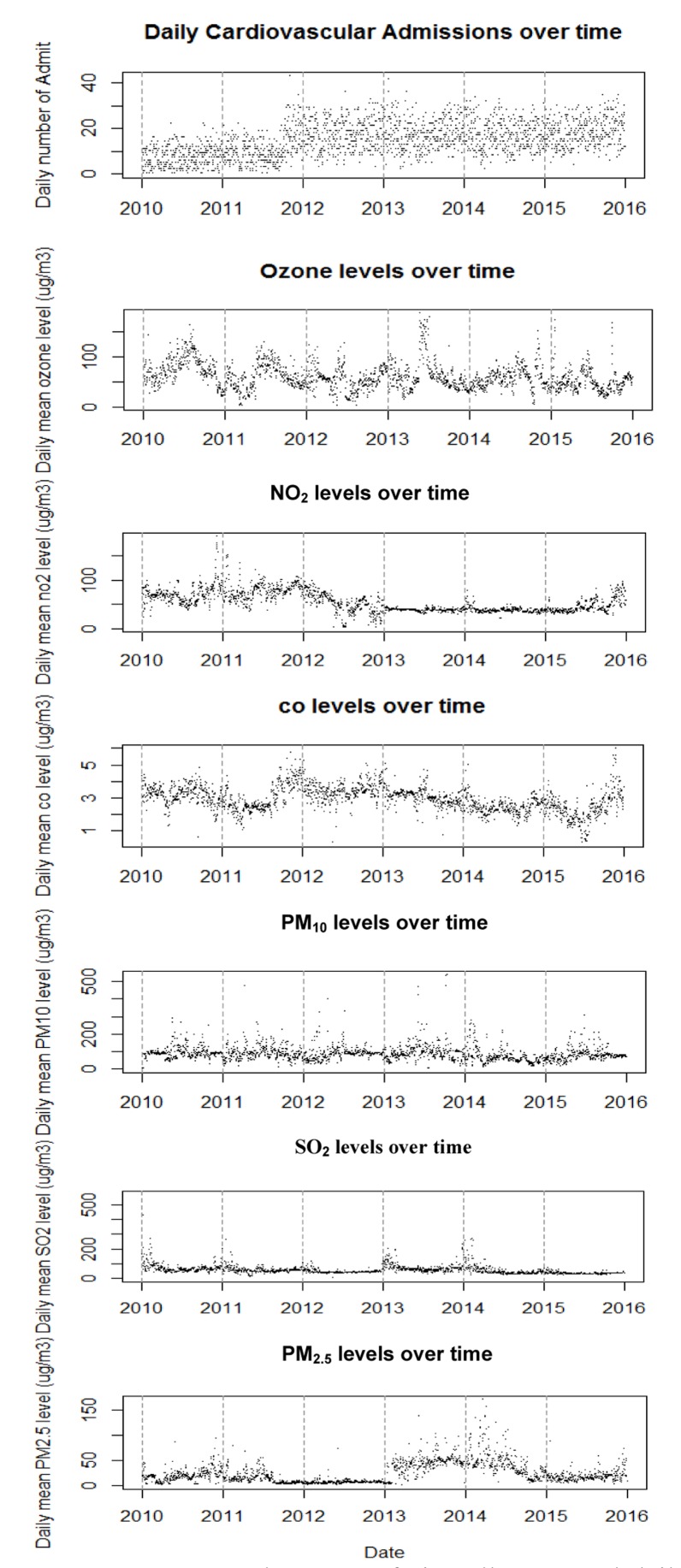
This investigation was carried out from January 1, 2010 to December 31, 2015, in the urban population of Arak, Iran. Daily records of concentrations of air pollutants including particulate matter less than 10 µm (PM10), nitrogen dioxide (NO2), particulate matter less than 2.5 µm (PM2.5), ozone (O3), carbon monoxide (CO), and sulfur dioxide (SO2) as well as the daily number of hospital admissions due to cardiovascular disease were inquired from the Arak Department of Environment and two major hospitals, respectively. Time-series regression analysis was used to evaluate the effect of the pollutants on cardiovascular hospital admissions with different lag structures, controlling for weather variables, seasonality and long-term time trends, and day of the week.
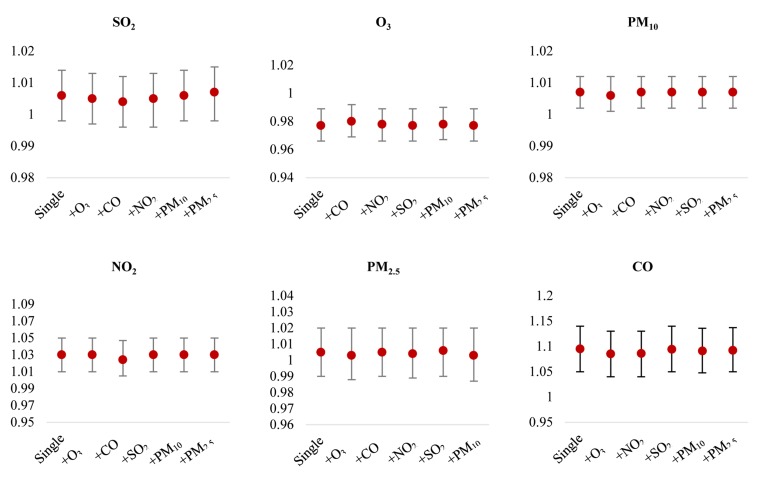
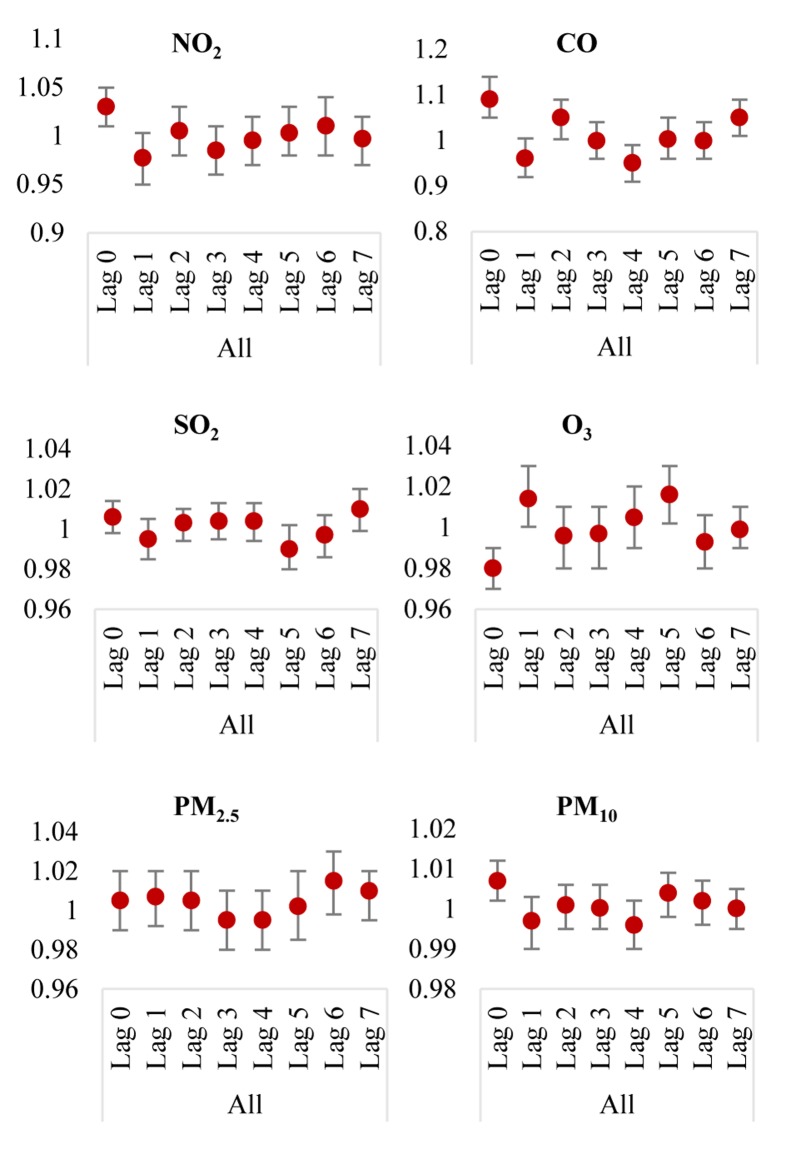
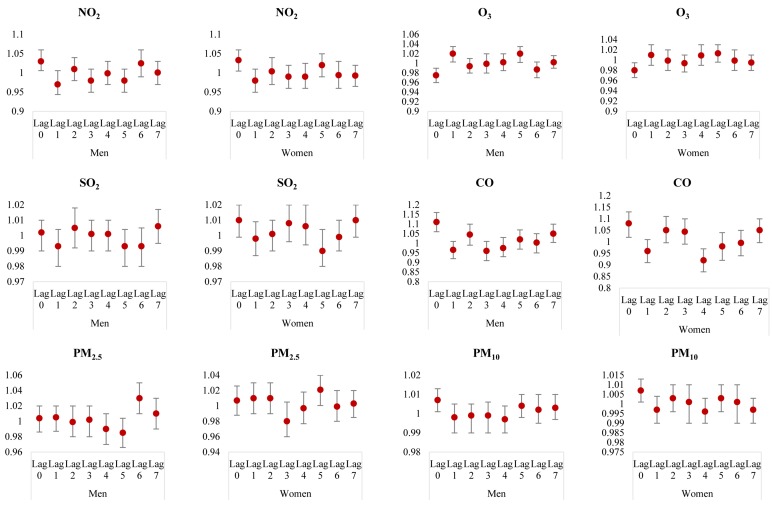
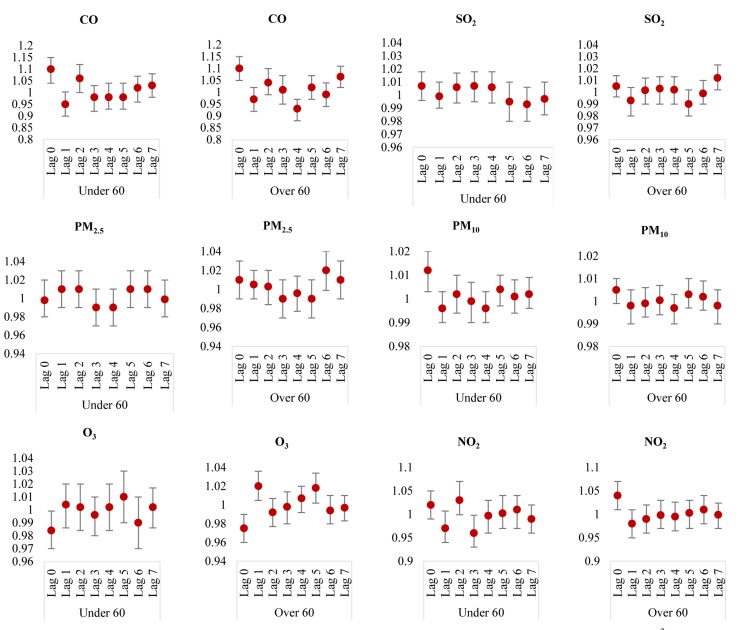
Each 10 µg/m3 increase in PM10 and NO2 and 1 mg/m3 increase in CO concentrations at lag 0 (day) were significantly associated with an increase of 0.7% (P = 0.004), 3.3% (P = 0.006), and 9.4% (P < 0.001), respectively in overall cardiovascular hospital admissions. The elderly were more susceptible than those under 60 years to exposure to the pollutants (especially NO2) with regard to cardiovascular hospital admission.
The results of this study showed that hospital admission for cardiovascular disease is partly related to the levels of ambient air pollutions in Arak. Susceptibility to air pollutants varies by age groups and sex.
在过去十年中,室外空气污染一直被视为最严重的健康问题之一。本研究旨在调查环境空气污染与心血管疾病住院之间的关联。
本调查于2010年1月1日至2015年12月31日在伊朗阿拉克市的城市人口中进行。分别从阿拉克环境部门和两家主要医院获取了包括小于10微米的颗粒物(PM10)、二氧化氮(NO2)、小于2.5微米的颗粒物(PM2.5)、臭氧(O3)、一氧化碳(CO)和二氧化硫(SO2)在内的空气污染物浓度的每日记录,以及心血管疾病住院的每日人数。采用时间序列回归分析来评估污染物对心血管疾病住院的影响,考虑不同的滞后结构,并控制天气变量、季节性、长期时间趋势和星期几。
在滞后0天(当日)时,PM10每增加10微克/立方米、NO2每增加10微克/立方米以及CO浓度每增加1毫克/立方米,总体心血管疾病住院人数分别显著增加0.7%(P = 0.004)、3.3%(P = 0.006)和9.4%(P < 0.001)。就心血管疾病住院而言,老年人比60岁以下人群更容易受到污染物(尤其是NO2)的影响。
本研究结果表明,阿拉克市心血管疾病住院部分与环境空气污染水平有关。对空气污染物的易感性因年龄组和性别而异。