Institute of Pharmacy, Freie Universität Berlin, Königin-Luise-Str. 2+4, 14195 Berlin, Germany.
Max-Delbrück-Centrum for Molecular Medicine, Helmholtz Protein Sample Production Facility, Robert-Rössle-Str. 10, 13125 Berlin, Germany.
Molecules. 2017 Nov 17;22(11):1989. doi: 10.3390/molecules22111989.
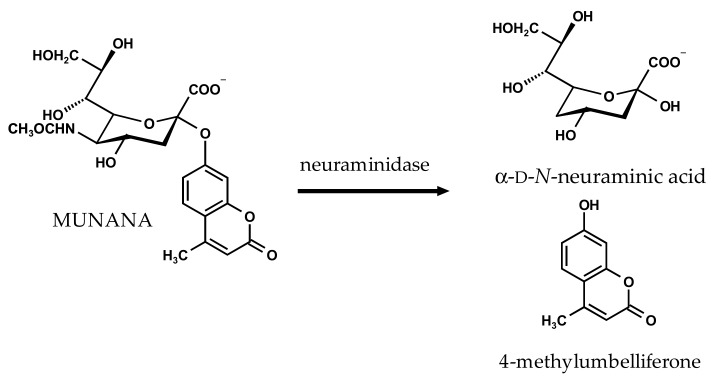
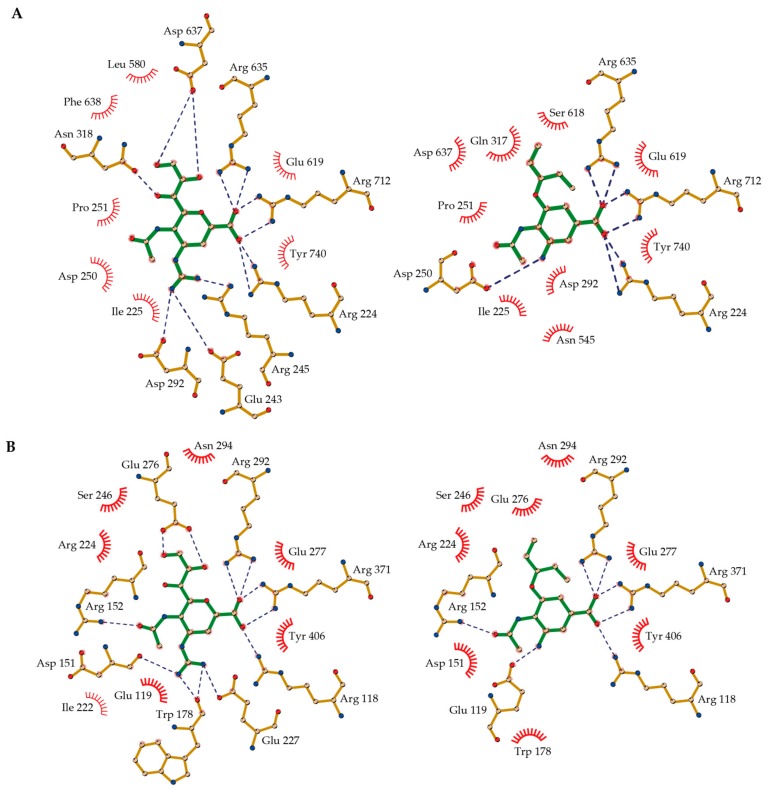
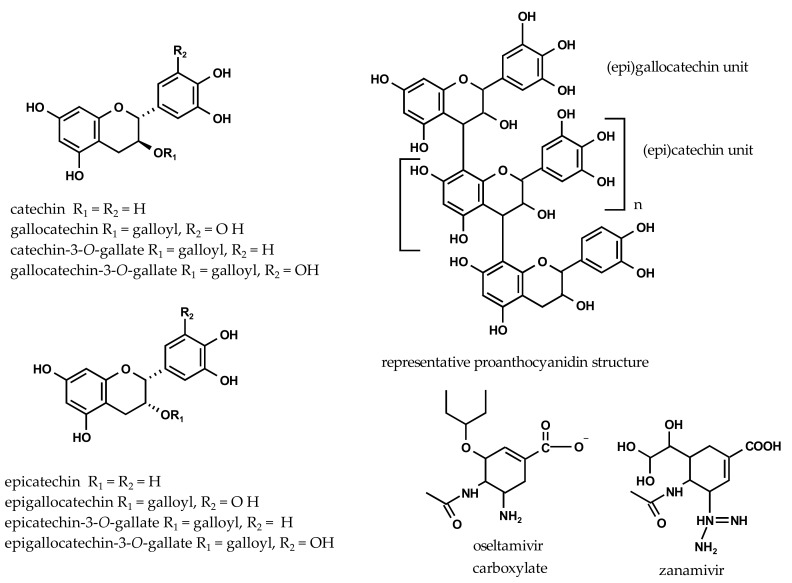
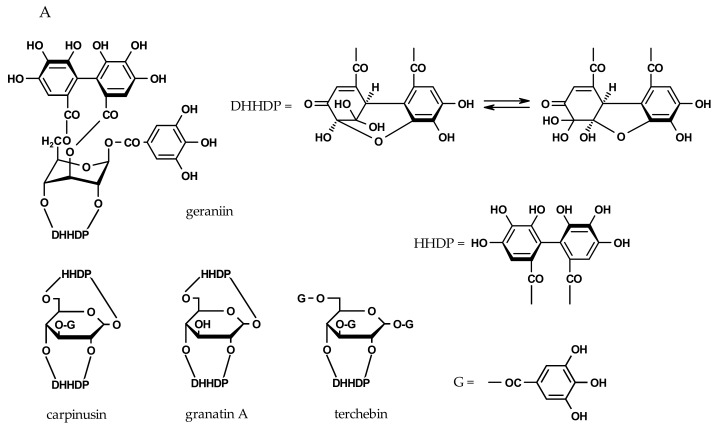
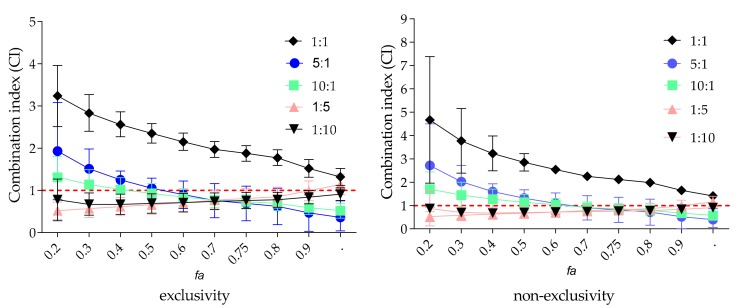
Neuraminidaseis a key enzyme in the life cycle of influenza viruses and is present in some bacterial pathogens. We here assess the inhibitory potency of plant tannins versus clinically used inhibitors on both a viral and a bacterial model neuraminidase by applying the 2'-(4-methylumbelliferyl)-α-d--acetylneuraminic acid (MUNANA)-based activity assay. A range of flavan-3-ols, ellagitannins and chemically defined proanthocyanidin fractions was evaluated in comparison to oseltamivir carboxylate and zanamivir for their inhibitory activities against viral influenza A (H1N1) and bacterial neuraminidase (VCNA). Compared to the positive controls, all tested polyphenols displayed a weak inhibition of the viral enzyme but similar or even higher potency on the bacterial neuraminidase. Structure-activity relationship analyses revealed the presence of galloyl groups and the hydroxylation pattern of the flavan skeleton to be crucial for inhibitory activity. The combination of zanamivir and EPs 7630 (root extract of ) showed synergistic inhibitory effects on the bacterial neuraminidase. Co-crystal structures of VCNA with oseltamivir carboxylate and zanamivir provided insight into bacterial versus viral enzyme-inhibitor interactions. The current data clearly indicate that inhibitor potency strongly depends on the biological origin of the enzyme and that results are not readily transferable. The therapeutic relevance of our findings is briefly discussed.
神经氨酸酶是流感病毒生命周期中的关键酶,存在于一些细菌病原体中。我们通过应用基于 2'-(4-甲基伞形基)-α-d--乙酰神经氨酸(MUNANA)的活性测定法,在此评估植物单宁与临床使用的抑制剂对病毒和细菌模型神经氨酸酶的抑制效力。与奥司他韦羧酸盐和扎那米韦相比,我们评估了一系列黄烷-3-醇、鞣花单宁和化学定义的原花青素级分,以评估其对病毒流感 A(H1N1)和细菌神经氨酸酶(VCNA)的抑制活性。与阳性对照相比,所有测试的多酚对病毒酶显示出较弱的抑制作用,但对细菌神经氨酸酶的抑制活性相似甚至更高。结构-活性关系分析表明,存在没食子酰基和黄烷骨架的羟基化模式对于抑制活性至关重要。扎那米韦和 EPs 7630(根提取物)的组合对细菌神经氨酸酶显示出协同抑制作用。VCNA 与奥司他韦羧酸盐和扎那米韦的共晶结构提供了细菌与病毒酶-抑制剂相互作用的见解。目前的数据清楚地表明,抑制剂的效力强烈依赖于酶的生物学来源,并且结果不易转移。我们的发现的治疗相关性简要讨论。