European Commission, Joint Research Centre (JRC), Directorate D - Sustainable Resources, Bio-economy Unit, Via E. Fermi, 21027 Ispra, VA, Italy.
European Commission, Joint Research Centre (JRC), Directorate D - Sustainable Resources, Bio-economy Unit, Via E. Fermi, 21027 Ispra, VA, Italy.
Waste Manag. 2018 Feb;72:3-16. doi: 10.1016/j.wasman.2017.11.007. Epub 2017 Nov 14.
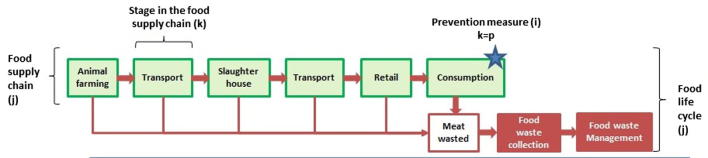
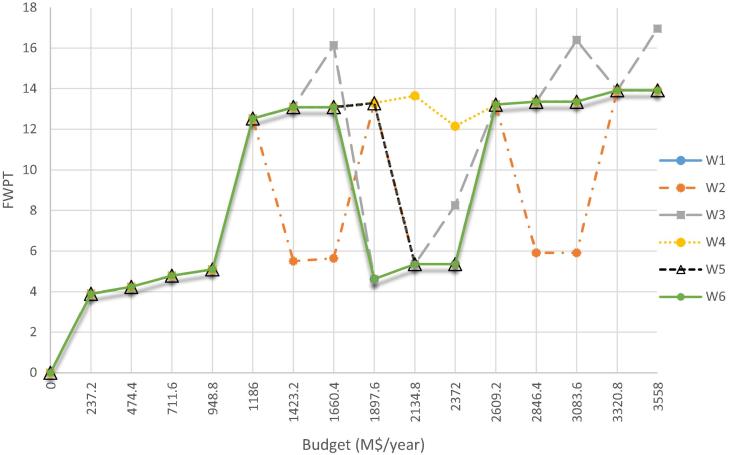
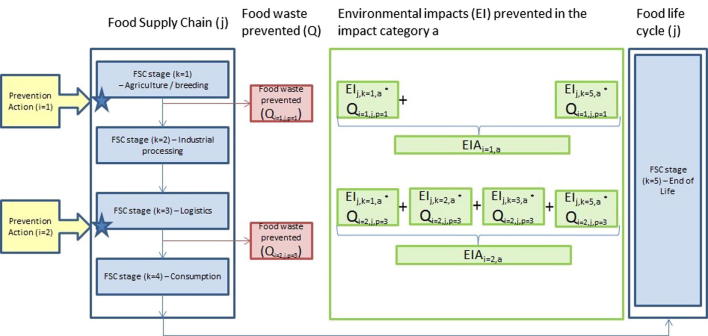
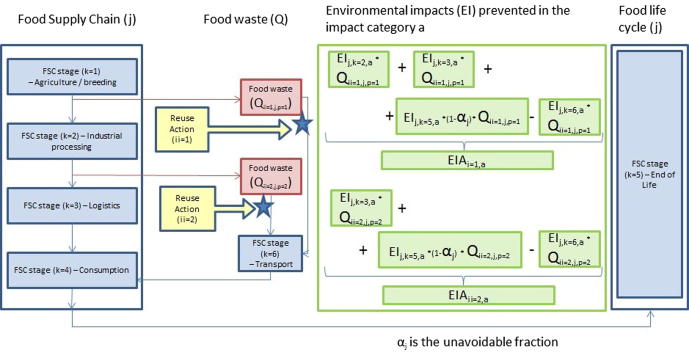
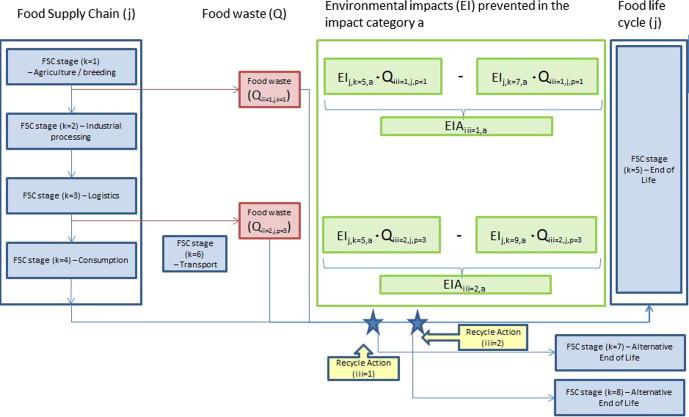
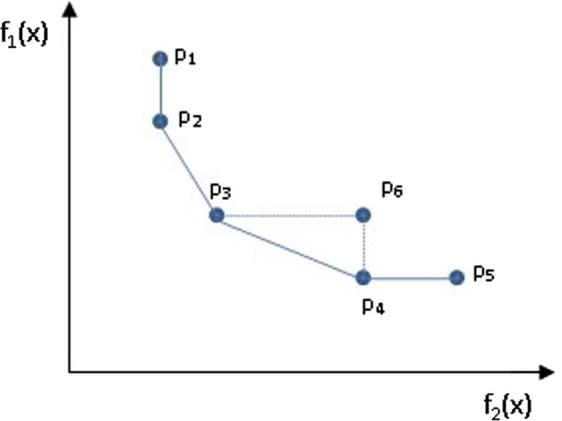
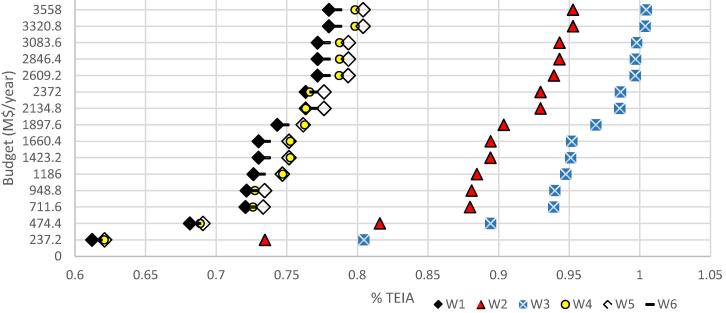
Food waste has gained prominence in the European political debate thanks to the recent Circular Economy package. Currently the waste hierarchy, introduced by the Waste Framework Directive, has been the rule followed to prioritize food waste prevention and management measures according to the environmental criteria. But when considering other criteria along with the environmental one, such as the economic, other tools are needed for the prioritization and optimization. This paper addresses the situation in which a decision-maker has to design a food waste prevention programme considering the limited economic resources in order to achieve the highest environmental impact prevention along the whole food life cycle. A methodology using Life Cycle Assessment and mathematical programing is proposed and its capabilities are shown through a case study. Results show that the order established in the waste hierarchy is generally followed. The proposed methodology revealed to be especially helpful in identifying "quick wins" - measures that should be always prioritized since they avoid a high environmental impact at a low cost. Besides, in order to aggregate the environmental scores related to a variety of impact categories, different weighting sets were proposed. In general, results show that the relevance of the weighting set in the prioritization of the measures appears to be limited. Finally, the correlation between reducing food waste generation and reducing environmental impact along the Food Supply Chain has been studied. Results highlight that when planning food waste prevention strategies, it is important to set the targets at the level of environmental impact instead of setting the targets at the level of avoided food waste generation (in mass).
由于最近的循环经济一揽子计划,食品浪费在欧洲政治辩论中受到关注。目前,《废物框架指令》所引入的废物层级制度一直是根据环境标准优先考虑预防和管理食物浪费措施的规则。但是,当考虑到与环境标准相关的其他标准,如经济标准时,需要其他工具来进行优先排序和优化。本文针对决策者在考虑有限的经济资源的情况下设计食品浪费预防计划的情况,提出了一种使用生命周期评估和数学规划的方法,并通过案例研究展示了其功能。结果表明,废物层级制度中确立的顺序通常是遵循的。所提出的方法特别有助于确定“速赢措施”,因为这些措施可以以低成本避免高环境影响,因此应该始终优先考虑。此外,为了聚合与多种影响类别相关的环境分数,提出了不同的权重集。一般来说,结果表明,在措施的优先级排序中,权重集的相关性似乎是有限的。最后,研究了减少食物浪费产生和减少食品供应链中环境影响之间的相关性。结果强调,在规划食物浪费预防策略时,将目标设定在环境影响水平而不是设定在避免的食物浪费产生(质量)水平非常重要。