Salemdeeb Ramy, Zu Ermgassen Erasmus K H J, Kim Mi Hyung, Balmford Andrew, Al-Tabbaa Abir
Department of Engineering, University of Cambridge, Trumpington Street, Cambridge CB2 1PZ, UK.
Conservation Science Group, Department of Zoology, University of Cambridge, The David Attenborough Building, Pembroke Street, Cambridge CB2 3QZ, UK.
J Clean Prod. 2017 Jan 1;140:871-880. doi: 10.1016/j.jclepro.2016.05.049.
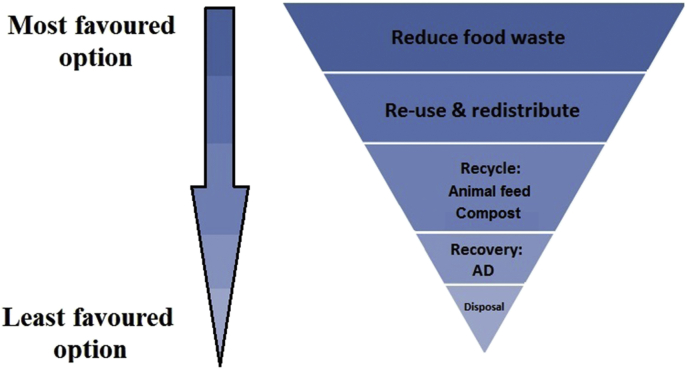
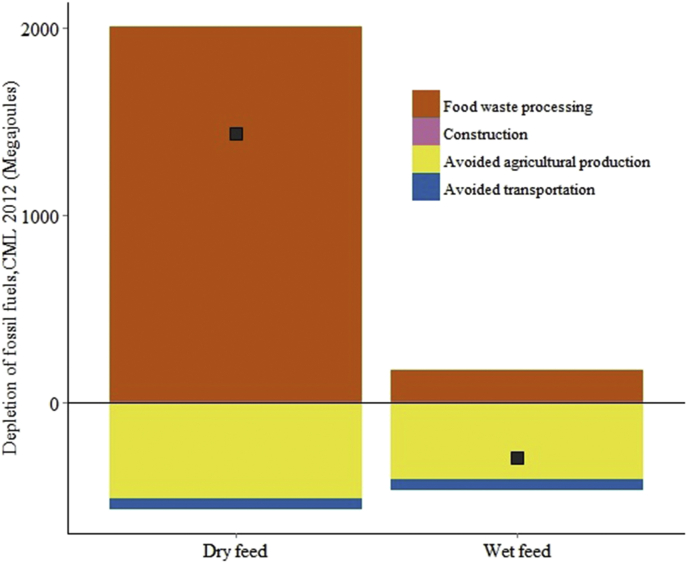
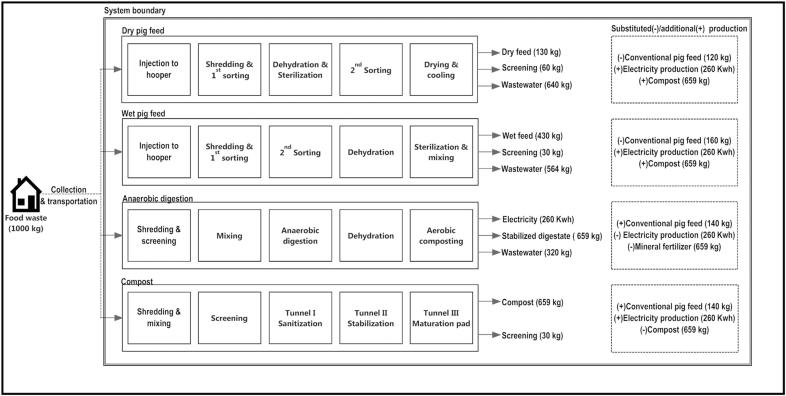
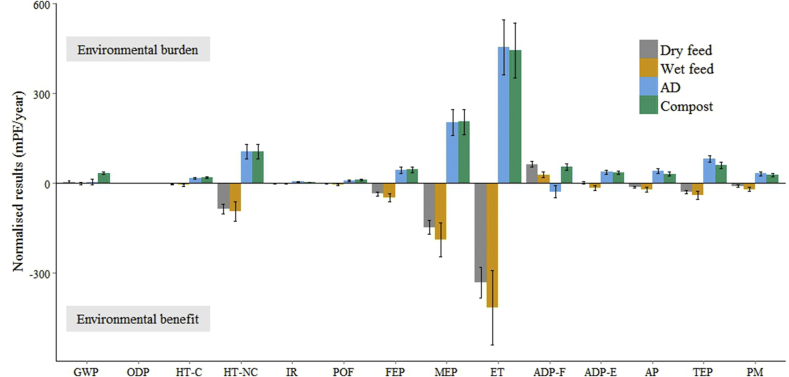
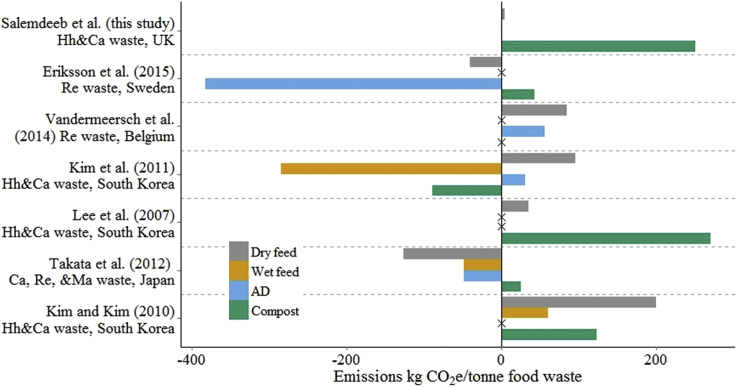
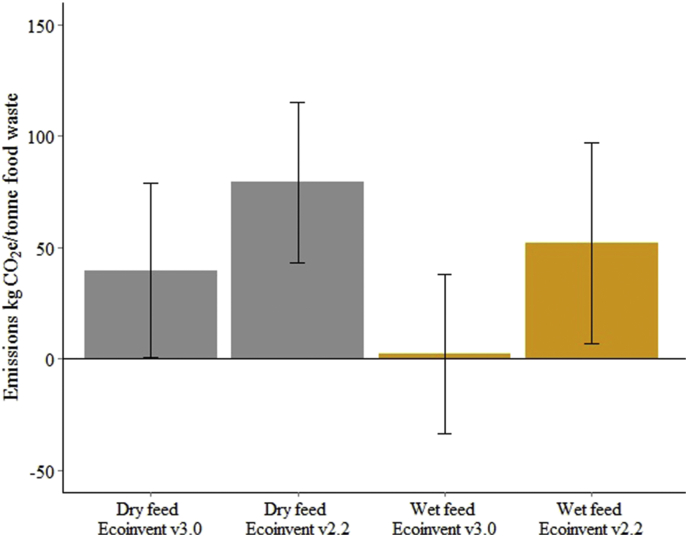
The disposal of food waste is a large environmental problem. In the United Kingdom (UK), approximately 15 million tonnes of food are wasted each year, mostly disposed of in landfill, via composting, or anaerobic digestion (AD). European Union (EU) guidelines state that food waste should preferentially be used as animal feed though for most food waste this practice is currently illegal, because of disease control concerns. Interest in the potential diversion of food waste for animal feed is however growing, with a number of East Asian states offering working examples of safe food waste recycling - based on tight regulation and rendering food waste safe through heat treatment. This study investigates the potential benefits of diverting food waste for pig feed in the UK. A hybrid, consequential life cycle assessment (LCA) was conducted to compare the environmental and health impacts of four technologies for food waste processing: two technologies of South Korean style-animal feed production (as a wet pig feed and a dry pig feed) were compared with two widespread UK disposal technologies: AD and composting. Results of 14 mid-point impact categories show that the processing of food waste as a wet pig feed and a dry pig feed have the best and second-best scores, respectively, for 13/14 and 12/14 environmental and health impacts. The low impact of food waste feed stems in large part from its substitution of conventional feed, the production of which has substantial environmental and health impacts. While the re-legalisation of the use of food waste as pig feed could offer environmental and public health benefits, this will require support from policy makers, the public, and the pig industry, as well as investment in separated food waste collection which currently occurs in only a minority of regions.
食物垃圾的处理是一个重大的环境问题。在英国,每年约有1500万吨食物被浪费,其中大部分被填埋处理,或通过堆肥、厌氧消化(AD)进行处理。欧盟指南规定,食物垃圾应优先用作动物饲料,不过就大多数食物垃圾而言,由于疾病控制方面的担忧,目前这种做法是非法的。然而,将食物垃圾用于动物饲料的潜在用途受到越来越多的关注,一些东亚国家提供了安全回收食物垃圾的成功范例——基于严格的监管,并通过热处理使食物垃圾变得安全。本研究调查了在英国将食物垃圾转用于猪饲料的潜在益处。进行了一项混合式的、基于后果的生命周期评估(LCA),以比较四种食物垃圾处理技术对环境和健康的影响:将两种韩国式动物饲料生产技术(作为湿猪饲料和干猪饲料)与英国两种广泛使用的处理技术——厌氧消化和堆肥进行比较。14个中点影响类别的结果表明,将食物垃圾加工成湿猪饲料和干猪饲料,在14项环境和健康影响中的13项和12项方面,分别获得了最佳和次佳分数。食物垃圾饲料的低影响在很大程度上源于其对传统饲料的替代,传统饲料的生产对环境和健康有重大影响。虽然将食物垃圾用作猪饲料的重新合法化可能带来环境和公共卫生效益,但这需要政策制定者、公众、养猪业的支持,以及对单独的食物垃圾收集进行投资,目前只有少数地区进行这种收集。