Maruyama Kazuichi, Inaba Tohru, Sugita Sunao, Ichinohasama Ryo, Nagata Kenji, Kinoshita Shigeru, Mochizuki Manabu, Nakazawa Toru
Department of Ophthalmology and Visual Science, Tohoku University Graduate School of Medicine, Sendai, Japan.
Department of Ophthalmology, Kyoto Prefectural University of Medicine, Kyoto, Japan.
BMJ Open. 2017 Nov 16;7(11):e014549. doi: 10.1136/bmjopen-2016-014549.
To determine the clinical relevance of vitreous biomarkers in patients with uveitis.
Multicentre, prospective, observational study.
Uveitis outpatient clinics of two academic medical centres in Japan.
This study included 234 eyes of 191 patients with various uveitis aetiologies: definitive sarcoidosis (61 eyes of 46 patients), suspected sarcoidosis (60 eyes of 45 patients), intraocular tumour (34 eyes of 27 patients), viral infection (20 eyes of 18 patients), non-sarcoidosis (16 eyes of 16 patients) and unknown aetiology (43 eyes of 39 patients).
Vitreous samples (taken by pars planta vitrectomy) were analysed with flow cytometry, cytology and multiplex PCR analysis.
The primary outcome measures were the diagnostic values of various biomarkers (T cells, B cells and pathogen DNA) in vitreous samples. The secondary outcome was visual acuity after vitrectomy.
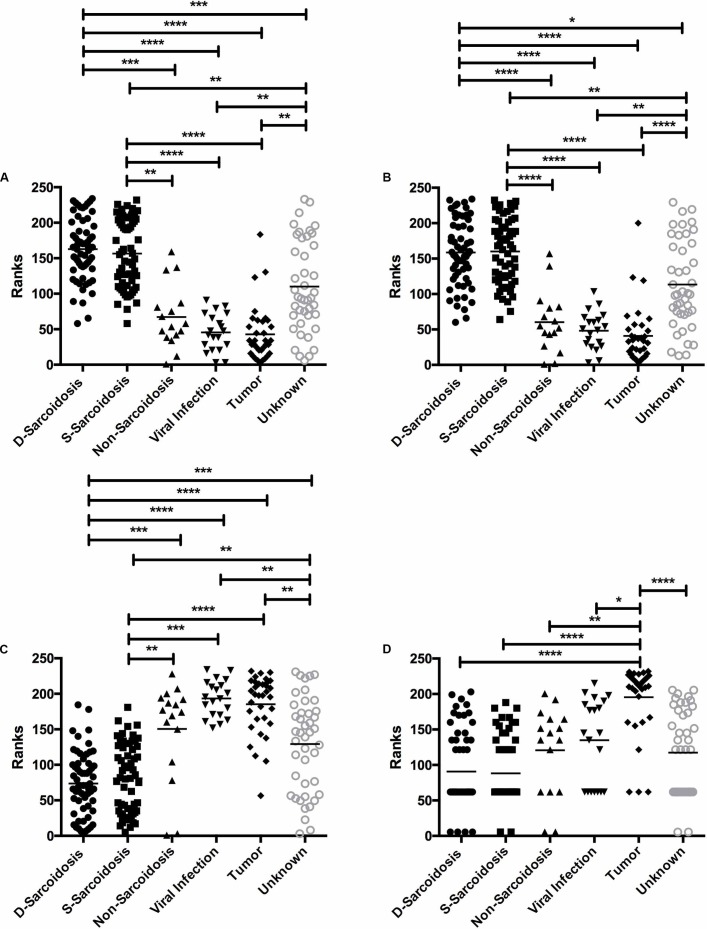
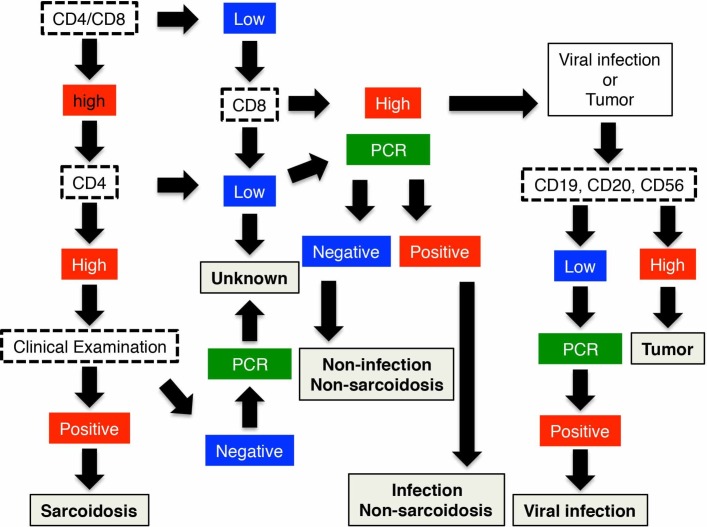
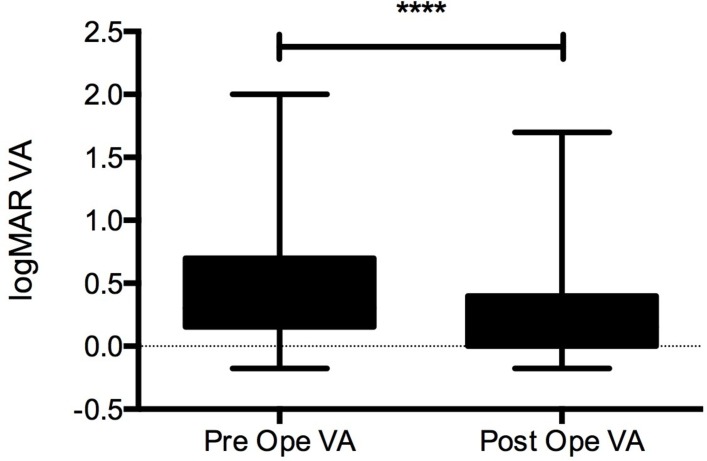
Sarcoidosis showed higher CD4/CD8 or CD4 measurements than other aetiologies (p<0.01). In samples with viral infection, pathogen DNA was detected, and CD8 counts were higher than the other aetiologies (p<0.01). Eyes with tumour had higher CD19 (p<0.05). Non-sarcoidosis had lower CD4/CD8 than sarcoidosis, higher CD8 than sarcoidosis and lower CD19 than tumour (p<0.01). Unknown uveitis had lower CD4/CD8 than sarcoidosis (p<0.01), and higher CD4/CD8 than non-sarcoidosis, viral infection or tumour (p<0.001). Visual acuity improved after vitrectomy (p<0.001).
Uveitis aetiologies had distinct vitreous biomarker profiles, especially of infiltrating lymphocytes. Analyses of CD4/CD8 ratio, T-lymphocyte and B-lymphocyte subset, and pathogen DNA in vitreous samples have good safety profiles and high diagnostic value for uveitis classification.
UMIN000004980; Pre-results.
确定葡萄膜炎患者玻璃体液生物标志物的临床相关性。
多中心、前瞻性、观察性研究。
日本两个学术医学中心的葡萄膜炎门诊。
本研究纳入了191例各种葡萄膜炎病因患者的234只眼:确诊结节病(46例患者的61只眼)、疑似结节病(45例患者的60只眼)、眼内肿瘤(27例患者的34只眼)、病毒感染(18例患者的20只眼)、非结节病(16例患者的16只眼)和病因不明(39例患者的43只眼)。
对玻璃体液样本(通过经睫状体扁平部玻璃体切除术获取)进行流式细胞术、细胞学和多重聚合酶链反应分析。
主要观察指标是玻璃体液样本中各种生物标志物(T细胞、B细胞和病原体DNA)的诊断价值。次要观察指标是玻璃体切除术后的视力。
结节病的CD4/CD8或CD4测量值高于其他病因(p<0.01)。在病毒感染的样本中,检测到病原体DNA,且CD8计数高于其他病因(p<0.01)。肿瘤患者的眼睛CD19水平较高(p<0.05)。非结节病的CD4/CD8低于结节病,CD8高于结节病,CD19低于肿瘤(p<0.01)。病因不明的葡萄膜炎的CD4/CD8低于结节病(p<0.01),且高于非结节病、病毒感染或肿瘤(p<0.001)。玻璃体切除术后视力有所改善(p<0.001)。
葡萄膜炎病因具有独特的玻璃体液生物标志物特征,尤其是浸润淋巴细胞的特征。玻璃体液样本中CD4/CD8比值、T淋巴细胞和B淋巴细胞亚群以及病原体DNA的分析具有良好的安全性,对葡萄膜炎分类具有较高的诊断价值。
UMIN000004980;预结果。