Wang Hannah, Altemus Jessica, Niazi Farshad, Green Holly, Calhoun Benjamin C, Sturgis Charles, Grobmyer Stephen R, Eng Charis
Genomic Medicine Institute, Lerner Research Institute, Cleveland Clinic, Cleveland, OH, USA.
Cleveland Clinic Lerner College of Medicine, Cleveland Clinic, Cleveland, OH, USA.
Oncotarget. 2017 Aug 14;8(50):88122-88138. doi: 10.18632/oncotarget.21490. eCollection 2017 Oct 20.
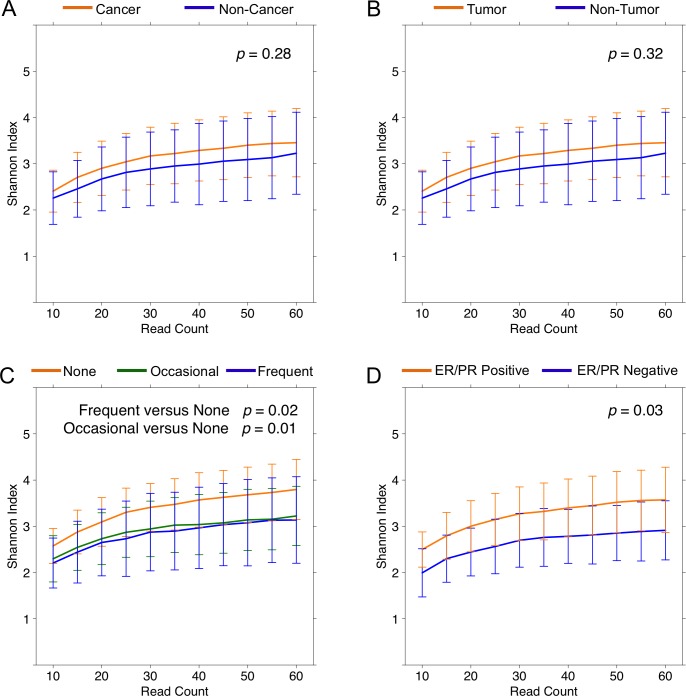
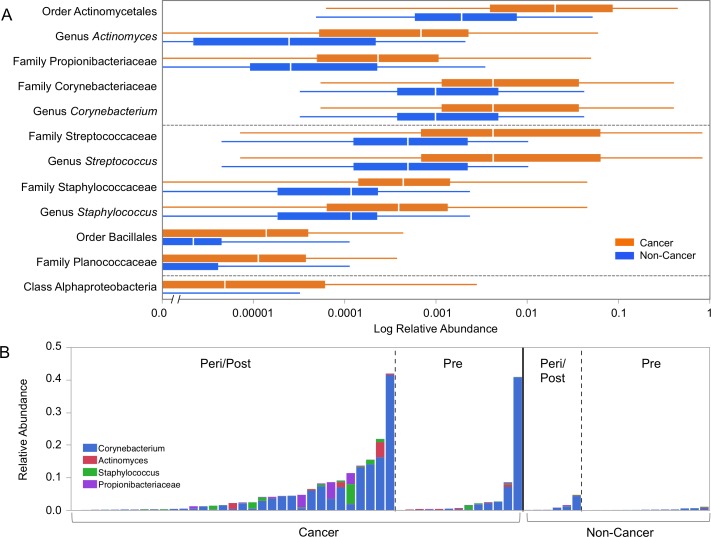
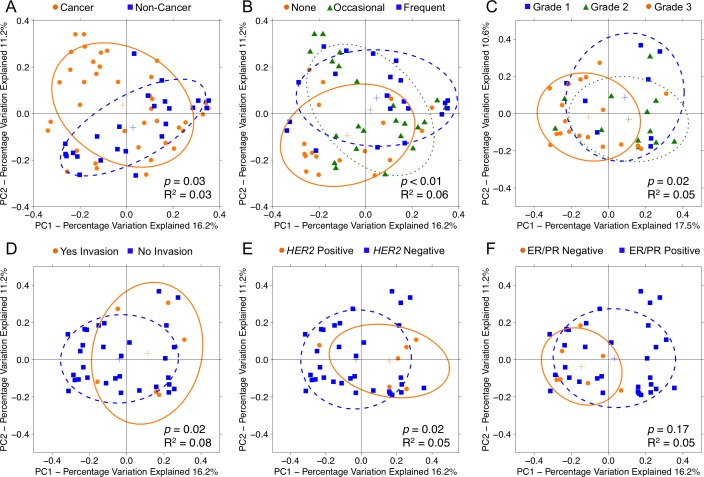
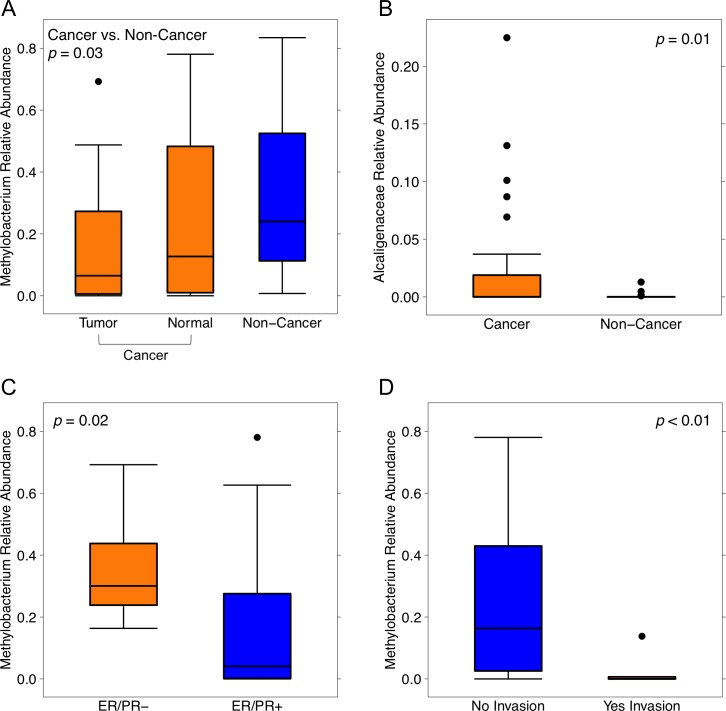
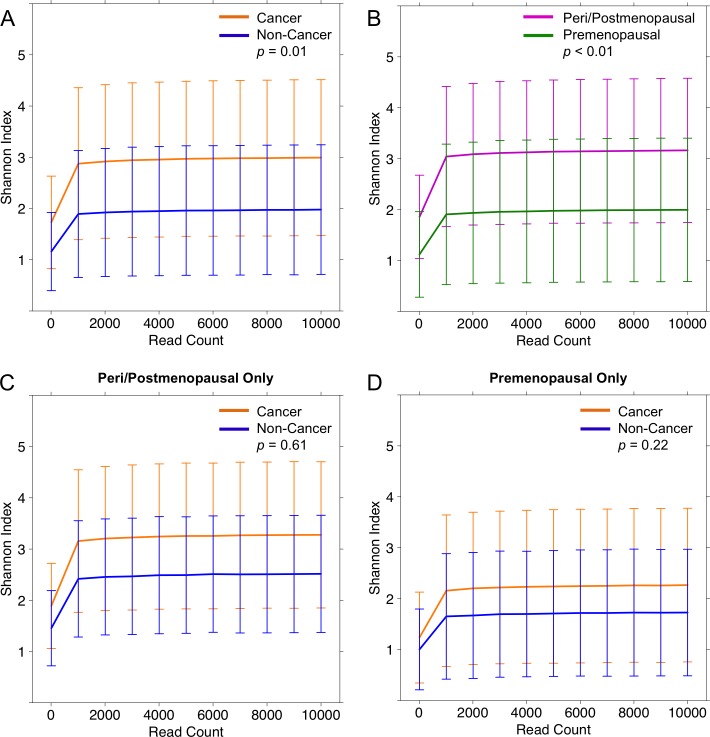
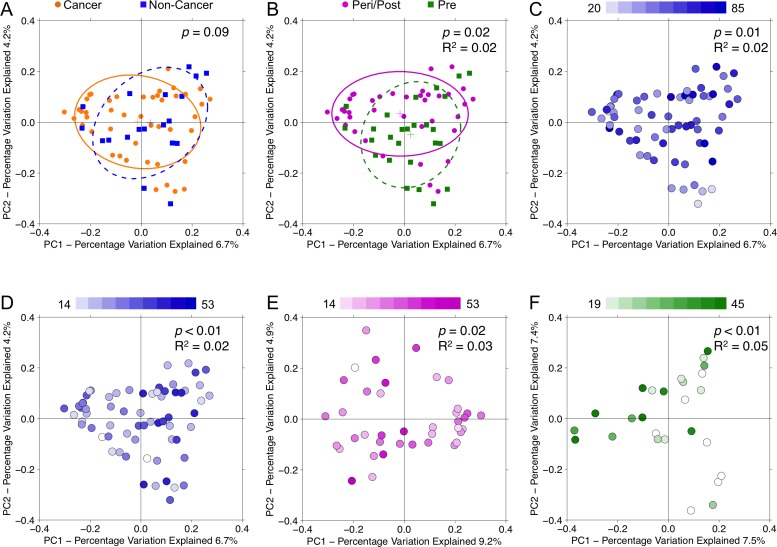
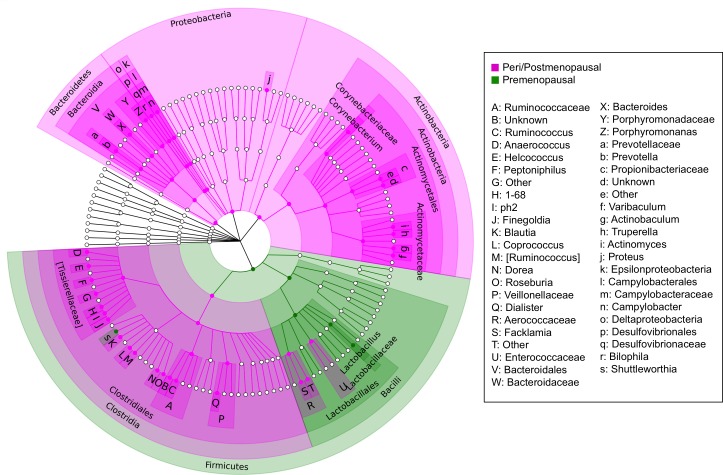
It has long been proposed that the gut microbiome contributes to breast carcinogenesis by modifying systemic estrogen levels. This is often cited as a possible mechanism linking breast cancer and high-fat, low-fiber diets as well as antibiotic exposure, associations previously identified in population-based studies. More recently, a distinct microbiome has been identified within breast milk and tissue, but few studies have characterized differences in the breast tissue microbiota of patients with and without cancer, and none have investigated distant body-site microbiomes outside of the gut. We hypothesize that cancerous breast tissue is associated with a microbiomic profile distinct from that of benign breast tissue, and that microbiomes of more distant sites, the oral cavity and urinary tract, will reflect dysbiosis as well. Fifty-seven women with invasive breast cancer undergoing mastectomy and 21 healthy women undergoing cosmetic breast surgery were enrolled. The bacterial 16S rRNA gene was amplified from urine, oral rinse and surgically collected breast tissue, sequenced, and processed through a QIIME-based bioinformatics pipeline. Cancer patient breast tissue microbiomes clustered significantly differently from non-cancer patients (=0.03), largely driven by decreased relative abundance of in cancer patients (median 0.10 vs. 0.24, =0.03). There were no significant differences in oral rinse samples. Differences in urinary microbiomes were largely explained by menopausal status, with peri/postmenopausal women showing decreased levels of . Independent of menopausal status, however, cancer patients had increased levels of gram-positive organisms including (<0.01), (=0.02) (<0.01), and Propionibacteriaceae (<0.01). Our observations suggest that the local breast microbiota differ in patients with and without breast cancer. Cancer patient urinary microbiomes were characterized by increased levels of gram-positive organisms in this study, but need to be further studied in larger cohorts.
长期以来,人们一直认为肠道微生物群通过改变全身雌激素水平来促进乳腺癌的发生。这通常被认为是将乳腺癌与高脂肪、低纤维饮食以及抗生素暴露联系起来的一种可能机制,此前在基于人群的研究中已发现这些关联。最近,在母乳和组织中发现了一种独特的微生物群,但很少有研究描述患癌和未患癌患者乳腺组织微生物群的差异,也没有研究肠道以外其他身体部位的微生物群。我们假设癌性乳腺组织与不同于良性乳腺组织的微生物群特征相关,并且口腔和尿道等更远部位的微生物群也会表现出生态失调。招募了57名接受乳房切除术的浸润性乳腺癌女性和21名接受美容乳房手术的健康女性。从尿液、口腔冲洗液和手术采集的乳腺组织中扩增细菌16S rRNA基因,进行测序,并通过基于QIIME的生物信息学流程进行处理。癌症患者的乳腺组织微生物群聚类与非癌症患者有显著差异(=0.03),主要是由于癌症患者中 的相对丰度降低(中位数0.10对0.24,=0.03)。口腔冲洗液样本没有显著差异。尿液微生物群的差异很大程度上由绝经状态解释,围绝经期/绝经后女性的 水平降低。然而,与绝经状态无关,癌症患者的革兰氏阳性菌水平升高,包括 (<0.01)、 (=0.02) (<0.01)和丙酸杆菌科(<0.01)。我们的观察结果表明,患癌和未患癌患者的局部乳腺微生物群不同。在本研究中,癌症患者的尿液微生物群以革兰氏阳性菌水平升高为特征,但需要在更大的队列中进一步研究。