Yang Lei, Shen Lei, Li Yue, Li Yanxia, Yu Shijie, Wang Shanshan
Department of Gastroenterology, Key Laboratory of Hubei Province for Digestive System Disease, Renmin Hospital of Wuhan University, Wuhan, 430060 China.
J Inflamm (Lond). 2017 Nov 14;14:25. doi: 10.1186/s12950-017-0172-5. eCollection 2017.
Hyperoside (Hyp) is a flavonoid glycoside compound that has been demonstrated to have anti-inflammatory, anti-apoptotic and antioxidant effects. However, the impact of Hyp on inflammatory bowel disease (IBD) has not been previously explored. Thus, we evaluated the role of Hyp in dextran sodium sulfate (DSS)-induced acute colitis in mice.
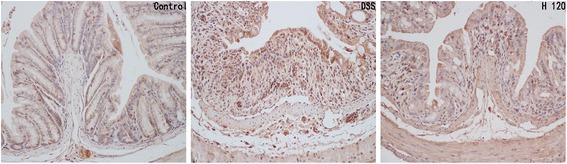
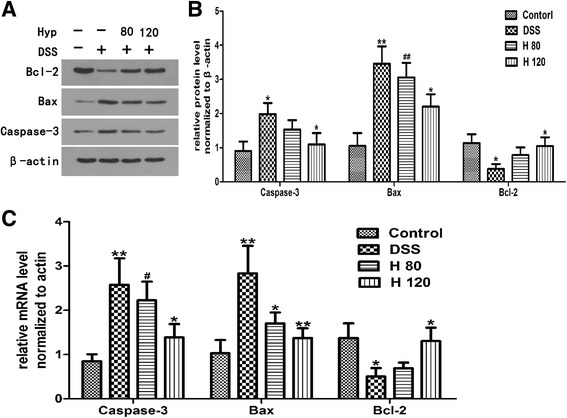
We established a mouse model of experimental acute colitis by treating mice with drinking water supplemented with 3.0% DSS for 7 days. The disease activity index (DAI), colon length, histological features and colonic malondialdehyde (MDA) levels were examined using appropriate methods, and COX-2 expression was examined by immunohistochemistry. TNF-α, IL-4, IL-6, IL-10, NF-κB p65, Bcl-2, Bax, Caspase-3, nuclear factor-erythroid 2-related factor 2 (Nrf2), hemeoxygenase-1 (HO-1) and superoxide dismutase (SOD) levels in colorectal tissues were detected by RT-PCR and western blotting.
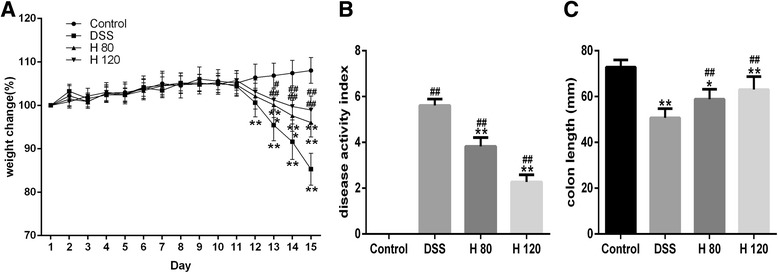
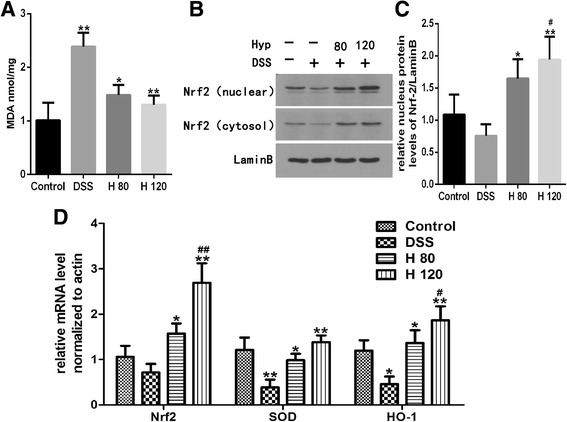
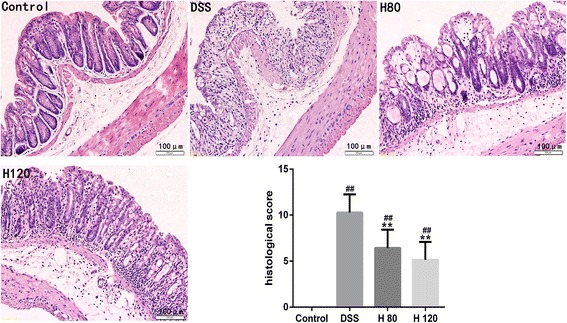
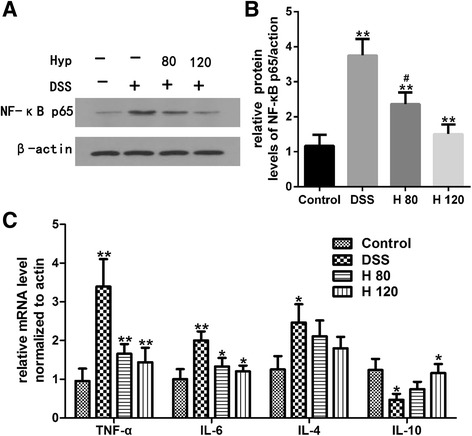
Hyp significantly attenuated DSS-induced changes in the DAI as well as DSS-induced colonic shortening and histological changes. Hyp also inhibited inflammation, a change reflected by decreases in TNF-α, IL-6, COX-2 and NF-κB p65 expression and increases in IL-10 expression. Hyp suppressed increases in the levels of apoptosis-related proteins, such as Caspase-3 and Bax, but upregulated the level of the anti-apoptotic protein Bcl2. In addition, Hyp also exerted antioxidant effects. The MDA content was decreased, and the expression of Nrf2 and its downstream targets HO-1 and SOD were increased by Hyp.
Based on these findings, Hyp possesses the ability to attenuate colitis, possibly by mitigating colonic inflammation and apoptosis via activation of the Nrf2 signaling pathway.
金丝桃苷(Hyp)是一种黄酮苷类化合物,已被证明具有抗炎、抗凋亡和抗氧化作用。然而,Hyp对炎症性肠病(IBD)的影响此前尚未被研究。因此,我们评估了Hyp在葡聚糖硫酸钠(DSS)诱导的小鼠急性结肠炎中的作用。
通过给小鼠饮用含3.0% DSS的水7天,建立实验性急性结肠炎小鼠模型。使用适当方法检测疾病活动指数(DAI)、结肠长度、组织学特征和结肠丙二醛(MDA)水平,并通过免疫组织化学检测COX-2表达。通过RT-PCR和蛋白质免疫印迹法检测结直肠组织中TNF-α、IL-4、IL-6、IL-10、NF-κB p65、Bcl-2、Bax、Caspase-3、核因子红细胞2相关因子2(Nrf2)、血红素加氧酶-1(HO-1)和超氧化物歧化酶(SOD)水平。
Hyp显著减轻了DSS诱导的DAI变化以及DSS诱导的结肠缩短和组织学变化。Hyp还抑制了炎症,这一变化表现为TNF-α、IL-6、COX-2和NF-κB p65表达降低以及IL-10表达增加。Hyp抑制了凋亡相关蛋白如Caspase-3和Bax水平的升高,但上调了抗凋亡蛋白Bcl2的水平。此外,Hyp还发挥了抗氧化作用。Hyp降低了MDA含量,并增加了Nrf2及其下游靶点HO-1和SOD的表达。
基于这些发现,Hyp具有减轻结肠炎的能力,可能是通过激活Nrf2信号通路减轻结肠炎症和凋亡来实现的。