Henan Province Engineering Laboratory for Bioconversion Technology of Functional Microbes, College of Life Sciences, Henan Normal University, Xinxiang, 453007, China.
Advanced Environmental Biotechnology Center, Nanyang Environment and Water Research Institute, Nanyang Technological University, Singapore, 637141, Singapore.
Sci Rep. 2017 Nov 22;7(1):15994. doi: 10.1038/s41598-017-16125-7.
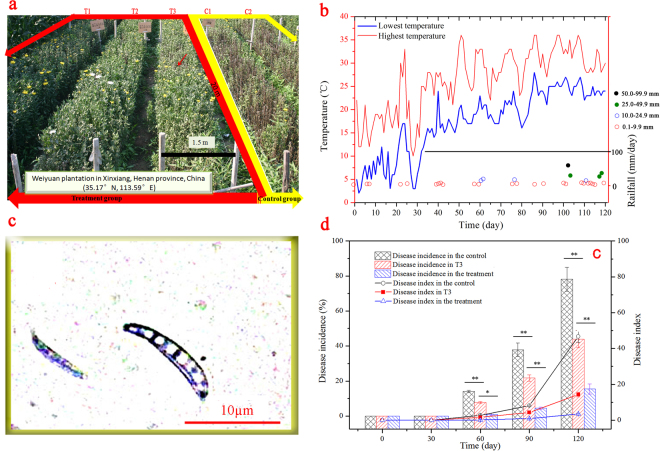
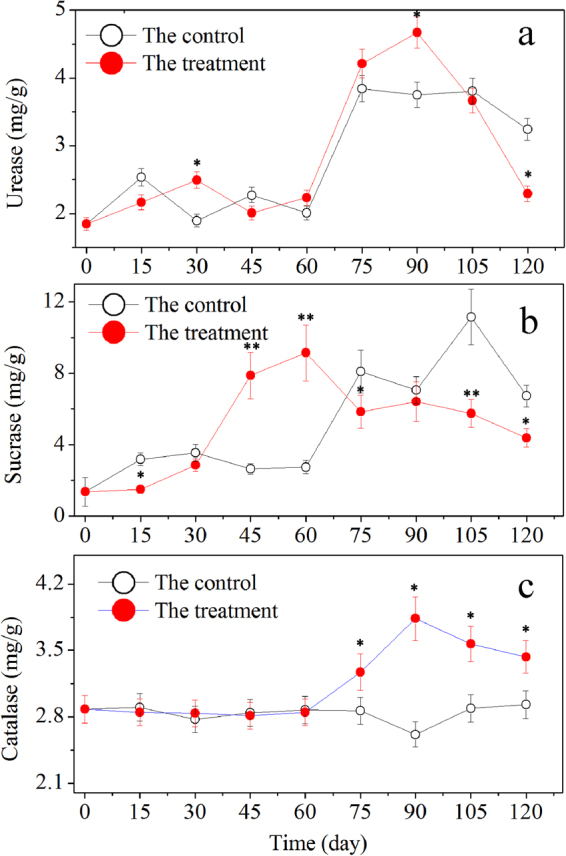
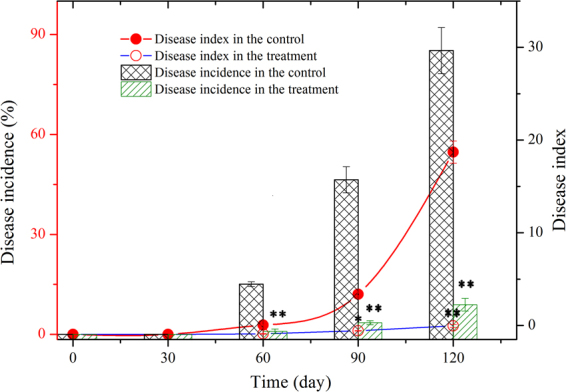
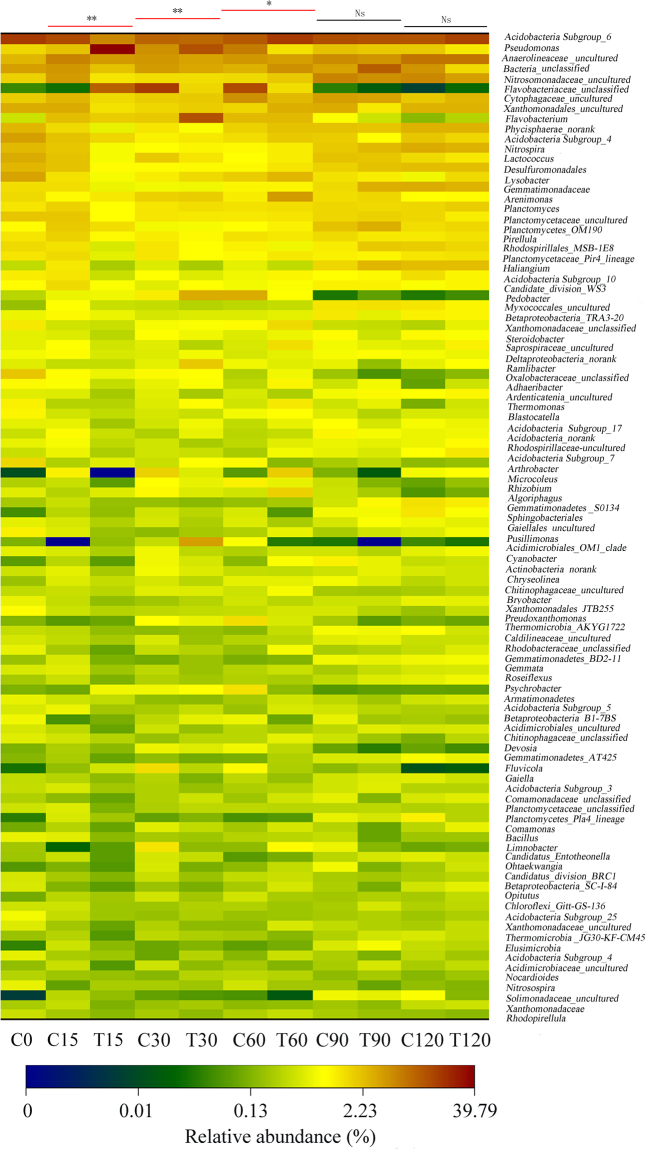
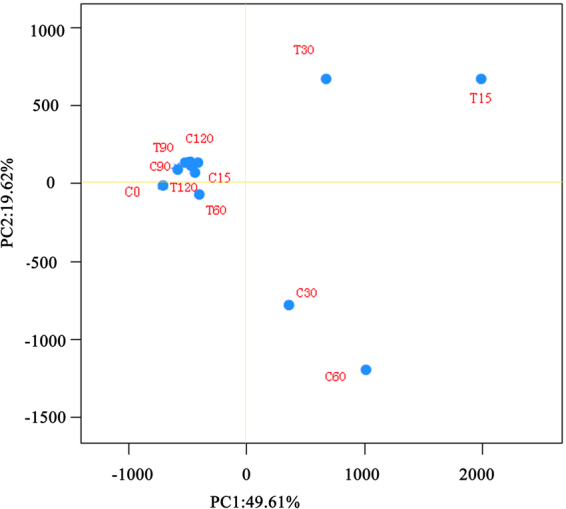
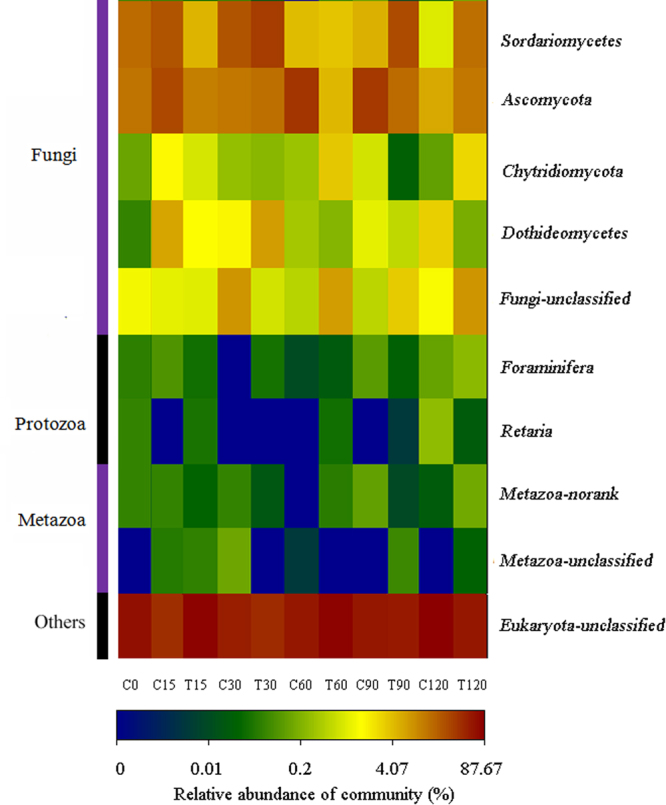
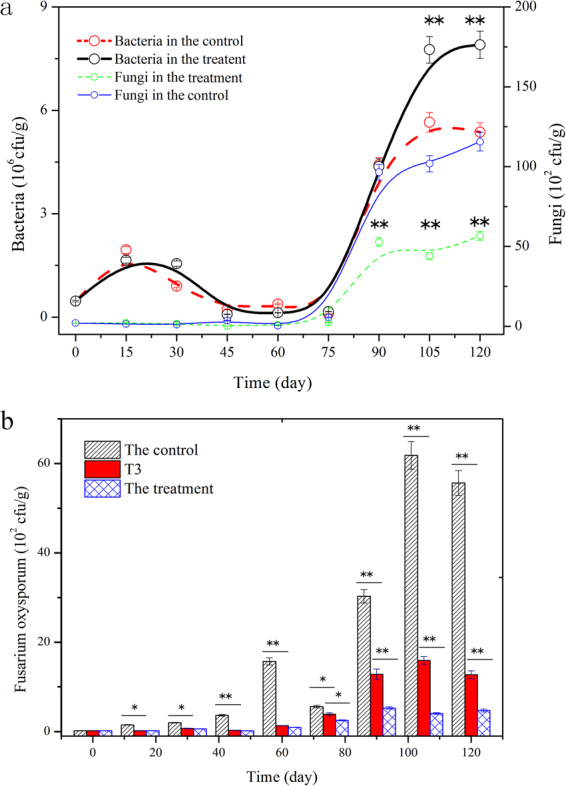
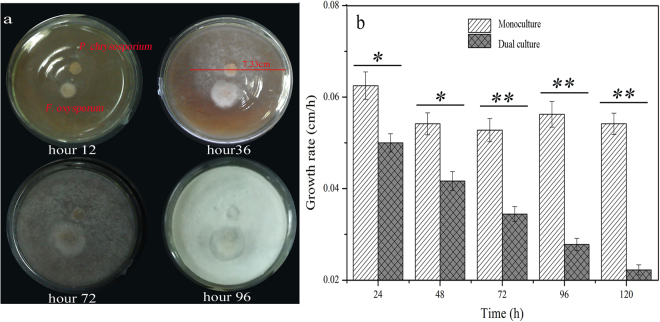
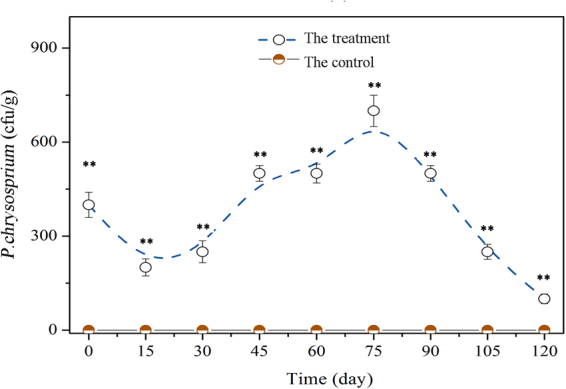
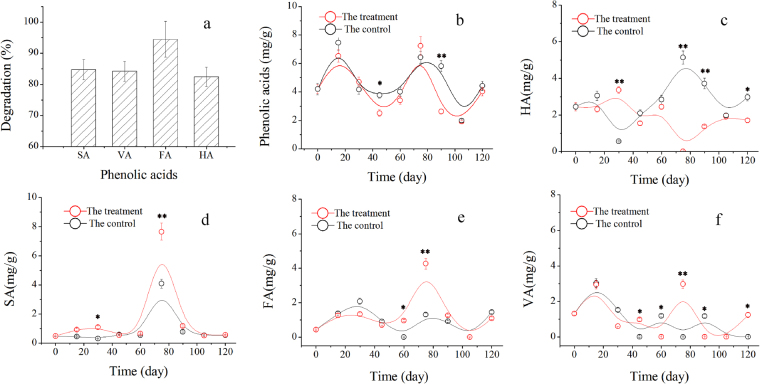
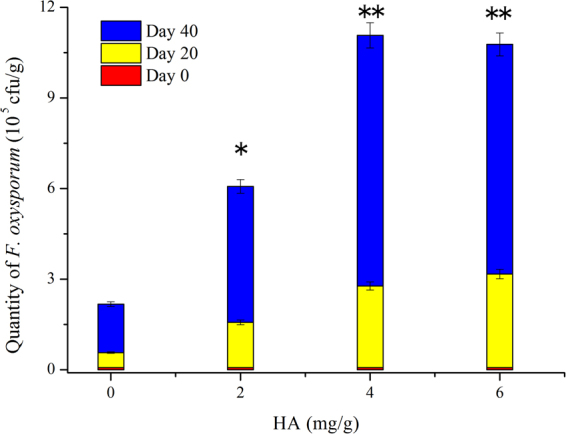
Continuous cropping is a universal challenge in agriculture because it has adverse physiological effects on plants, resulting in stunting, inferior quality, and even massive loss in harvest due to diseases. In this study, Phanerochaete chrysosporium was inoculated into the field in which cut chrysanthemum had already been continuously cropped for five years to control wilt disease. After 120 days of cultivation, the addition of P. chrysosporium significantly improved the physiological status of plants and changed the bacterial and fungal community structure in the soil. The bacterial quantity in the treatment increased by 1.76 times, but the fungal quantity, especially the quantity of Fusarium oxysporum, decreased significantly in comparison with the control. The investigation into the mechanisms of control of Fusarium wilt of cut chrysanthemum by P. chrysosporium showed that P. chrysosporium in soil can inhibit the growth of F. oxysporum and decrease p-hydroxybenzoic acid (HA), which stimulates the propagation of F. oxysporum. Based on current evidence, the inhibition by P. chrysosporium and change in HA appear to be the main causes of the alleviation of wilt disease in the treatment. Other factors, such as nutrients, might also have an influence on the wilt disease of cut chrysanthemum.
连作是农业中普遍存在的难题,因为它对植物产生不良的生理影响,导致植株矮小、品质下降,甚至因病害而大量减产。在这项研究中,将糙皮侧耳接种到已连续种植五年切花菊花的田间,以防治枯萎病。培养 120 天后,添加糙皮侧耳显著改善了植物的生理状态,并改变了土壤中的细菌和真菌群落结构。处理组中的细菌数量增加了 1.76 倍,而真菌数量,特别是尖孢镰刀菌数量,与对照组相比显著减少。对糙皮侧耳防治切花菊花枯萎病的机制的调查表明,土壤中的糙皮侧耳可以抑制尖孢镰刀菌的生长,并降低对其繁殖有刺激作用的对羟基苯甲酸(HA)。基于现有证据,糙皮侧耳的抑制作用和 HA 的变化似乎是处理组中枯萎病缓解的主要原因。其他因素,如养分,也可能对切花菊花枯萎病产生影响。