Gerrish Heather R, Broad Elizabeth, Lacroix Melissa, Ogan Dana, Pritchett Robert C, Pritchett Kelly
Department of Nutrition, Exercise and Health Sciences, Central Washington University, Ellensburg, WA, USA.
US Olympic Committee, Chula Vista, CA, USA.
Int J Exerc Sci. 2017 Nov 1;10(7):1018-1028. doi: 10.70252/FQDQ5053. eCollection 2017.
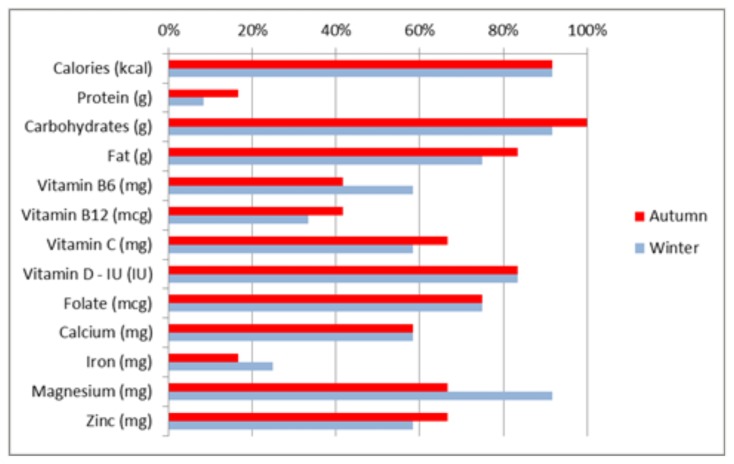
The nutrient needs of athletes with Spinal Cord Injury (SCI) are dependent on their physiological alterations and training status. Limited research is available regarding dietary intake of elite athletes with SCI and possible nutrient deficiencies. Therefore, the purpose of this study was to examine dietary intake of elite athletes with SCI, and determine dietary intake inadequacies based on the Estimated Average Requirement (EAR) comparisons. Additionally, the average energy and macronutrient (carbohydrate, protein, and fat) intake was compared based on level of injury (C level, T1-T6, T7-T12, Lumbar). A total of 39 athletes with a SCI completed a self-reported 24 hour diet recall in autumn and 27 athletes returned to complete a second data collection period (winter). Nutrient inadequacy was estimated by the proportion of athletes with mean intakes below the EAR through the Research Solutions Food Processor Diet Analysis Software (ESHA). Although Macronutrients for both men and women were within acceptable macronutrient distribution range (AMDR) recommendations, low EAR's for various nutrients were consistently found for both men and women. No significant differences were found for energy or macronutrient intake between groups based on level of lesion. Further research is needed to examine nutrient intake using other methods of dietary assessment and to determine the factors that may lead to nutrient insufficiency among elite athletes with SCI.
脊髓损伤(SCI)运动员的营养需求取决于他们的生理变化和训练状况。关于SCI精英运动员的饮食摄入和可能存在的营养缺乏,现有研究有限。因此,本研究的目的是调查SCI精英运动员的饮食摄入情况,并根据估计平均需求量(EAR)比较来确定饮食摄入不足。此外,还根据损伤程度(C级、T1-T6、T7-T12、腰椎)比较了平均能量和宏量营养素(碳水化合物、蛋白质和脂肪)的摄入量。共有39名SCI运动员在秋季完成了一份自我报告的24小时饮食回顾,27名运动员返回完成第二个数据收集期(冬季)。通过研究解决方案食品处理器饮食分析软件(ESHA),以平均摄入量低于EAR的运动员比例来估计营养不足情况。尽管男性和女性的宏量营养素摄入量均在可接受的宏量营养素分布范围(AMDR)建议之内,但男性和女性各种营养素的EAR值一直较低。基于损伤程度分组,在能量或宏量营养素摄入量方面未发现显著差异。需要进一步研究以使用其他饮食评估方法来检查营养摄入情况,并确定可能导致SCI精英运动员营养不足的因素。