Western Australian Centre for Rural Health, The University of Western Australia, 35 Stirling Highway, Perth, WA, 6009, Australia.
Aboriginal and Rural Health Care, The University of Western Australia, 35 Stirling Highway, Perth, WA, 6009, Australia.
BMC Cancer. 2017 Nov 28;17(1):794. doi: 10.1186/s12885-017-3790-7.
Utilisation of radiation therapy for regional Australia and around the world has been the focus of much health policy the last decade. Radiation therapy centres have been built in Australian regional and rural areas to improve access to radiation therapy and reduce the tyranny of distance as a barrier to access. After this the enablers, barriers and perceptions of patients has been evaluated to determine utilisation once centres have been built. Thisreview looks the impact of rural radiation services in the developed world, barriers and enablers of establishing a rural radiation centre, and patients' and service providers' perspectives and preferences around the uptake of rural radiation therapy.
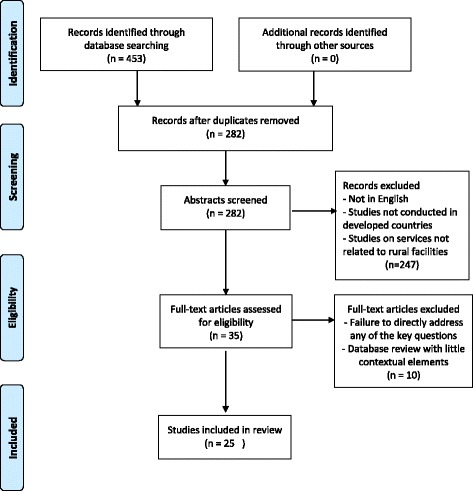
Online search of peer reviewed literature was undertaken using MeSH terms relating to the topic. Inclusion criteria were regional radiation therapy centres in developing countries, any year of publication, in English, and qualitative or quantitative methodologies. Articles were reviewed by two authors with conflicts discussed with a third.
Twenty three studies addressed the theme directly. Distance barriers have been overcome by building regional centres and health economic burden was lower for government service providers with this strategy. However distance still plays an important role in influencing uptake of radiation therapy. Cultural expectations, influence of the family doctor and perception of care was influential. Carer support, duration of displacement from home, financial impact of the required care and seasonal weather were practical factors on a patient's decision.
Regional radiation therapy centres have improved access to radiation therapy in developing countries. However the complex nuances between socio-economic, cultural and health system factors that influence regional patient's decision making bears further consideration, as distance is not the only issue.
在过去十年中,区域澳大利亚和世界各地的放射治疗利用一直是许多卫生政策的重点。为了改善放射治疗的可及性并减少距离作为获取治疗的障碍,澳大利亚的区域和农村地区已经建立了放射治疗中心。在此之后,评估了患者的促进因素、障碍和认知,以确定中心建成后的利用情况。本综述着眼于发达国家农村放射服务的影响、建立农村放射中心的障碍和促进因素,以及患者和服务提供者对接受农村放射治疗的看法和偏好。
使用与主题相关的 MeSH 术语对同行评审文献进行在线搜索。纳入标准为发展中国家的区域放射治疗中心、任何出版年份、英语、定性或定量方法学。由两名作者审查文章,并与第三名作者讨论冲突。
23 项研究直接探讨了这一主题。通过建立区域中心,克服了距离障碍,并且这种策略使政府服务提供者的卫生经济负担降低。然而,距离仍然在影响放射治疗的接受程度方面发挥着重要作用。文化期望、家庭医生的影响和对护理的认知是有影响力的因素。照顾者的支持、离开家的时间长短、所需护理的经济影响以及季节性天气是患者决策的实际因素。
区域放射治疗中心改善了发展中国家的放射治疗可及性。然而,影响区域患者决策的社会经济、文化和卫生系统因素之间的复杂细微差异需要进一步考虑,因为距离不是唯一的问题。