Tushingham Shannon, Fulkerson Tiffany, Hill Katheryn
Department of Anthropology, Washington State University, Pullman, Washington, United States of America.
Department of Anthropology, University of California Davis, Davis, California, United States of America.
PLoS One. 2017 Nov 29;12(11):e0188403. doi: 10.1371/journal.pone.0188403. eCollection 2017.
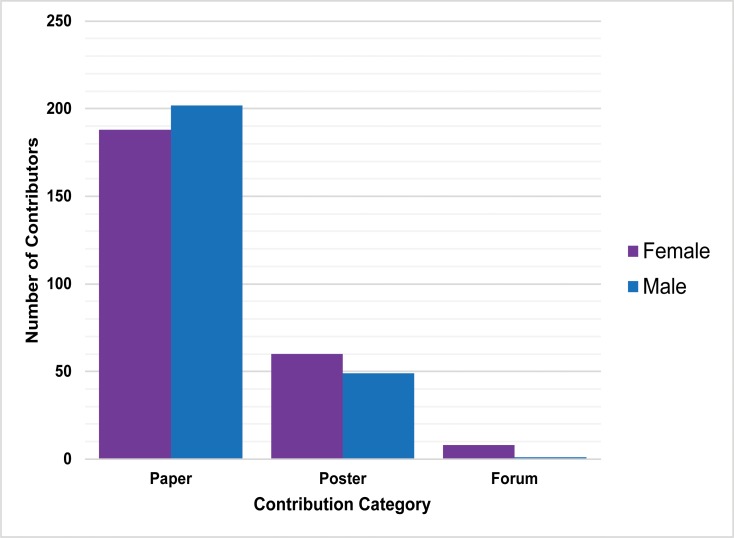
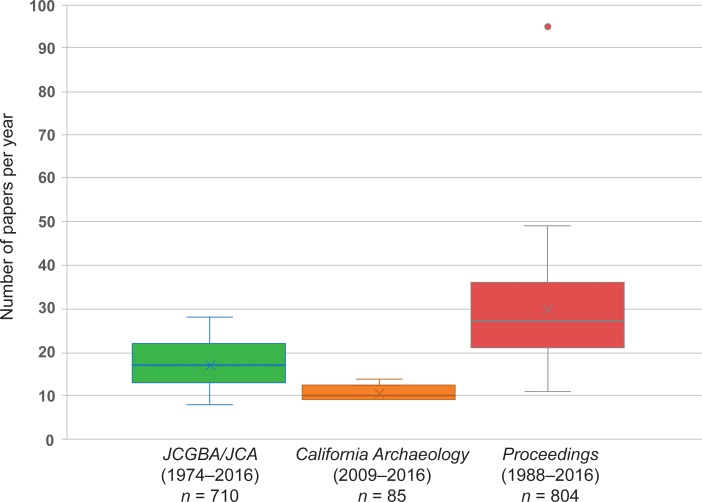
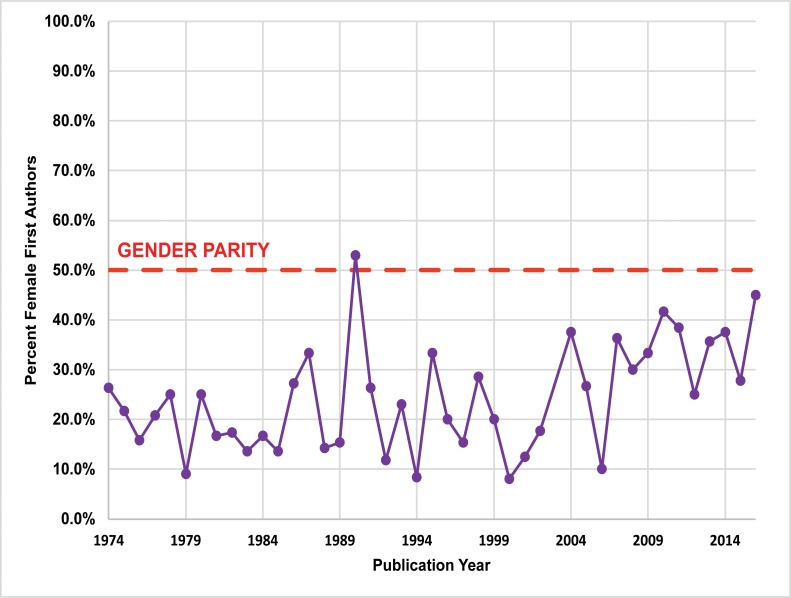
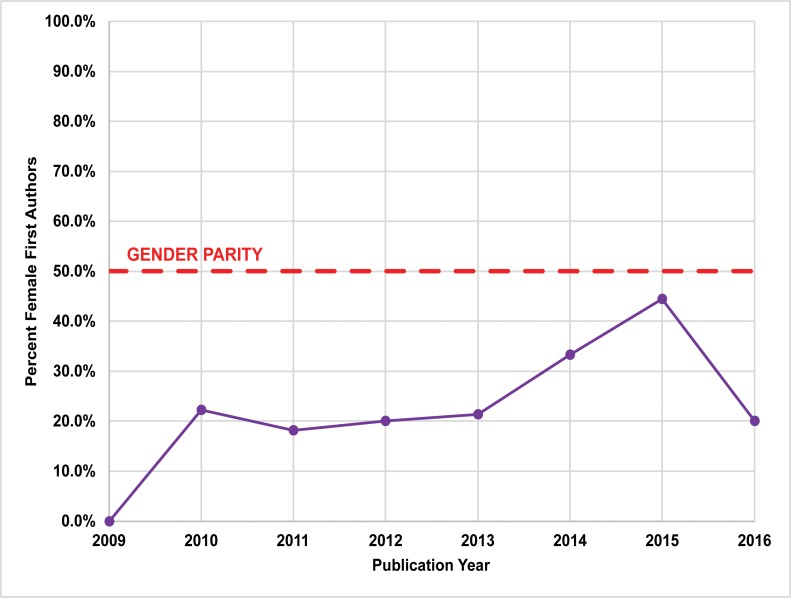
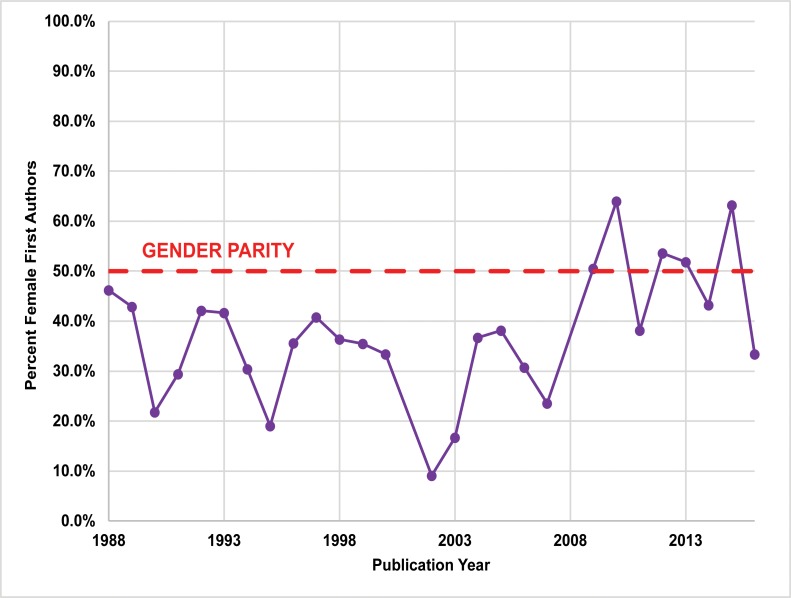
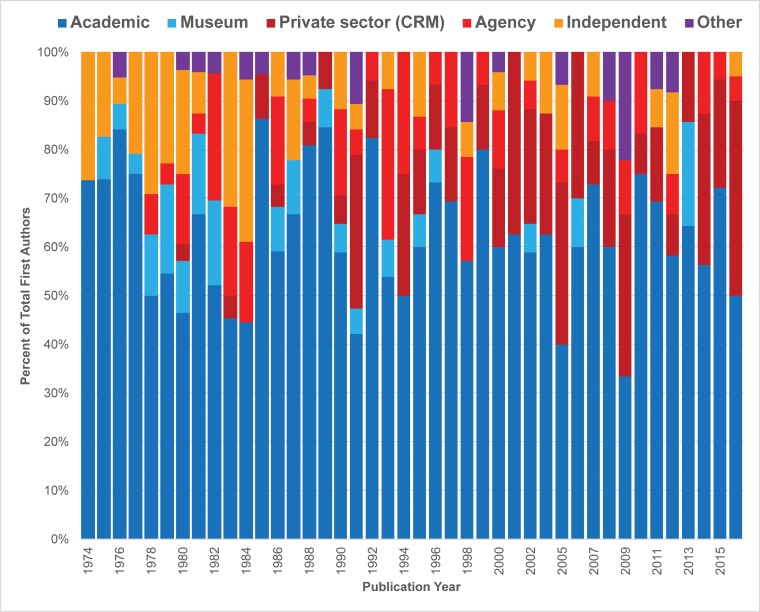
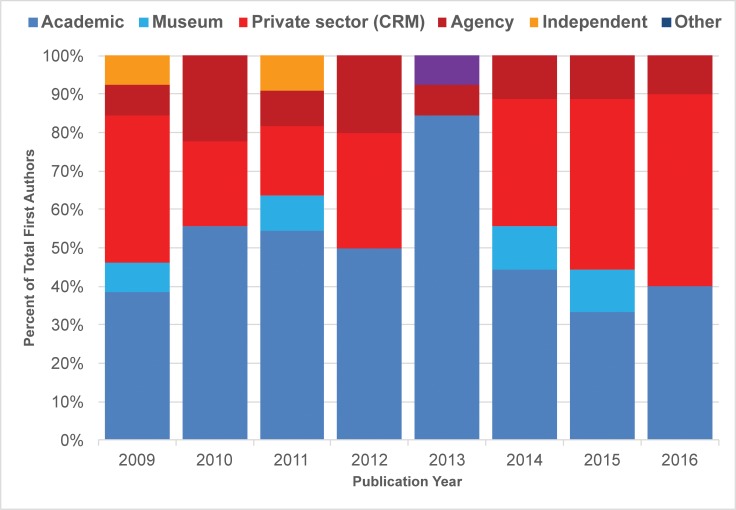
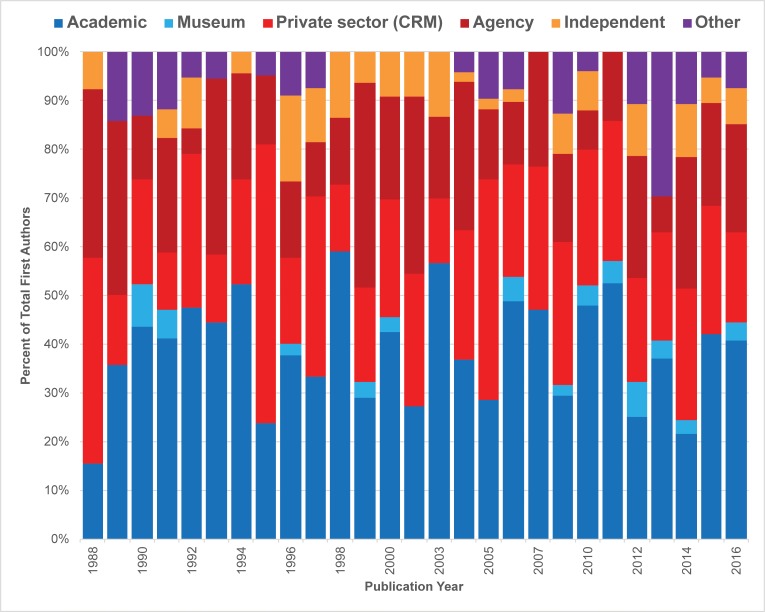
Researchers have repeatedly demonstrated that women continue to be underrepresented in publication output in the sciences. This is true even in female-rich fields such as archaeology. Since most gender-related publication studies rely on data from peer-reviewed journals, it would be instructive, though challenging, to also track publication output in non-refereed and professional or industry venues, which tend to be more accessible to those working in extra-academic settings. This comparison is important in fields such as archaeology in which the vast majority (approximately 90%) of practitioners in the USA work for private sector cultural resource management firms and federal and state agencies. To understand the dynamics of who publishes where, we compiled a new dataset tracking over 40 years of peer-reviewed versus non-peer-reviewed publications that publish articles on the archaeology of California (an American Indian cultural area including southwest Oregon, most of the state of California, and Baja Mexico) and the Great Basin culture area (spanning eight western USA states). Historic gender differences in the publishing output of authors identified as men versus those identified as women were revealed by articles published between 1974 and 2016 in two refereed journals, the Journal of California Anthropology/ Journal of California and Great Basin Anthropology and California Archaeology, and in one un-refereed venue, the Society for California Archaeology Proceedings. Although multiple independent measures indicate that women are contributing and active members of the discipline, publishing records yield more variable results. Specifically, while women have historic and increasingly robust levels of participation in the non-peer-reviewed Proceedings, they remain vastly underrepresented in the two peer-reviewed journals, which are widely regarded as more prestigious and influential. We argue that this "peer review gap" is influenced by variation in the costs (largely time investment) and benefits of publication for people working in different professional roles (e.g., agency professionals, private/cultural resource management firm personnel, tenure-track faculty, adjunct faculty, etc.). We also argue that these cost and benefit variations may ultimately influence the decisions of people of all genders and backgrounds, but, because of the current structure of our discipline-including the fact that women and minorities lag in positions where costly peer-reviewed publication is a rewarded and supported activity-overwhelmingly affect these groups. We recognize that non-refereed publications such as Proceedings provide an important means of bridging the peer review gap and give voice to individuals from diverse backgrounds and perspectives.
研究人员多次证明,在科学领域的出版物产出中,女性的占比仍然较低。即使在考古学等女性从业者众多的领域也是如此。由于大多数与性别相关的出版物研究依赖于同行评审期刊的数据,因此,追踪非评审以及专业或行业渠道的出版物产出,虽然具有挑战性,但可能会很有启发性,这些渠道往往更容易被学术界以外的从业者所接触。这种比较在考古学等领域很重要,在美国,绝大多数(约90%)考古从业者受雇于私营部门文化资源管理公司以及联邦和州机构。为了了解谁在何处发表文章的动态情况,我们编制了一个新的数据集,追踪40多年来同行评审与非同行评审的出版物,这些出版物发表了关于加利福尼亚州(一个包括俄勒冈州西南部、加利福尼亚州大部分地区和墨西哥下加利福尼亚州的美洲印第安文化区)和大盆地文化区(横跨美国西部八个州)考古学的文章。1974年至2016年期间在两份同行评审期刊《加利福尼亚人类学杂志/加利福尼亚和大盆地人类学杂志》以及《加利福尼亚考古学》,以及一份非评审渠道《加利福尼亚考古学会会刊》上发表的文章,揭示了被认定为男性与女性作者在出版产出方面的历史性别差异。尽管多项独立指标表明女性是该学科的贡献者和活跃成员,但出版记录得出的结果却更具变数。具体而言,虽然女性在非同行评审的《会刊》中的参与度一直很高且呈上升趋势,但在两份被广泛认为更具声望和影响力的同行评审期刊中,她们的占比仍然极低。我们认为,这种“同行评审差距”受到不同职业角色(如机构专业人员、私营/文化资源管理公司人员、终身教职教员、兼职教员等)的人员在出版成本(主要是时间投入)和收益方面差异的影响。我们还认为,这些成本和收益差异最终可能会影响所有性别和背景的人的决策,但由于我们学科目前的结构——包括女性和少数族裔在那些高成本的同行评审出版活动得到奖励和支持的职位上滞后这一事实——这些差异对这些群体的影响尤为巨大。我们认识到,像《会刊》这样的非评审出版物是弥合同行评审差距的重要手段,能让来自不同背景和观点的人发声。