Saggu Sandeep Kaur, Mishra Prakash Chandra
Department of Biotechnology, Guru Nanak Dev University, Amritsar, Punjab, India.
PLoS One. 2017 Nov 30;12(11):e0188724. doi: 10.1371/journal.pone.0188724. eCollection 2017.
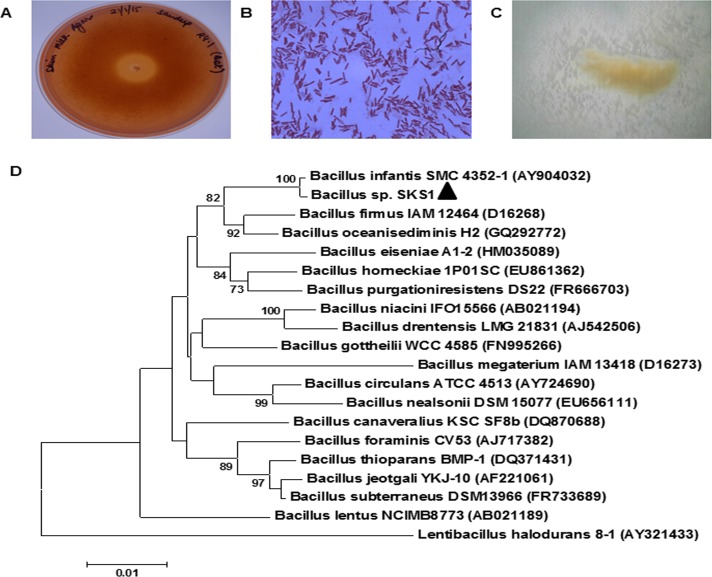
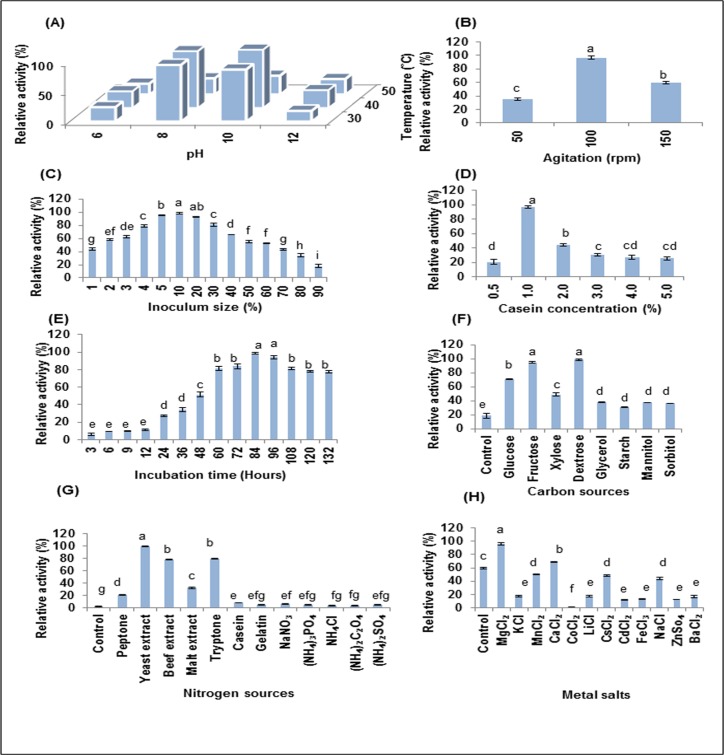
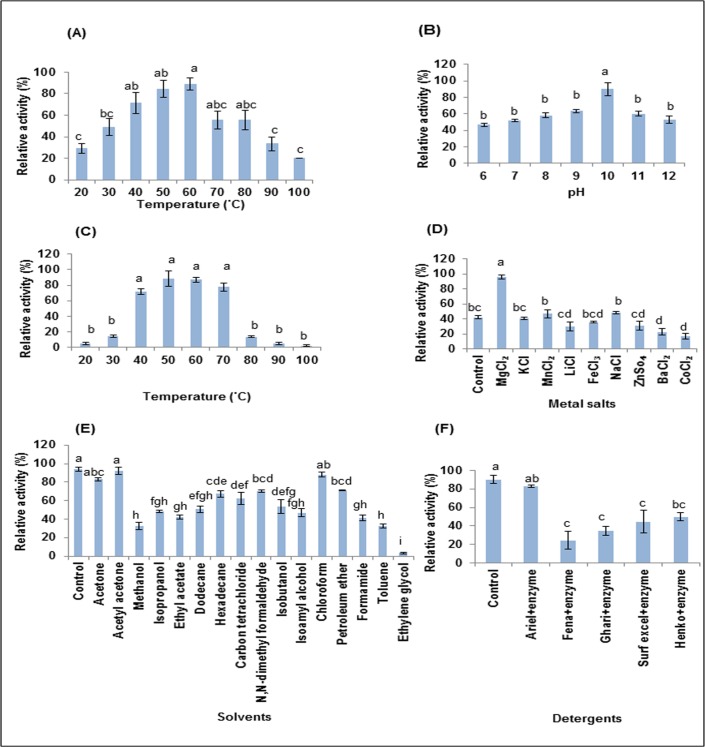
Proteases are one of the largest groups of hydrolytic enzymes constituting about 60% of total worldwide sales of industrial enzymes due to their wide applications in detergent, leather, textile, food and pharmaceutical industry. Microbial proteases have been preferred over animal and plant proteases because of their fundamental features and ease in production. Bacillus infantis SKS1, an alkaline protease producing bacteria has been isolated from garden soil of north India and identified using morphological, biochemical and molecular methods. 16S rDNA sequence amplified using universal primers has 99% sequence identity with corresponding gene sequence of Bacillus infantis strain FM 34 and Bacillus sp. Beige. The bacterial culture and its 16S rDNA gene sequence have been deposited to Microbial Culture Collection (Pune, India) with accession number MCC 3035 and GenBank with accession number KR092197 respectively. The partially purified extract of Bacillus infantis SKS1 was thermostable and active in presence of Mg2+, acetyl acetone and laundry detergents implicating its application in industry. Production of these enzymes using this strain was maximized by optimization of various parameters including temperature, pH, media components and other growth conditions. Our results show that fructose and dextrose serve as the best carbon sources for production of these enzymes, highlighting the use of this strain for enzyme production utilizing relatively inexpensive substrates like beet molasses and corn steep liquor. Additionally, this strain showed maximum production of enzymes at 40°C similar to bacterial species used for commercial production of alkaline proteases. Characterization of alkaline proteases from this strain of Bacillus infantis and optimization of parameters for its production would help in understanding its industrial application and large-scale production.
蛋白酶是水解酶中最大的类别之一,由于其在洗涤剂、皮革、纺织、食品和制药行业的广泛应用,占全球工业酶总销售额的约60%。由于微生物蛋白酶的基本特性和易于生产,它们比动物和植物蛋白酶更受青睐。婴儿芽孢杆菌SKS1是一种产生碱性蛋白酶的细菌,已从印度北部的花园土壤中分离出来,并通过形态学、生物化学和分子方法进行了鉴定。使用通用引物扩增的16S rDNA序列与婴儿芽孢杆菌菌株FM 34和芽孢杆菌属米色菌株的相应基因序列具有99%的序列同一性。该细菌培养物及其16S rDNA基因序列已分别保藏于微生物培养物保藏中心(印度浦那),保藏编号为MCC 3035,以及GenBank,保藏编号为KR092197。婴儿芽孢杆菌SKS1的部分纯化提取物具有热稳定性,并且在Mg2+、乙酰丙酮和洗衣粉存在的情况下具有活性,这表明其在工业中的应用。通过优化包括温度、pH、培养基成分和其他生长条件在内的各种参数,使该菌株生产这些酶的产量最大化。我们的结果表明,果糖和葡萄糖是生产这些酶的最佳碳源,突出了利用该菌株利用甜菜糖蜜和玉米浆等相对廉价的底物生产酶的用途。此外,该菌株在40°C时酶产量最高,与用于商业生产碱性蛋白酶的细菌种类相似。对该婴儿芽孢杆菌菌株碱性蛋白酶的表征及其生产参数的优化将有助于了解其工业应用和大规模生产。