Song In-Sung, Jeong Yu Jeong, Seo Young Jin, Byun Jung Mi, Kim Young Nanm, Jeong Dae Hoon, Han Jin, Kim Ki Tae, Jang Sung-Wuk
Department of Biomedical Sciences, College of Medicine, Ulsan University, Asan Medical Center, Seoul, Republic of Korea.
Department of Obstetrics & Gynecology, Paik Institute for Clinical Research, Busan Paik Hospital, Inje University, Busan, Republic of Korea.
Oncotarget. 2017 Oct 6;8(54):92788-92800. doi: 10.18632/oncotarget.21580. eCollection 2017 Nov 3.
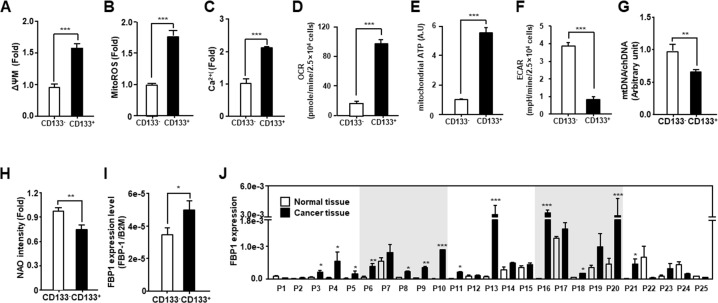
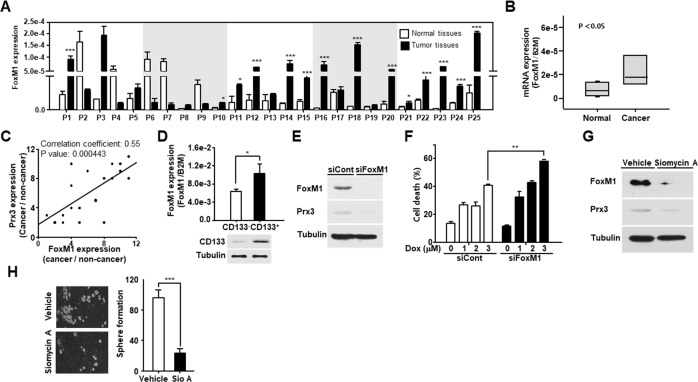
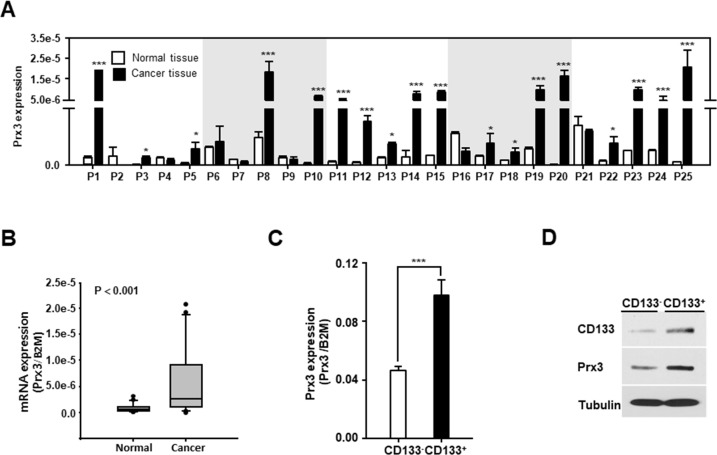
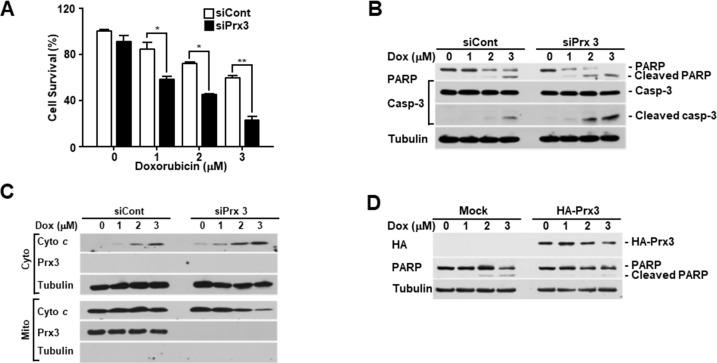
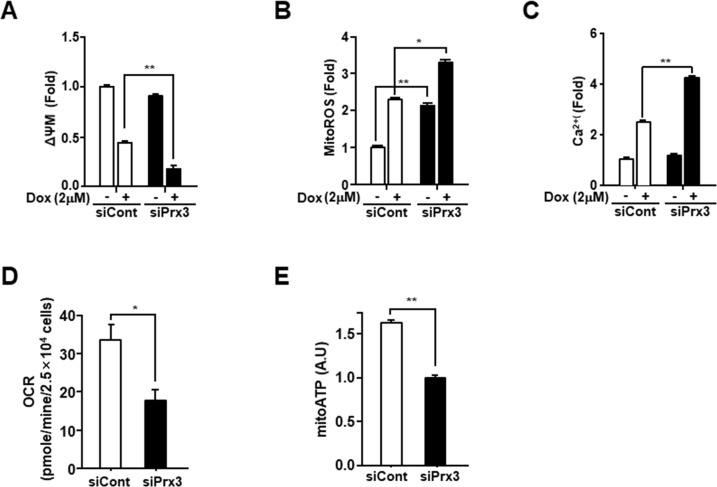
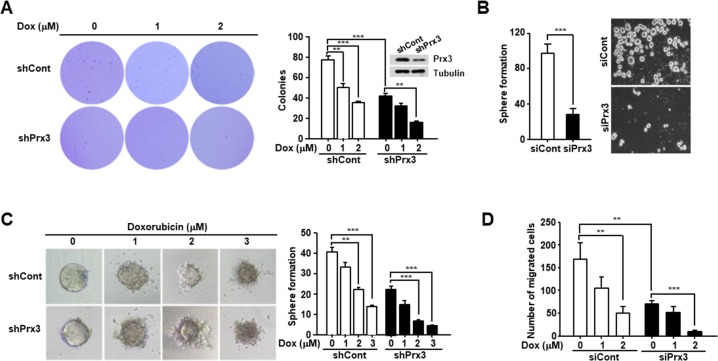
Cancer stem cell (CSC)-targeted therapy could reduce tumor growth, recurrence, and metastasis in endometrial cancer (EC). The mitochondria of CSCs have been recently found to be an important target for cancer treatment, but the mitochondrial features of CSCs and their regulators, which maintain mitochondrial function, remain unclear. Here, we investigated the mitochondrial properties of CSCs, and identified specific targets for eliminating CSCs in EC. We found that endometrial CSCs displayed higher mitochondrial membrane potential, Ca, reactive oxygen species, ATP levels, and oxygen consumption rates than non-CSCs. Further, we also verified that mitochondrial peroxiredoxin 3 (Prx3) was upregulated, and that it contributed to the survival of CSCs in EC. The knockdown of the Prx3 gene resulted not only in decreased sphere formation, but also reduced the viability of endometrial CSCs, by causing mitochondrial dysfunction. Furthermore, we found that the forkhead box protein M1 (FoxM1), an important transcriptional factor, is overexpressed in patients with EC. FoxM1 expression correlates with elevated Prx3 expression levels, in agreement with the tumorigenic ability of Prx3 in endometrial CSCs. Taken together, our findings indicate that human endometrial CSCs have enhanced mitochondrial function compared to that of endometrial tumor cells. Endometrial CSCs show increased expression of the mitochondrial Prx3, which is required for the maintenance of mitochondrial function and survival, and is induced by FoxM1. Based on our findings, we believe that these proteins might represent valuable therapeutic targets and could provide new insights into the development of new therapeutic strategies for patients with endometrial cancer.
靶向癌症干细胞(CSC)的疗法可减少子宫内膜癌(EC)的肿瘤生长、复发和转移。最近发现CSC的线粒体是癌症治疗的重要靶点,但CSC的线粒体特征及其维持线粒体功能的调节因子仍不清楚。在此,我们研究了CSC的线粒体特性,并确定了消除EC中CSC的特定靶点。我们发现,与非CSC相比,子宫内膜CSC表现出更高的线粒体膜电位、钙离子、活性氧物种、ATP水平和氧消耗率。此外,我们还证实线粒体过氧化物酶体增殖物激活受体3(Prx3)上调,并且它有助于EC中CSC的存活。Prx3基因的敲低不仅导致球体形成减少,还通过引起线粒体功能障碍降低了子宫内膜CSC的活力。此外,我们发现重要的转录因子叉头框蛋白M1(FoxM1)在EC患者中过表达。FoxM1表达与Prx3表达水平升高相关,这与Prx3在子宫内膜CSC中的致瘤能力一致。综上所述,我们的研究结果表明,与子宫内膜肿瘤细胞相比,人子宫内膜CSC具有增强的线粒体功能。子宫内膜CSC显示线粒体Prx3表达增加,这是维持线粒体功能和存活所必需的,并且由FoxM1诱导。基于我们的研究结果,我们认为这些蛋白质可能是有价值的治疗靶点,并可为子宫内膜癌患者新治疗策略的开发提供新的见解。