Laboratory of Experimental Microbiology, Graduate Program in Health Sciences, Health Sciences Unit, University of Southern Santa Catarina, Criciúma, SC, Brazil.
Translational Psychiatry Program, Department of Psychiatry and Behavioral Sciences, McGovern Medical School, The University of Texas Health Science Center at Houston (UTHealth), Houston, TX, USA.
Mediators Inflamm. 2017;2017:6490652. doi: 10.1155/2017/6490652. Epub 2017 Oct 22.
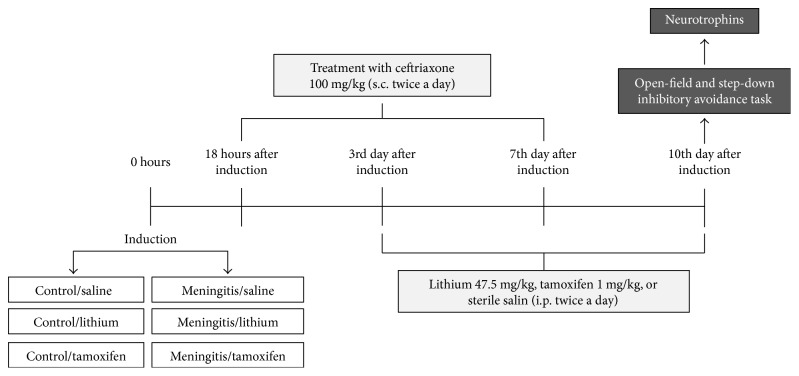
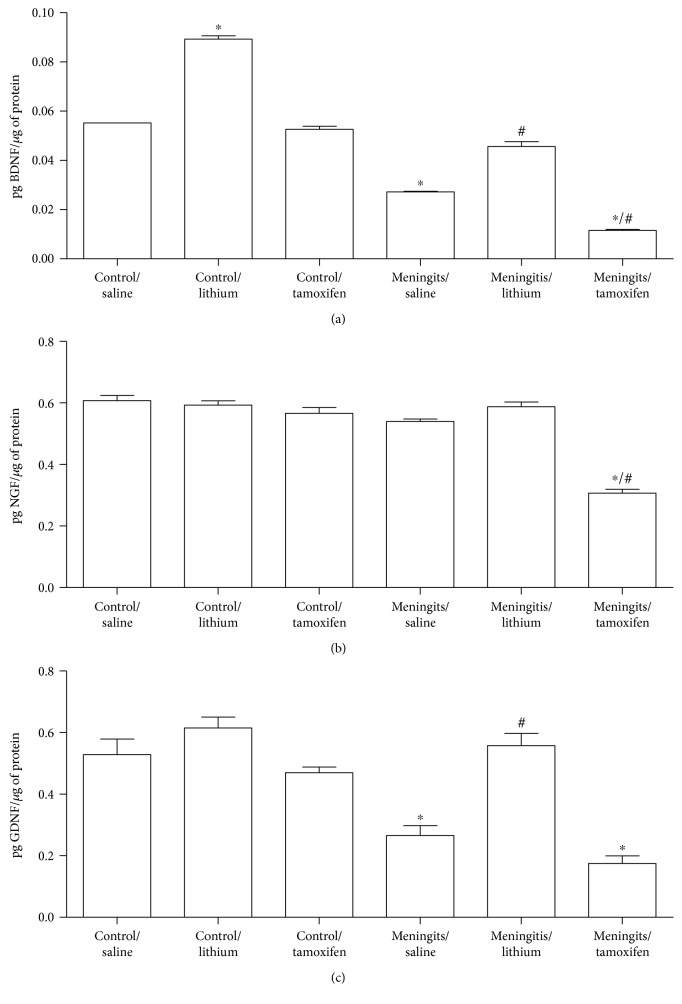
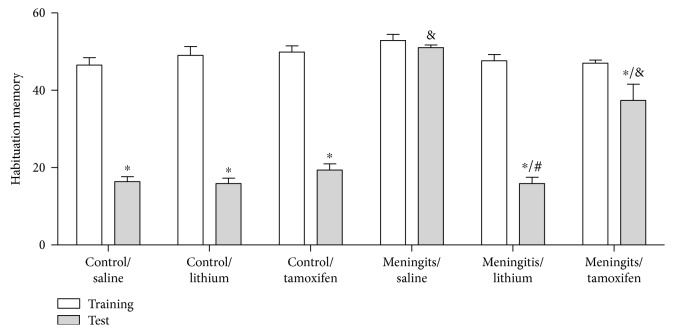
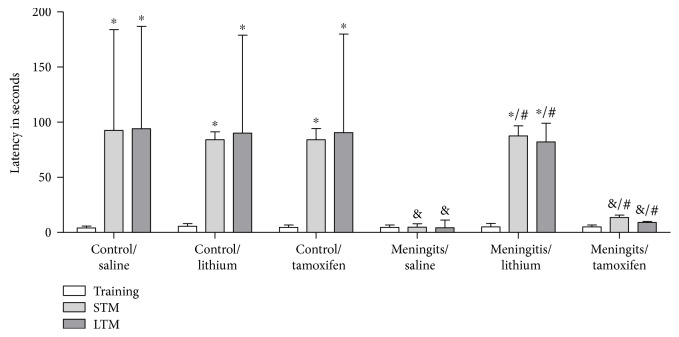
The aim of this study was to investigate the effects of lithium on brain-derived neurotrophic factor (BDNF), nerve growth factor (NGF), and glial cell line-derived neurotrophic factor (GDNF) expression in the hippocampus and on memory in experimental pneumococcal meningitis. The mood-stabilizer lithium is known as a neuroprotective agent with many effects on the brain. In this study, animals received either artificial cerebrospinal fluid or suspension at a concentration of 5 × 10 CFU/mL. Eighteen hours after induction, all animals received ceftriaxone. The animals received saline or lithium (47.5 mg/kg) or tamoxifen (1 mg/kg) as adjuvant treatment, and they were separated into six groups: control/saline, control/lithium, control/tamoxifen, meningitis/saline, meningitis/lithium, and meningitis/tamoxifen. Ten days after meningitis induction, animals were subjected to open-field habituation and the step-down inhibitory avoidance tasks. Immediately after these tasks, the animals were killed and their hippocampus was removed to evaluate the expression of BDNF, NGF, and GDNF. In the meningitis group, treatment with lithium and tamoxifen resulted in improvement in memory. Meningitis group showed decreased expression of BDNF and GDNF in the hippocampus while lithium reestablished the neurotrophin expression. Lithium was able to prevent memory impairment and reestablishes hippocampal neurotrophin expression in experimental pneumococcal meningitis.