Lippok Norman, Villiger Martin, Albanese Alexandre, Meijer Eelco F J, Chung Kwanghun, Padera Timothy P, Bhatia Sangeeta N, Bouma Brett E
Harvard Medical School, Boston, MA, USA.
Wellman Center for Photomedicine, Massachusetts General Hospital, Boston, MA, USA.
Nat Photonics. 2017;11:583-588. doi: 10.1038/nphoton.2017.128. Epub 2017 Jul 31.
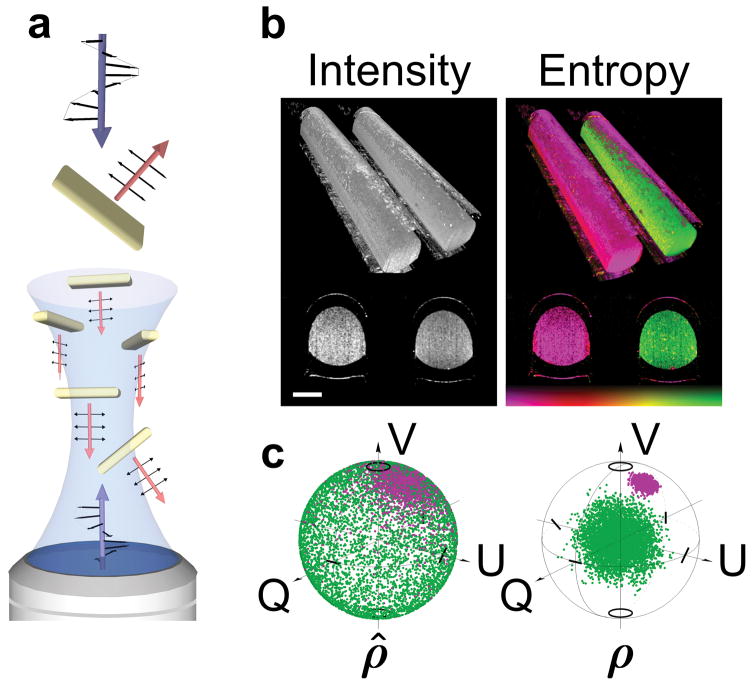
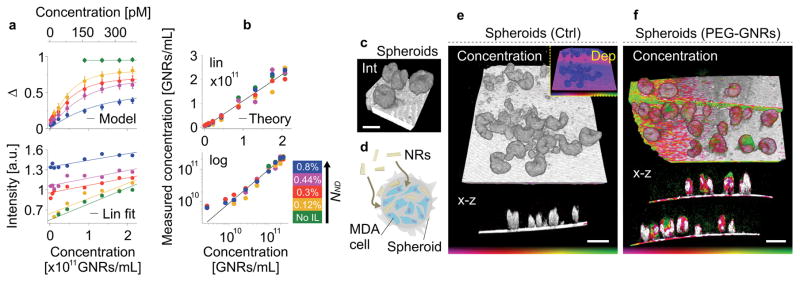
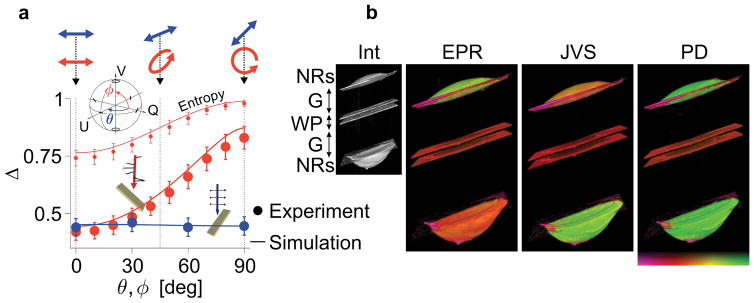
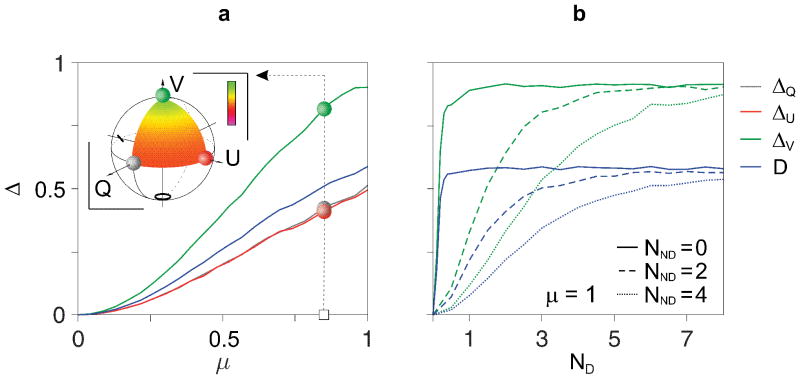
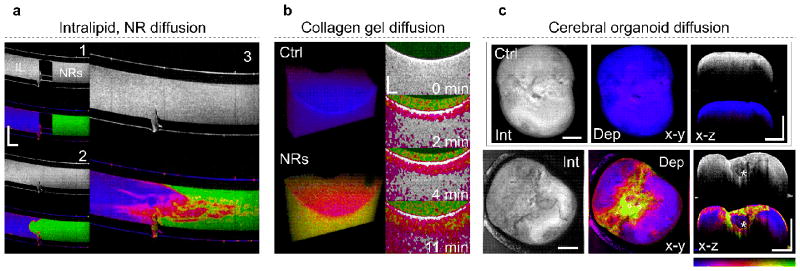
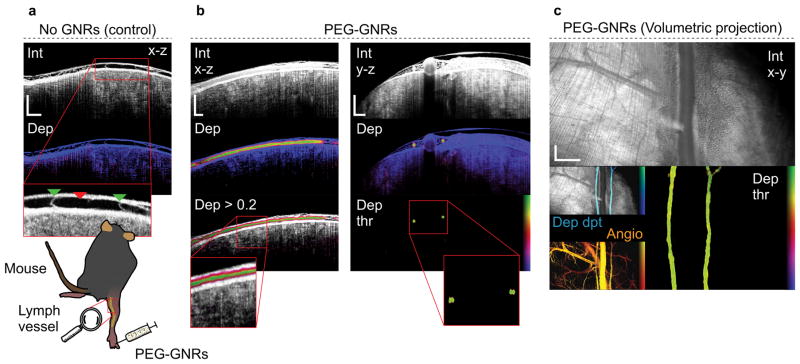
Owing to their electromagnetic properties, tunability and biocompatibility, gold nanorods (GNRs) are being investigated as multifunctional probes for a range of biomedical applications. However, detection beyond the reach of traditional fluorescence and two-photon approaches and quantitation of their concentration in biological tissue remain challenging tasks in microscopy. Here we show how the size and aspect ratio that impart GNRs with their plasmonic properties also make them a source of entropy. We report on how depolarization can be exploited as a strategy to visualize GNR diffusion and distribution in biologically relevant scenarios , and . We identify a deterministic relation between depolarization and nanoparticle concentration. As a result, some of the most stringent experimental conditions can be relaxed, and susceptibility to artefacts is reduced, enabling microscopic and macroscopic applications.
由于其电磁特性、可调谐性和生物相容性,金纳米棒(GNRs)正在作为一系列生物医学应用的多功能探针进行研究。然而,在显微镜下,传统荧光和双光子方法无法检测到的范围以及在生物组织中对其浓度进行定量,仍然是具有挑战性的任务。在这里,我们展示了赋予GNRs等离子体特性的尺寸和纵横比如何也使它们成为熵的来源。我们报告了如何将去极化作为一种策略,以可视化GNRs在生物相关场景中的扩散和分布,以及。我们确定了去极化与纳米颗粒浓度之间的确定性关系。因此,一些最严格的实验条件可以放宽,对伪影的敏感性降低,从而实现微观和宏观应用。