She Guorong, Zhou Ziqi, Zha Zhengang, Wang Fei, Pan Xiaoting
Department of Orthopedics, The First Affiliated Hospital of Jinan University, Guangzhou, Guangdong 510630, P.R. China.
Department of Radiation Therapy, Peking Union Medical College Hospital (East), Beijing 100000, P.R. China.
Exp Ther Med. 2017 Nov;14(5):4901-4909. doi: 10.3892/etm.2017.5135. Epub 2017 Sep 19.
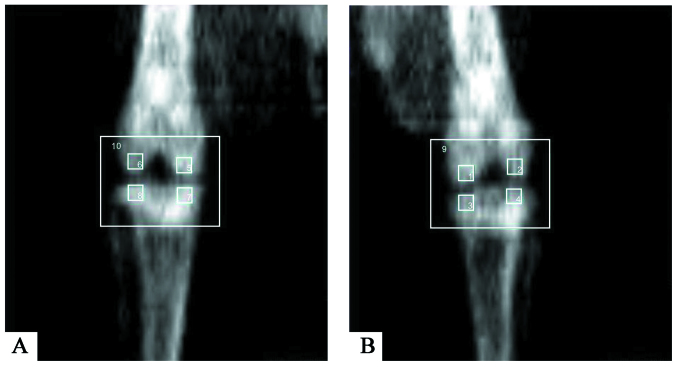
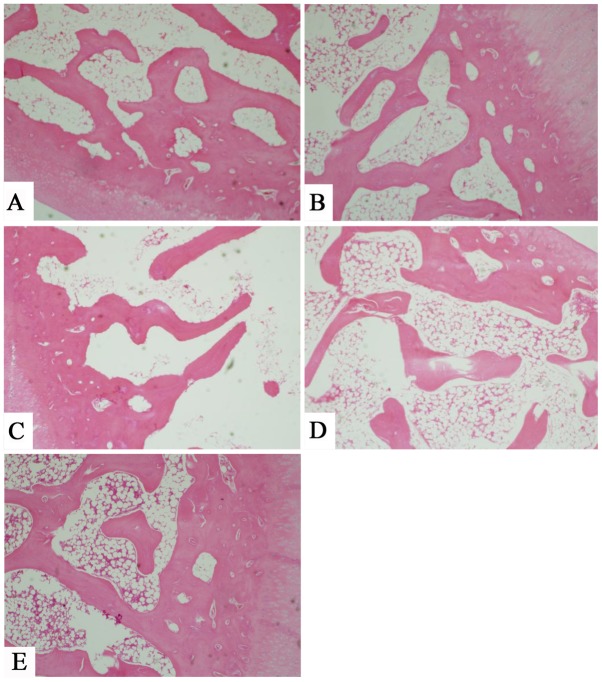
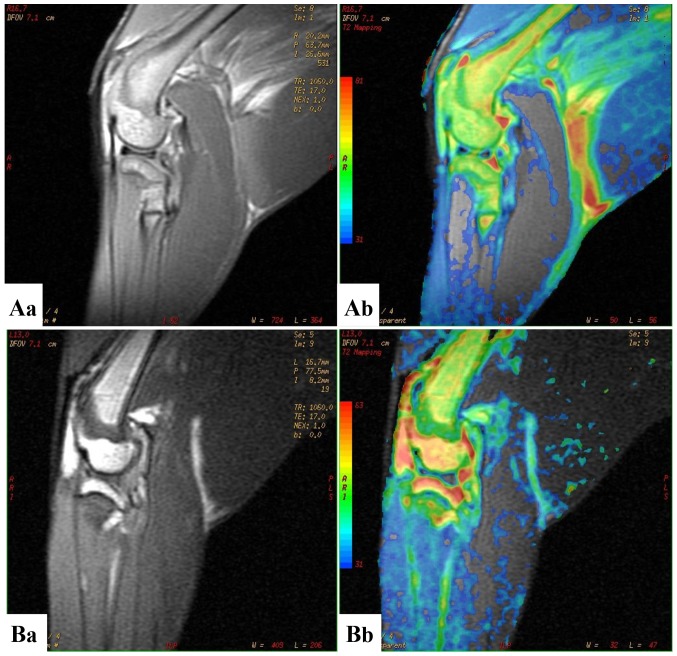
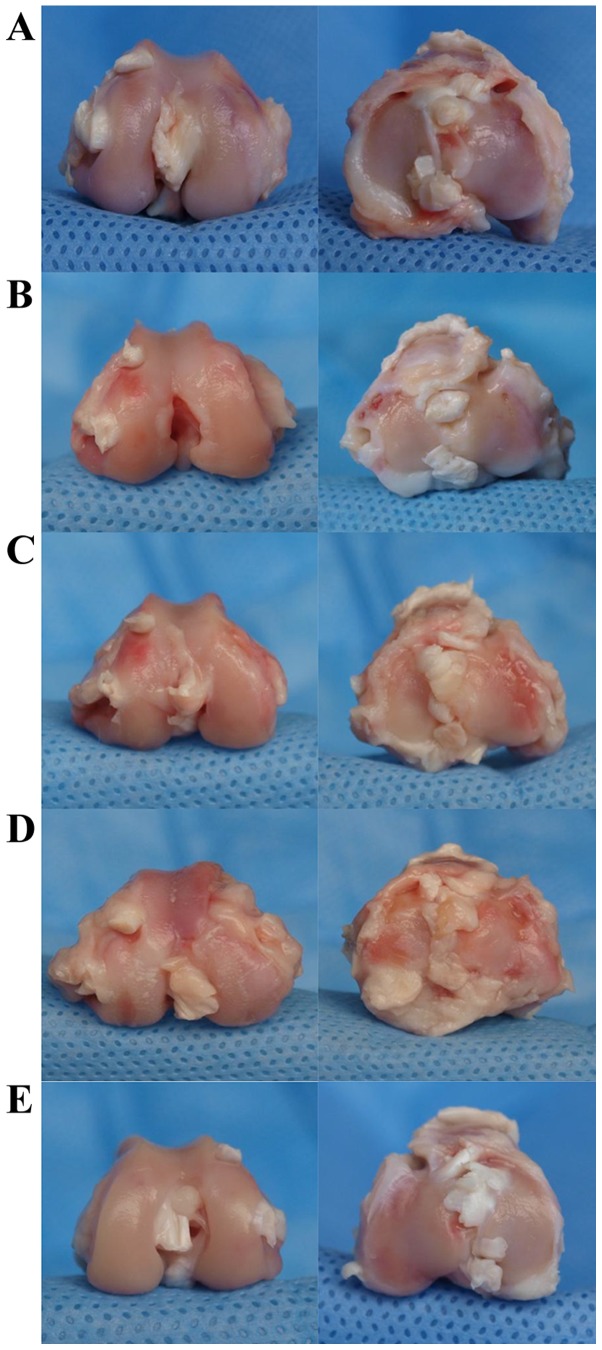
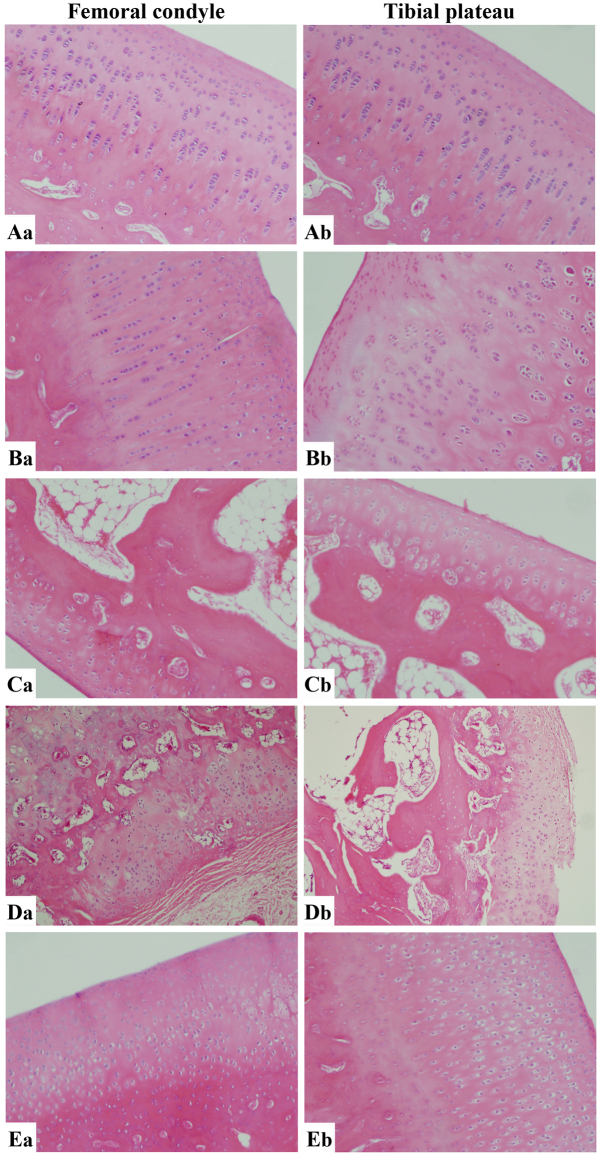
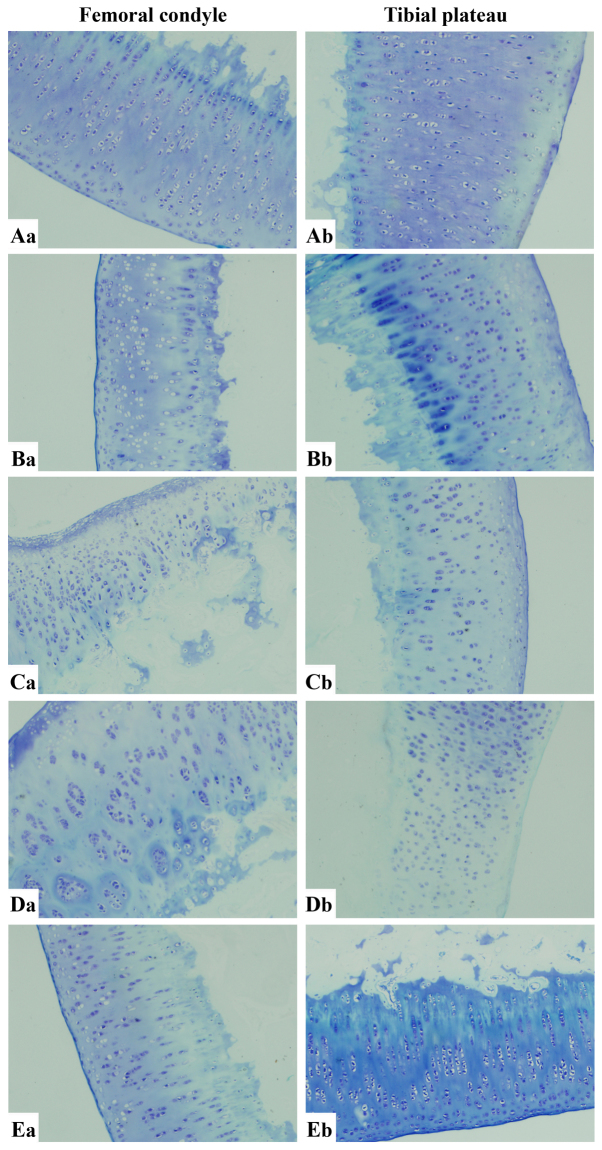
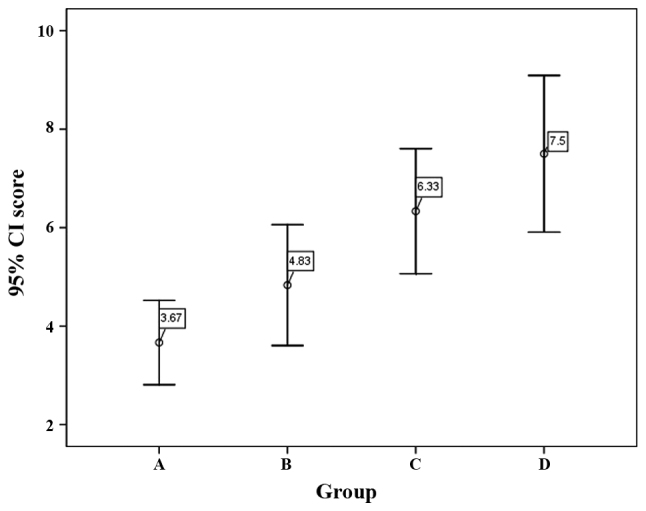
Subchondral bone reabsorption and remodeling are responsible for the initiation and progression of osteoarthritis (OA). Zoledronic acid (ZOL), a third-generation bisphosphonate (BIS), is an inhibitor of bone reabsorption. However, the intervention effect of ZOL on OA has not been fully characterized and remains to be directly demonstrated in animal experiments. The present study examined the microscopic and macroscopic changes in the anterior cruciate ligament transection (ACLT) model of OA in rabbits and evaluated the effects of ZOL on cartilage degeneration and subchondral bone loss. A total of 32 New Zealand white rabbits were randomly divided into four groups: High-, medium- and low-dose ZOL groups, which received an intravenous injection of 250, 50 and 10 µg/kg ZOL, respectively, after modeling, as well as an untreated group. The bone mineral density (BMD) of the knee joint was evaluated by dual-energy X-ray absorptiometry scanning immediately after modeling and at 4 and 8 weeks. At week 8, quantitative measurement of cartilage was performed by a specialized magnetic resonance imaging (MRI) technique, including three-dimensional fat-suppressed spoil gradient-recalled sequence and T2 mapping. The rabbits were sacrificed by air embolism after anesthesia and both knee joints were harvested and evaluated by general and histological observation. Toluidine blue and hematoxylin and eosin staining were used to assess histological changes in the articular cartilage. Quantitative analysis of cartilage histopathology was performed according to the Mankin scoring system. The BMD of ACLT joints dropped after modeling, which was effectively suppressed by ZOL at the high and medium dose but not the low dose. MRI scans demonstrated that in the untreated group, articular cartilages on ACLT knees were thinner than those on normal knees. The high dose of ZOL preserved the cartilage tissue thickness more efficiently than the medium and low doses. Observation of specimens and pathological slices revealed that the articular cartilage degeneration in the high-dose ZOL group was lightest, while that in the medium- and low-dose ZOL group was moderate, and the untreated group exhibited the most severe defect. The untreated group had the highest Mankin score, whereas the high-dose ZOL group had the lowest score. In conclusion, ZOL increased the subchondral bone density, improved the microstructure and reduced the degeneration of articular cartilage in OA according to morphological as well as quantitative observation. ZOL exerted significant chondroprotective effects in a dose-dependent manner. A favorable chondroprotective effect was induced at the dose of 250 µg/kg. ZOL may represent a novel promising drug to complement the treatment of OA.
软骨下骨重吸收和重塑是骨关节炎(OA)发生和发展的原因。唑来膦酸(ZOL)是第三代双膦酸盐(BIS),是一种骨重吸收抑制剂。然而,ZOL对OA的干预效果尚未完全明确,仍有待在动物实验中直接证明。本研究观察了兔OA前交叉韧带横断(ACLT)模型的微观和宏观变化,并评估了ZOL对软骨退变和软骨下骨丢失的影响。将32只新西兰白兔随机分为四组:高、中、低剂量ZOL组,建模后分别静脉注射250、50和10μg/kg ZOL,以及未治疗组。建模后立即、4周和8周时通过双能X线吸收法扫描评估膝关节的骨密度(BMD)。在第8周,通过专门的磁共振成像(MRI)技术对软骨进行定量测量,包括三维脂肪抑制扰相梯度回波序列和T2映射。麻醉后通过空气栓塞处死兔子,取出双膝关节并进行大体和组织学观察。用甲苯胺蓝和苏木精-伊红染色评估关节软骨的组织学变化。根据Mankin评分系统对软骨组织病理学进行定量分析。建模后ACLT关节的BMD下降,高、中剂量ZOL有效抑制了这种下降,但低剂量无效。MRI扫描显示,在未治疗组中,ACLT膝关节的关节软骨比正常膝关节的薄。高剂量ZOL比中、低剂量更有效地保持了软骨组织厚度。标本和病理切片观察显示,高剂量ZOL组的关节软骨退变最轻,中、低剂量ZOL组为中度,未治疗组表现出最严重的缺损。未治疗组的Mankin评分最高,而高剂量ZOL组的评分最低。总之,根据形态学和定量观察,ZOL提高了软骨下骨密度,改善了微观结构,减少了OA中关节软骨的退变。ZOL以剂量依赖性方式发挥显著的软骨保护作用。在250μg/kg剂量时诱导了良好的软骨保护作用。ZOL可能是一种有前景的新型药物,可补充OA的治疗。