Center for Public Health Nutrition, University of Washington, Seattle, Washington, USA.
Nutr Rev. 2018 Jan 1;76(1):21-28. doi: 10.1093/nutrit/nux063.
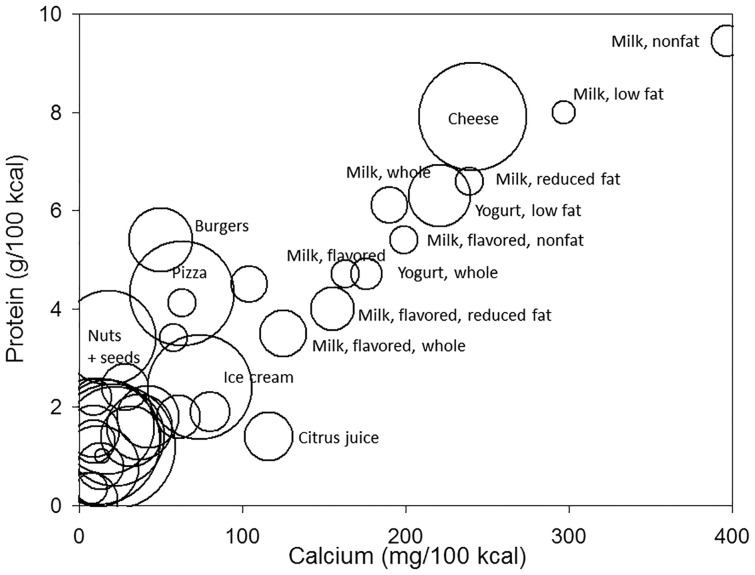
The 4 domains of sustainable diets are nutrition, economics, society, and the environment. To be sustainable, foods and food patterns need to be nutrient-rich, affordable, culturally acceptable, and sparing of natural resources and the environment. Each sustainability domain has its own measures and metrics. Nutrient density of foods has been assessed through nutrient profiling models, such as the Nutrient-Rich Foods family of scores. The Food Affordability Index, applied to different food groups, has measured both calories and nutrients per penny (kcal/$). Cultural acceptance measures have been based on relative food consumption frequencies across population groups. Environmental impact of individual foods and composite food patterns has been measured in terms of land, water, and energy use. Greenhouse gas emissions assess the carbon footprint of agricultural food production, processing, and retail. Based on multiple sustainability metrics, milk, yogurt, and other dairy products can be described as nutrient-rich, affordable, acceptable, and appealing. The environmental impact of dairy farming needs to be weighed against the high nutrient density of milk, yogurt, and cheese as compared with some plant-based alternatives.
可持续饮食的四个领域是营养、经济、社会和环境。为了实现可持续性,食物和饮食模式需要营养丰富、价格实惠、文化上可接受,并且节约自然资源和环境。每个可持续性领域都有自己的衡量标准和指标。食物的营养密度可以通过营养成分分析模型来评估,例如营养丰富食物评分家族中的各种评分。食品可负担性指数适用于不同的食品组,它衡量了每分钱(美分/美元)的卡路里和营养素。文化接受度的衡量标准基于不同人群的相对食物消费频率。个别食物和复合食物模式的环境影响可以根据土地、水和能源的使用来衡量。温室气体排放评估了农业食品生产、加工和零售的碳足迹。基于多种可持续性指标,牛奶、酸奶和其他乳制品可以被描述为营养丰富、价格实惠、可接受和有吸引力的。与一些植物性替代品相比,需要权衡乳制品养殖的环境影响与牛奶、酸奶和奶酪的高营养密度。