Department of Ultrasound in Medicine, Shanghai East Hospital, Tongji University School of Medicine, Shanghai, 200120, China.
Paul C. Lauterbur Research Center for Biomedical Imaging, Shenzhen Institutes of Advanced Technology, Chinese Academy of Sciences, Shenzhen, 518055, China.
Biomed Eng Online. 2017 Dec 6;16(1):137. doi: 10.1186/s12938-017-0425-9.
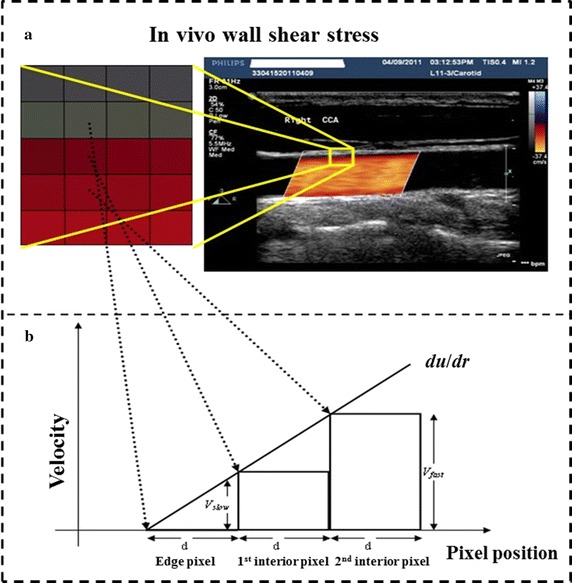
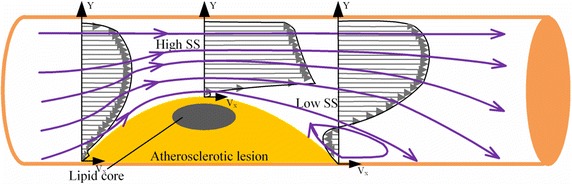
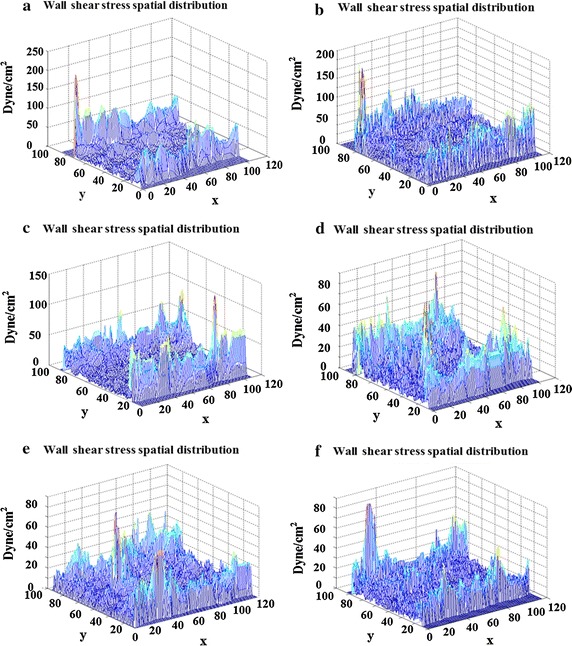
This paper presents quantitative analysis of blood flow shear stress by measuring the carotid arterial wall shear stress (WSS) and the intima-media thickness (IMT) of experimental rabbits fed with high-fat feedstuff on a weekly basis in order to cause atherosclerosis.
This study is based on establishing an atherosclerosis model of high-fat rabbits, and measuring the rabbits' common carotid arterial WSS of the experimental group and control group on a weekly basis. Detailed analysis was performed by using WSS quantification.
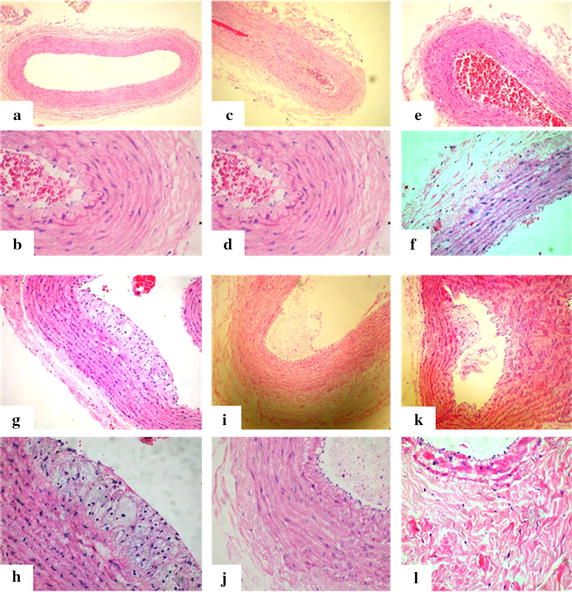
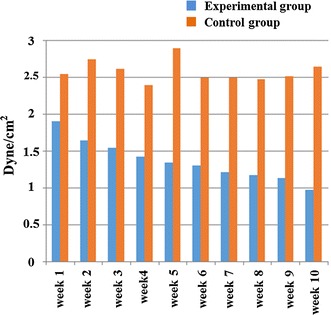
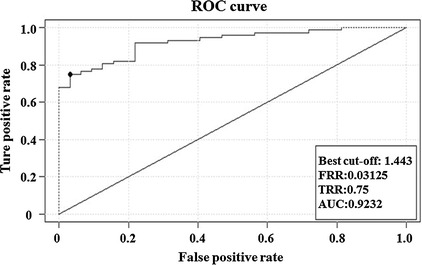
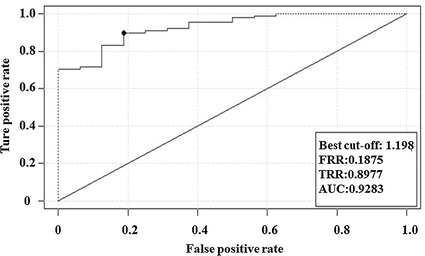
We have demonstrated small significant difference of rabbit carotid artery WSS between the experimental group and the control group (P<0.01) from the 1st week onwards, while the IMT of experimental group had larger differences from 5th week compared with the control group (P<0.05). Next, we have shown that with increasing blood lipids, the rabbit carotid artery shear stress decreases and the rabbit carotid artery IMT goes up. The decrease of shear stress appears before the start of IMT growth. Furthermore, our receiver operator characteristic (ROC) curve analysis showed that when the mean value of shear stress is 1.198 dyne/cm, the rabbit common carotid atherosclerosis fatty streaks sensitivity is 89.8%, and the specificity is 81.3%. The area under the ROC curve is 0.9283.
All these data goes to show that WSS decreasing to 1.198 dyne/cm can be used as an indicator that rabbit common carotid artery comes into the period of fibrous plaques. In conclusion, our study is able to find and confirm that the decrease of the arterial WSS can predict the occurrence of atherosclerosis earlier, and offer help for positive clinical intervention.
本研究通过测量高脂饲料喂养的实验兔颈动脉壁切应力(WSS)和内中膜厚度(IMT),每周定量分析血流切应力,以诱发动脉粥样硬化。
本研究基于建立高脂兔动脉粥样硬化模型,每周测量实验组和对照组实验兔的颈总动脉 WSS,采用 WSS 定量分析进行详细分析。
从第 1 周开始,实验组和对照组兔颈动脉 WSS 差异具有统计学意义(P<0.01),实验组 IMT 从第 5 周开始与对照组差异具有统计学意义(P<0.05)。随后,我们表明随着血脂的增加,兔颈动脉剪切应力降低,兔颈动脉 IMT 增加。剪切应力的下降出现在 IMT 生长开始之前。此外,我们的接收者操作特征(ROC)曲线分析显示,当剪切应力的平均值为 1.198 达因/平方厘米时,兔颈总动脉粥样硬化脂纹的灵敏度为 89.8%,特异性为 81.3%。ROC 曲线下面积为 0.9283。
所有这些数据表明,WSS 降低至 1.198 达因/平方厘米可作为兔颈总动脉进入纤维斑块期的指标。总之,我们的研究能够发现并证实动脉 WSS 的降低可以更早地预测动脉粥样硬化的发生,并为积极的临床干预提供帮助。