Institut de Biotecnologia i Biomedicina. Universitat Autònoma de Barcelona, 08193, Bellaterra, Spain.
Departament de Bioquímica i Biologia Molecular, Universitat Autònoma de Barcelona, 08193, Bellaterra, Spain.
Sci Rep. 2017 Dec 5;7(1):16994. doi: 10.1038/s41598-017-17259-4.
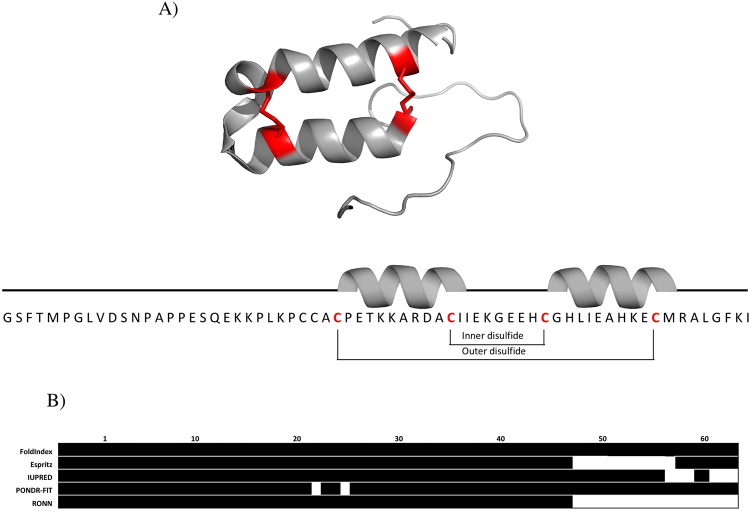
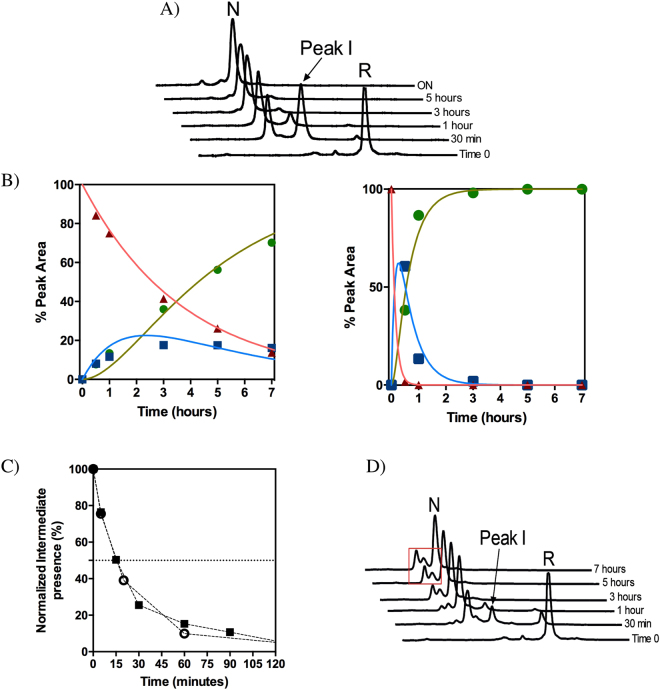
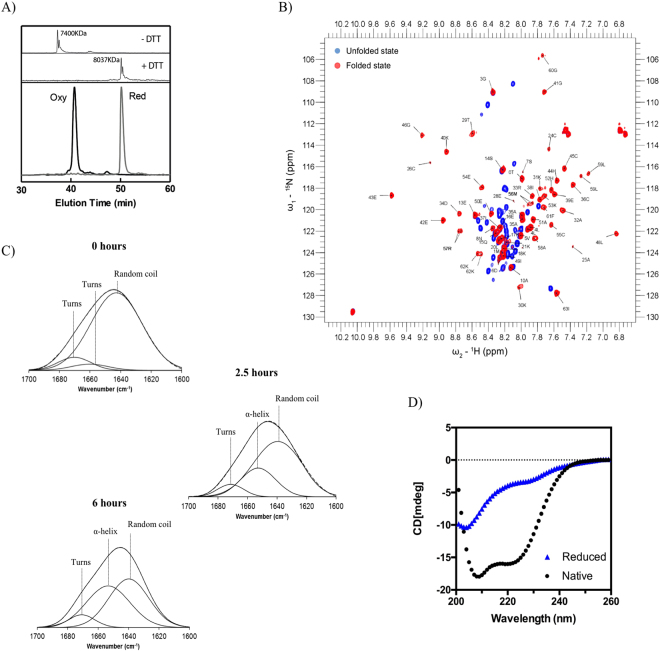
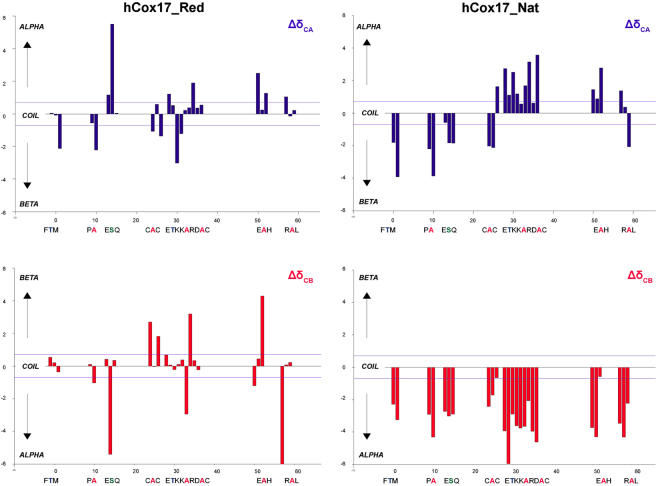
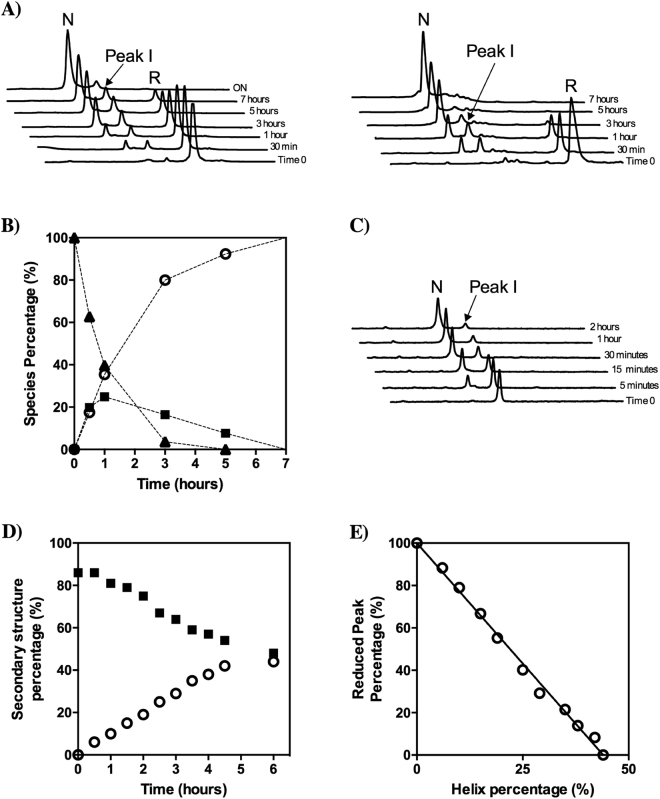
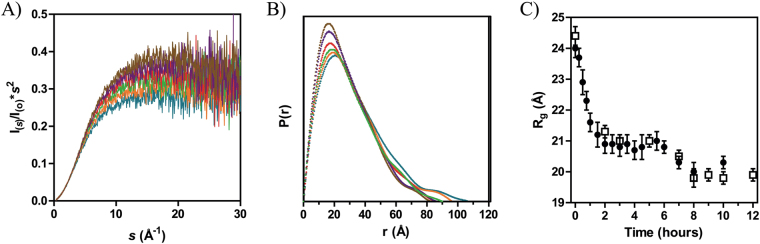
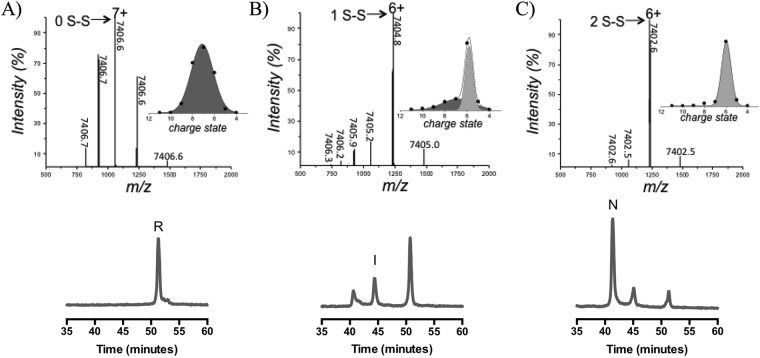
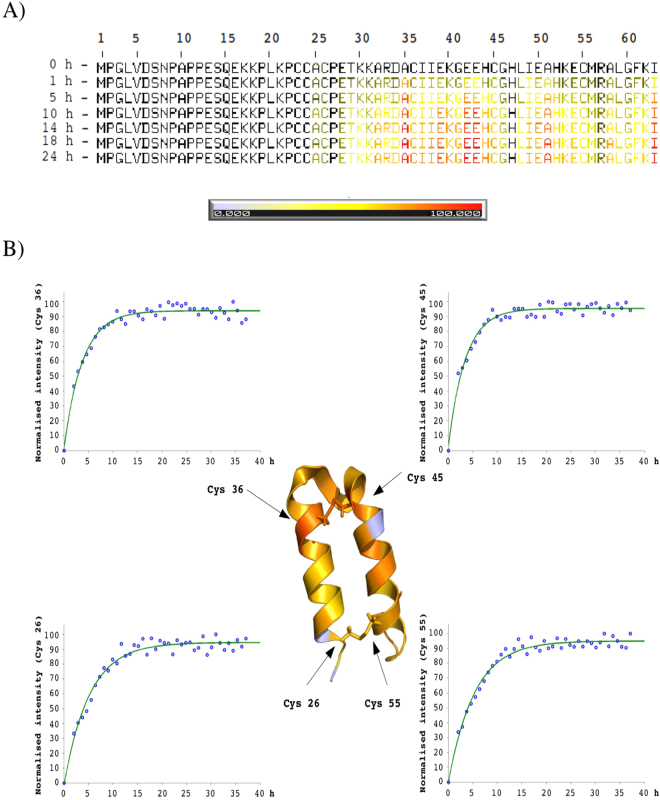
Conditionally disordered proteins are either ordered or disordered depending on the environmental context. The substrates of the mitochondrial intermembrane space (IMS) oxidoreductase Mia40 are synthesized on cytosolic ribosomes and diffuse as intrinsically disordered proteins to the IMS, where they fold into their functional conformations; behaving thus as conditionally disordered proteins. It is not clear how the sequences of these polypeptides encode at the same time for their ability to adopt a folded structure and to remain unfolded. Here we characterize the disorder-to-order transition of a Mia40 substrate, the human small copper chaperone Cox17. Using an integrated real-time approach, including chromatography, fluorescence, CD, FTIR, SAXS, NMR, and MS analysis, we demonstrate that in this mitochondrial protein, the conformational switch between disordered and folded states is controlled by the formation of a single disulfide bond, both in the presence and in the absence of Mia40. We provide molecular details on how the folding of a conditionally disordered protein is tightly regulated in time and space, in such a way that the same sequence is competent for protein translocation and activity.
条件性无序蛋白根据环境上下文条件,呈现出有序或无序状态。线粒体膜间空间(IMS)氧化还原酶 Mia40 的底物在胞质核糖体上合成,并作为固有无序蛋白扩散到 IMS,在那里它们折叠成其功能构象;因此表现为条件性无序蛋白。目前尚不清楚这些多肽的序列如何同时编码其折叠结构的能力和保持未折叠状态的能力。在这里,我们对 Mia40 底物,即人类小铜伴侣 Cox17 的无序到有序的转变进行了表征。使用集成的实时方法,包括色谱、荧光、CD、FTIR、SAXS、NMR 和 MS 分析,我们证明在这种线粒体蛋白中,无序和折叠状态之间的构象转换由单个二硫键的形成控制,无论是在 Mia40 存在还是不存在的情况下。我们提供了关于条件性无序蛋白的折叠如何在时间和空间上受到严格调控的分子细节,使得相同的序列有能力进行蛋白易位和活性。