Piao Yuji, Henry Verlene, Tiao Ningyi, Park Soon Young, Martinez-Ledesma Juan, Dong Jian Wen, Balasubramaniyan Veerakumar, de Groot John F
Department of Neuro-Oncology, The University of Texas MD Anderson Cancer Center, Houston, Texas, USA.
Department of Neuro-Surgery, The University of Texas MD Anderson Cancer Center, Houston, Texas, USA.
Oncotarget. 2017 Jun 29;8(57):96970-96983. doi: 10.18632/oncotarget.18859. eCollection 2017 Nov 14.
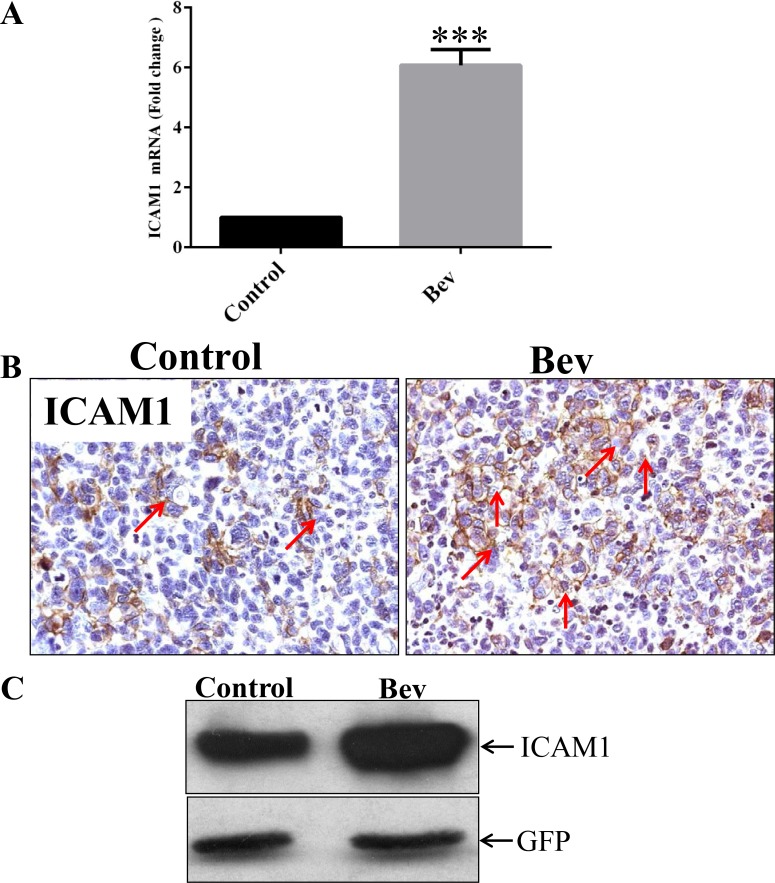
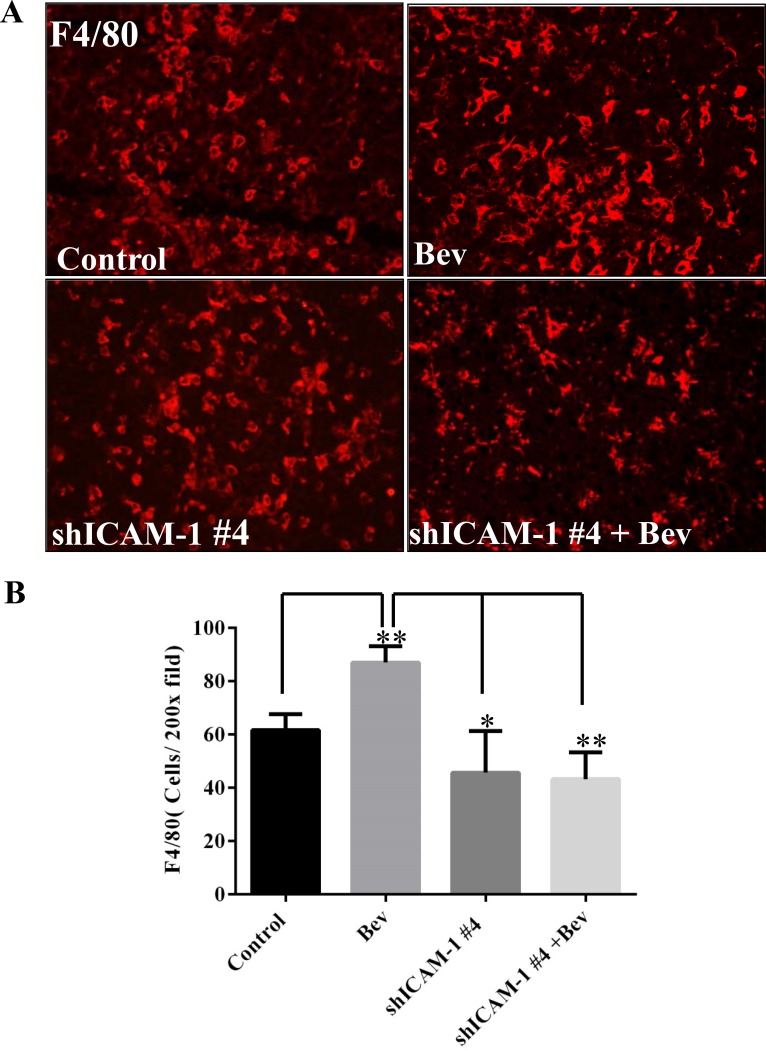
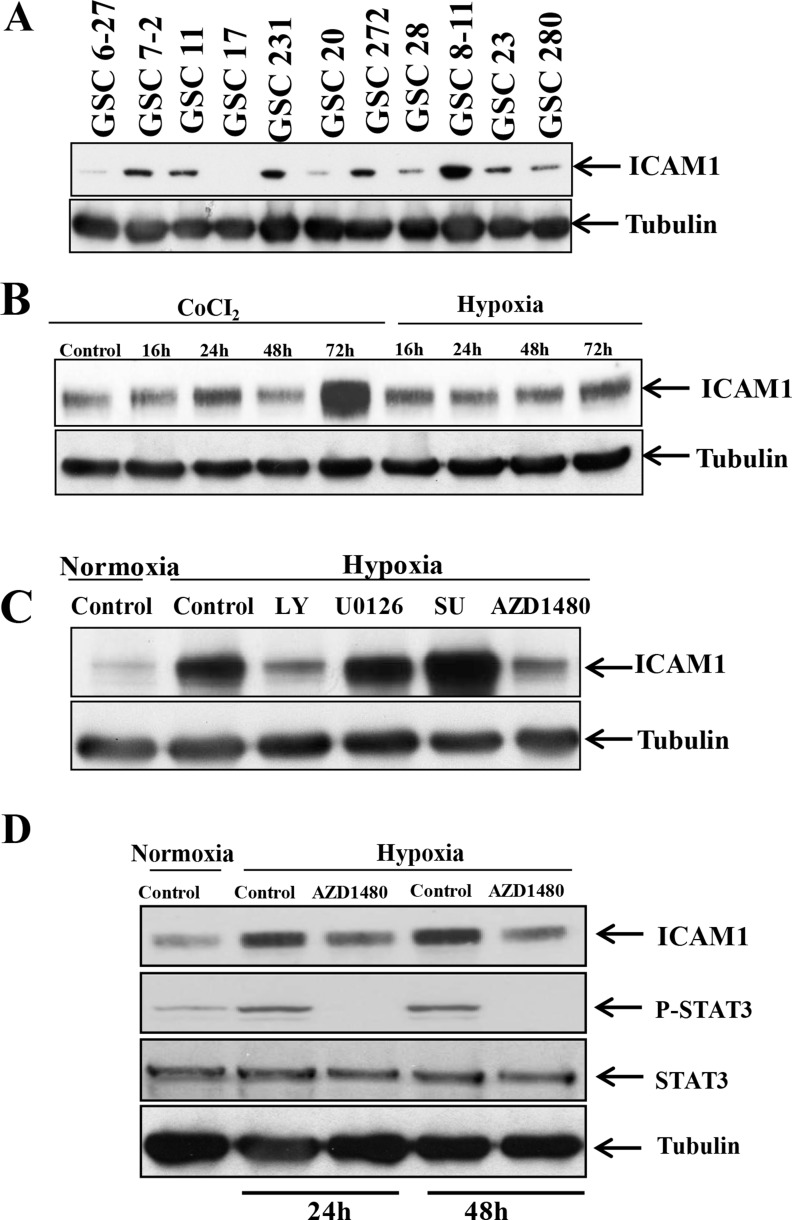
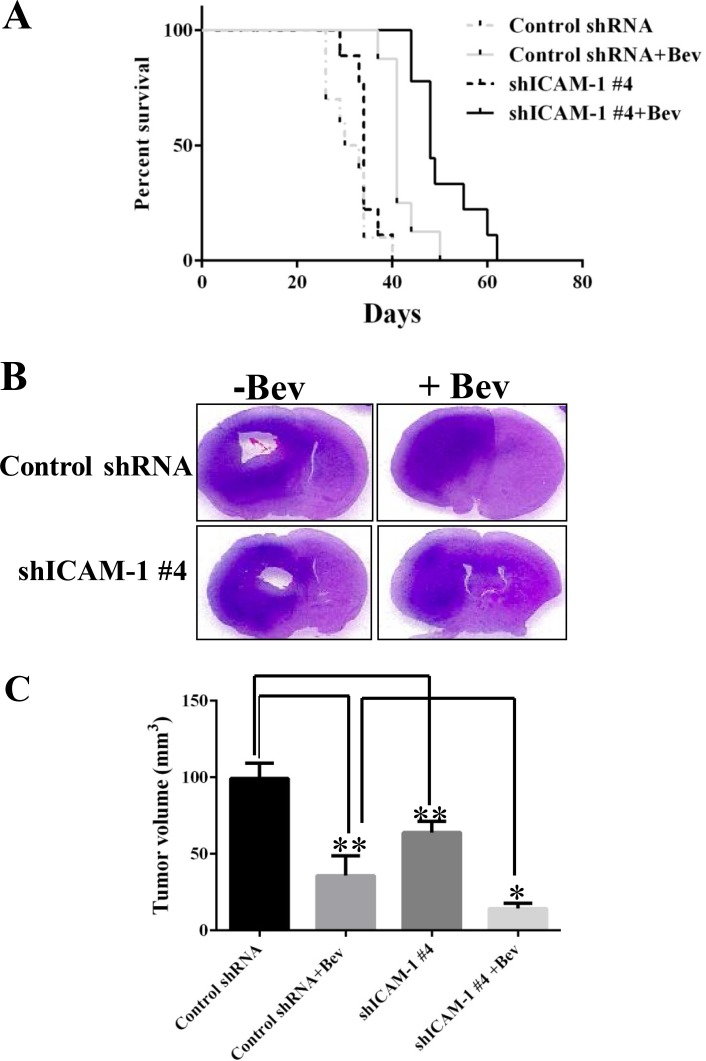
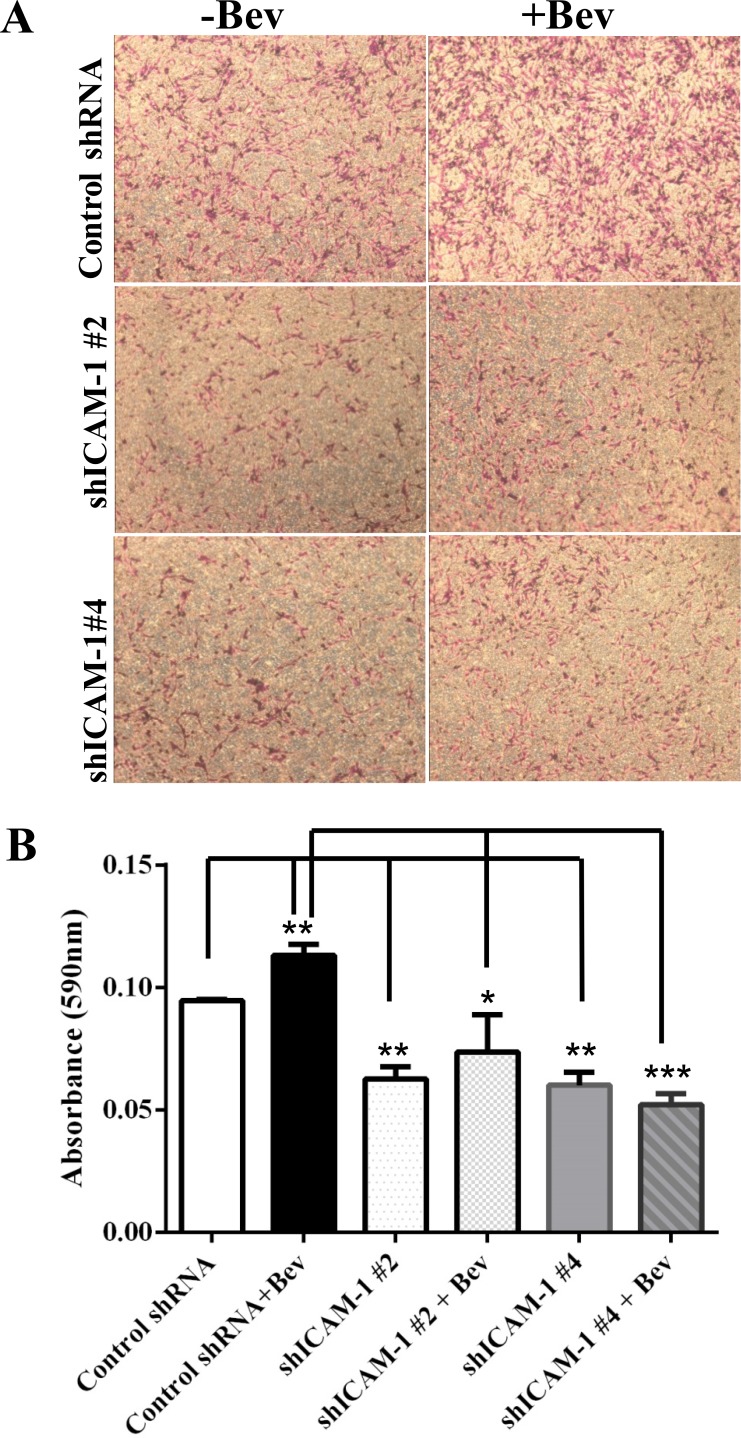
Intercellular cell adhesion molecule 1 (ICAM-1; also known as CD54) is overexpressed in bevacizumab-resistant glioblastoma. In the present study, we tested our hypothesis that highly expressed ICAM-1 mediates glioblastoma's resistance to antiangiogenic therapy. We validated ICAM-1 overexpression in tumors resistant to antiangiogenic therapy using real-time polymerase chain reaction, immunohistochemistry, and Western blotting. We also detected ICAM1 expression in most glioma stem cells (GSCs). We investigated the mechanism of ICAM-1 overexpression after bevacizumab treatment and found that ICAM-1 protein expression was markedly increased in a time-dependent manner in GSC11 and GSC17 cells under hypoxic conditions . We also found that hypoxia induced ICAM-1 overexpression through the up-regulation of phosphorylated signal transducer and activator of transcription (p-STAT3). Hypoxia-induced p-STAT3 increased the mRNA transcription of ICAM-1, which we could inhibit with the STAT3 inhibitor AZD1480. Next, we used GFP-tagged ICAM-1 shRNA lentivirus to knock down ICAM-1 in GSC11 and GSC17 glioma cell lines. Then, we injected shICAM-1 GSC11 and scramble glioma stem cells into the brains of nude mice. Mice bearing tumors from shICAM-1 GSC11 cells survived significantly longer than mice injected with control cells did. The tumor sizes was significantly decreased in mice bearing tumors from shICAM-1 cells than that in mice bearing tumors from GFP-tagged GSC11 control cells. Knocking down ICAM-1 suppressed tumor invasion and and inhibited macrophage infiltration to the tumor site in bevacizumab-treated mice. Our findings suggest that ICAM-1 is a potentially important mediator of tumor migration and invasion in bevacizumab-resistant glioblastoma. Targeting ICAM-1 may provide a new strategy for enhancing the efficacy of antiangiogenic therapy against glioblastoma and preventing the invasive phenotype of the disease.
细胞间黏附分子1(ICAM-1;也称为CD54)在贝伐单抗耐药的胶质母细胞瘤中过表达。在本研究中,我们验证了我们的假设,即高表达的ICAM-1介导胶质母细胞瘤对抗血管生成治疗的耐药性。我们使用实时聚合酶链反应、免疫组织化学和蛋白质印迹法验证了抗血管生成治疗耐药肿瘤中ICAM-1的过表达。我们还在大多数胶质瘤干细胞(GSC)中检测到ICAM1表达。我们研究了贝伐单抗治疗后ICAM-1过表达的机制,发现在缺氧条件下,GSC11和GSC17细胞中ICAM-1蛋白表达以时间依赖性方式显著增加。我们还发现缺氧通过磷酸化信号转导和转录激活因子(p-STAT3)的上调诱导ICAM-1过表达。缺氧诱导的p-STAT3增加了ICAM-1的mRNA转录,我们可以用STAT3抑制剂AZD1480抑制这种转录。接下来,我们使用绿色荧光蛋白标记的ICAM-1短发夹RNA慢病毒来敲低GSC11和GSC17胶质瘤细胞系中的ICAM-1。然后,我们将shICAM-1 GSC11和对照胶质瘤干细胞注射到裸鼠脑中。携带shICAM-1 GSC11细胞肿瘤的小鼠存活时间明显长于注射对照细胞的小鼠。与携带绿色荧光蛋白标记的GSC11对照细胞肿瘤的小鼠相比,携带shICAM-1细胞肿瘤的小鼠肿瘤大小明显减小。敲低ICAM-1可抑制肿瘤侵袭,并抑制贝伐单抗治疗小鼠中巨噬细胞向肿瘤部位的浸润。我们的研究结果表明,ICAM-1是贝伐单抗耐药胶质母细胞瘤中肿瘤迁移和侵袭的潜在重要介质。靶向ICAM-1可能为增强抗血管生成治疗胶质母细胞瘤的疗效和预防该疾病的侵袭性表型提供一种新策略。