Genomics Research Center, University of Rochester School of Medicine and Dentistry, Rochester, NY, USA.
Department of Biostatistics and Computational Biology, University of Rochester School of Medicine and Dentistry, Rochester, NY, USA.
Microbiome. 2017 Dec 11;5(1):158. doi: 10.1186/s40168-017-0377-0.
Identification of factors that influence the neonatal gut microbiome is urgently needed to guide clinical practices that support growth of healthy preterm infants. Here, we examined the influence of nutrition and common practices on the gut microbiota and growth in a cohort of preterm infants.
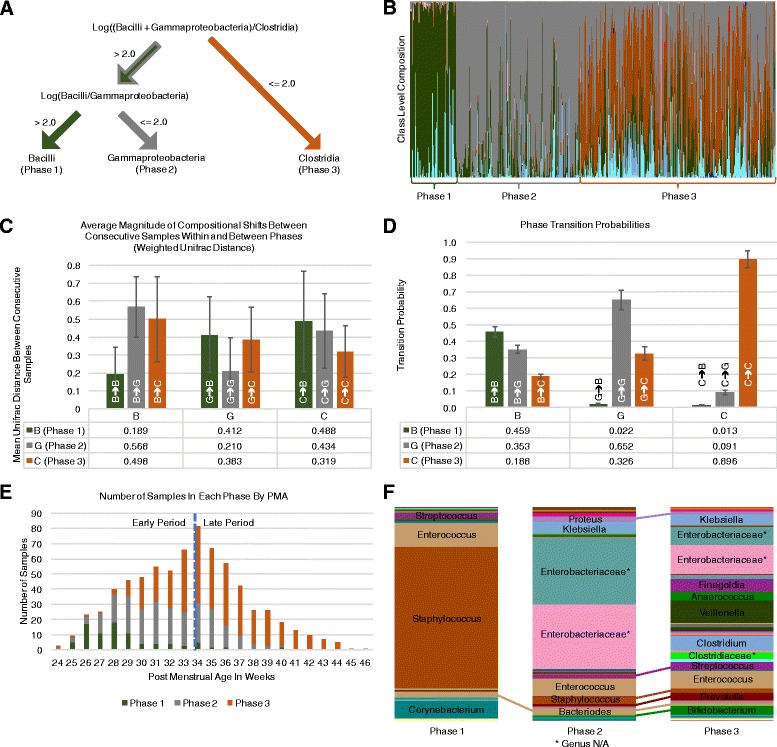
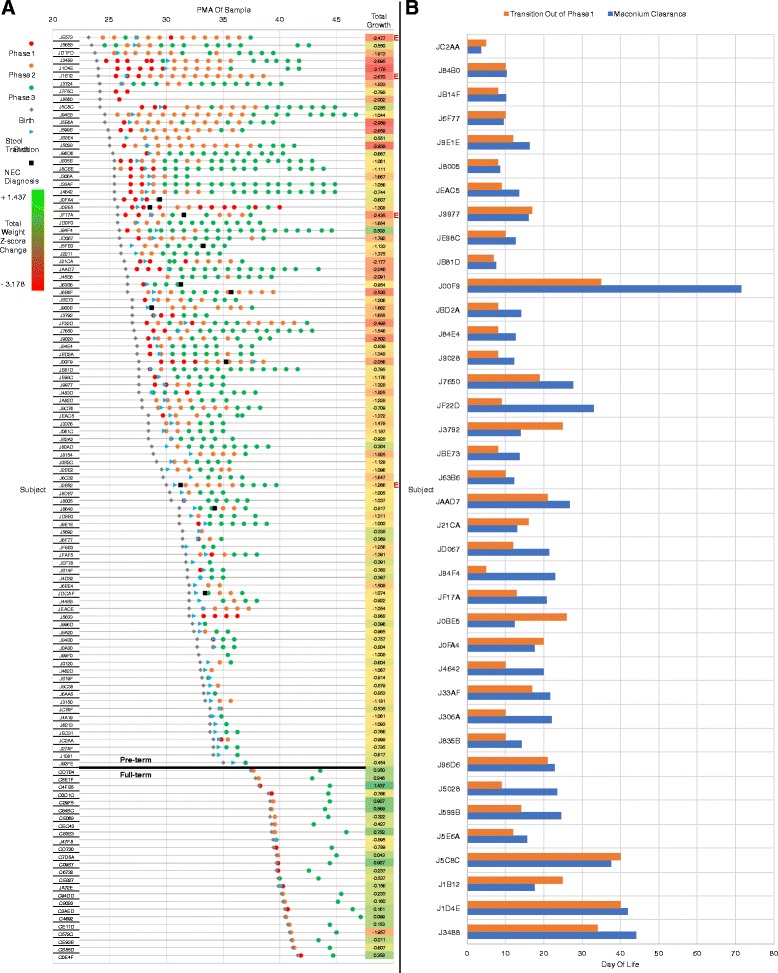
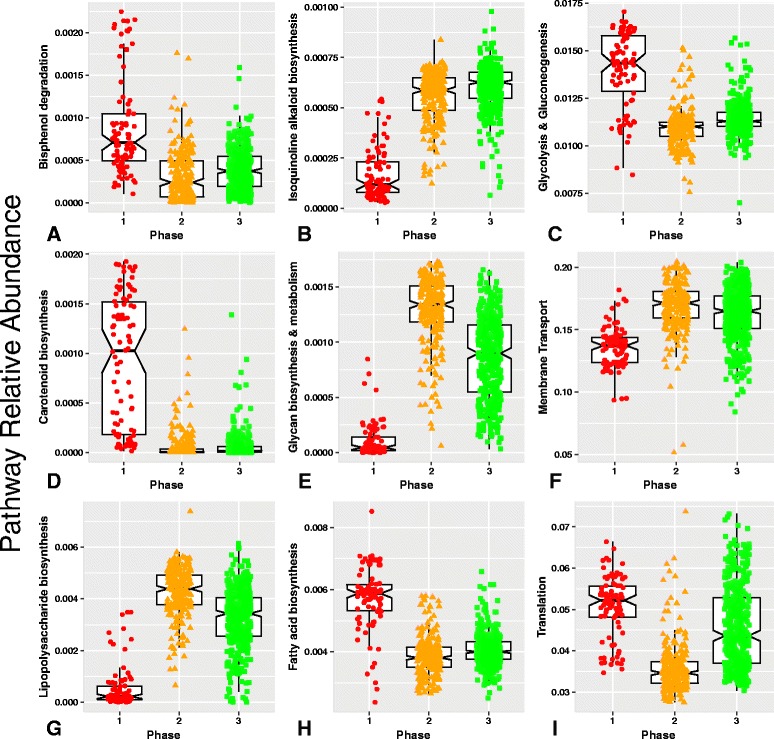
With weekly gut microbiota samples spanning postmenstrual age (PMA) 24 to 46 weeks, we developed two models to test associations between the microbiota, nutrition and growth: a categorical model with three successive microbiota phases (P1, P2, and P3) and a model with two periods (early and late PMA) defined by microbiota composition and PMA, respectively. The more significant associations with phase led us to use a phase-based framework for the majority of our analyses. Phase transitions were characterized by rapid shifts in the microbiota, with transition out of P1 occurring nearly simultaneously with the change from meconium to normal stool. The rate of phase progression was positively associated with gestational age at birth, and delayed transition to a P3 microbiota was associated with growth failure. We found distinct bacterial metabolic functions in P1-3 and significant associations between nutrition, microbiota phase, and infant growth.
The phase-dependent impact of nutrition on infant growth along with phase-specific metabolic functions suggests a pioneering potential for improving growth outcomes by tailoring nutrient intake to microbiota phase.
迫切需要确定影响新生儿肠道微生物组的因素,以指导支持健康早产儿生长的临床实践。在这里,我们研究了营养和常见做法对肠道微生物群和生长的影响在一个早产儿队列中。
通过每周一次的肠道微生物组样本,涵盖胎龄(PMA)24 至 46 周,我们开发了两种模型来测试微生物组、营养和生长之间的关联:一种是具有三个连续微生物组阶段(P1、P2 和 P3)的分类模型,另一种是由微生物组组成和 PMA 分别定义的早期和晚期 PMA 两个时期的模型。与阶段的更显著关联使我们在大多数分析中使用基于阶段的框架。阶段过渡的特点是微生物群的快速变化,P1 期的过渡几乎与胎粪转变为正常粪便同时发生。阶段进展的速度与出生时的胎龄呈正相关,而向 P3 期微生物群的延迟过渡与生长不良有关。我们在 P1-3 中发现了不同的细菌代谢功能,以及营养、微生物群阶段和婴儿生长之间的显著关联。
营养对婴儿生长的阶段依赖性影响以及特定于阶段的代谢功能表明,通过将营养摄入与微生物群阶段相匹配,有可能改善生长结局。