Department of Entomology, College of Natural Resources and Environment, South China Agricultural University, Guangzhou 510640, China.
Laboratory of Bio-control and Molecular Biology, Department of Arid Land Agriculture, College of Agricultural and Food Sciences, King Faisal University, 31982 Hofuf, Al-Ahsa, Saudi Arabia.
Int J Mol Sci. 2017 Dec 12;18(12):2694. doi: 10.3390/ijms18122694.
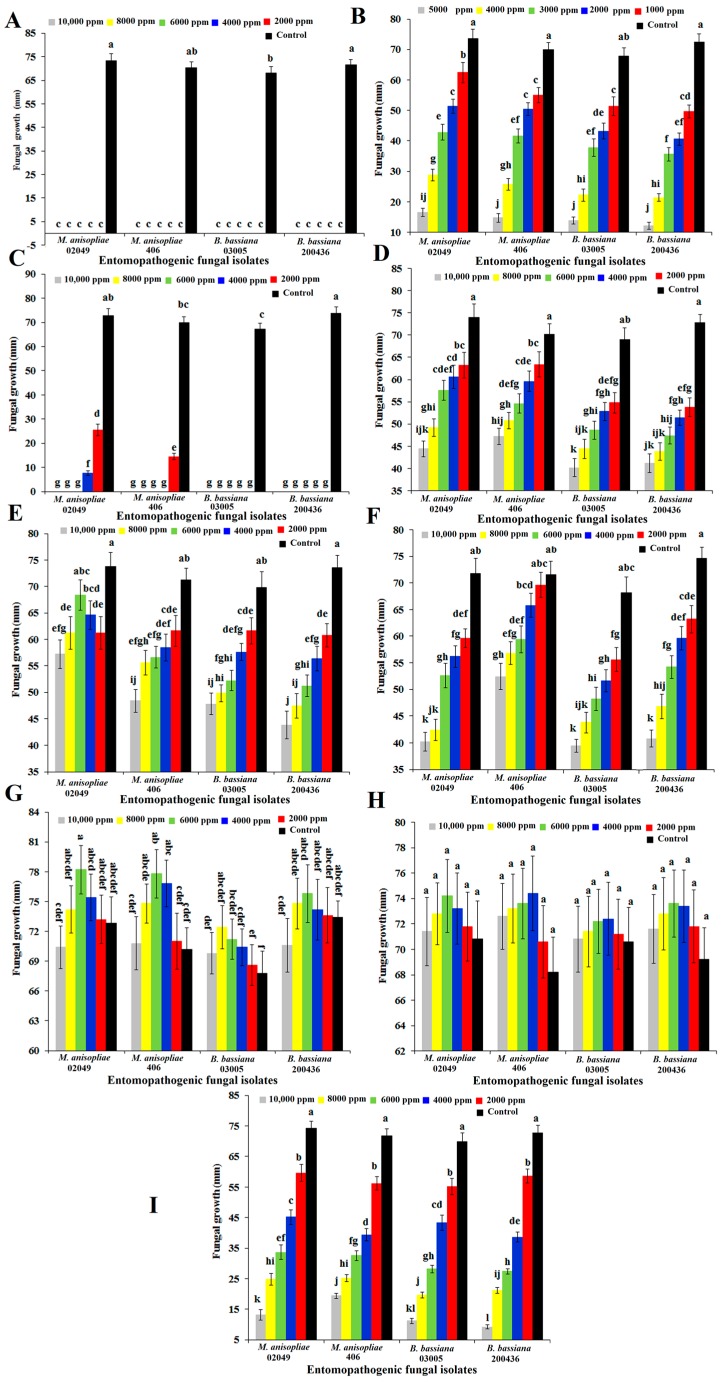
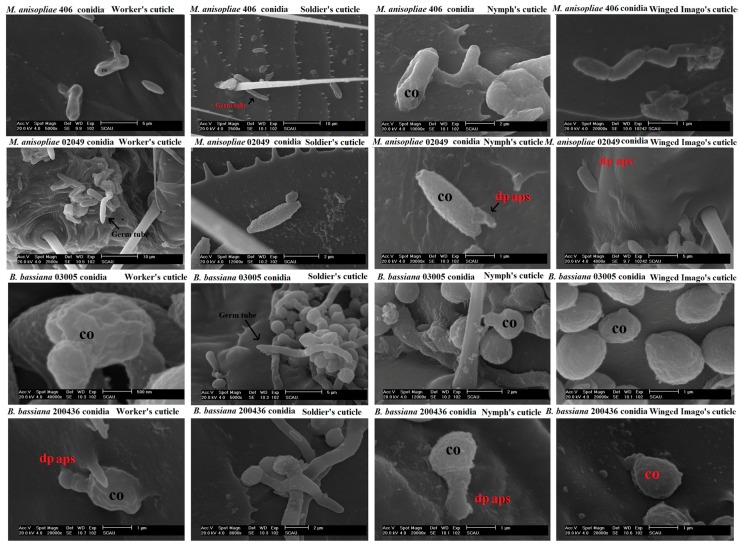
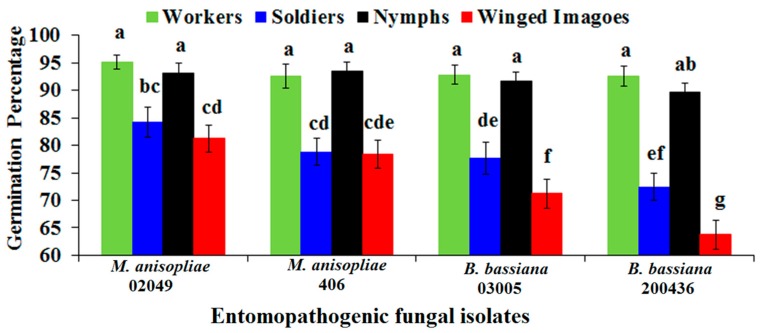
The survival and foraging of Shiraki in a microbe-rich environment reflect the adaptation of an extraordinary, sophisticated defense mechanism by the nest-mates. We aimed to explore the host pathogen interaction by studying caste-specific volatile chemistry and genes encoding the antioxidant defense of winged imagoes, nymphs, soldiers and workers of Formosan subterranean termites. Qualitative analyses of Shiraki performed by HS-SPME/GC-MS showed considerable variations in the chemical composition of volatile organic compounds (VOCs) and their proportions among all the castes. Winged imagoes produced the most important compounds such as naphthalene and hexanoic acid. The antifungal activity of these compounds along with nonanal, -pentadecane, tetradecane, -heptadecane and methyl octanoate against the conidial suspensions of and isolates enable us to suggest that the failure of natural fungal infection in the nest is due to the antiseptic environment of the nest, which is mainly controlled by the VOCs of nest-mates. In addition, conidial germination of and isolates evaluated on the cuticle of each caste showed significant variations among isolates and different castes. Our results showed that the conidia of 02049 exhibited the highest germination on the cuticle of all the inoculated castes. Moreover, we recorded the lowest germination of the conidia of 200436. Caste-specific germination variations enabled us to report for the first time that the cuticle of winged imagoes was found to be the most resistant cuticle. The analysis of the transcriptome of Shiraki revealed the identification of 17 genes directly involved in antioxidant defense. Expression patterns of the identified antioxidant genes by quantitative real-time PCR (qPCR) revealed the significantly highest upregulation of , , , , , , , , and genes among winged imagoes upon infection with the most virulent isolate, 02049. Furthermore, soldiers showed the least expression of genes encoding antioxidant defense. Our findings indicated that the volatile chemistry of nest-mates and genes encoding antioxidant defense greatly contribute to the survival and foraging of Formosan subterranean termites in a microbe-rich habitat.
Shiraki 在微生物丰富的环境中的生存和觅食反映了巢内同伴对非凡而复杂的防御机制的适应。我们旨在通过研究有翼成虫、若虫、兵蚁和工蚁的挥发性化学物质和编码抗氧化防御的基因来探索宿主病原体相互作用。通过 HS-SPME/GC-MS 对 Shiraki 进行的定性分析表明,挥发性有机化合物(VOC)的化学成分及其在所有巢内同伴中的比例存在相当大的差异。有翼成虫产生了最重要的化合物,如萘和己酸。这些化合物以及壬醛、-十五烷、十四烷、-十七烷和甲基辛酸对 和 分离株的孢子悬浮液的抗真菌活性使我们能够提出这样的建议,即巢内的天然真菌感染失败是由于巢内的防腐环境,主要由巢内同伴的 VOC 控制。此外,在每个巢内同伴的外骨骼上评估的 和 分离株的孢子萌发显示出分离株和不同巢内同伴之间的显著差异。我们的结果表明,02049 分离株的孢子在所有接种的巢内同伴的外骨骼上表现出最高的萌发。此外,我们记录了 200436 分离株的孢子萌发率最低。孢子萌发的巢内同伴特异性变化使我们首次报告发现有翼成虫的外骨骼是最具抗性的外骨骼。Shiraki 的转录组分析揭示了 17 个直接参与抗氧化防御的基因的鉴定。通过定量实时 PCR(qPCR)对鉴定出的抗氧化基因的表达模式进行分析表明,在感染最毒力分离株 02049 时,有翼成虫中 、 、 、 、 、 、 、 和 基因的表达水平显著上调。此外,兵蚁表现出最低的抗氧化防御基因表达。我们的研究结果表明,巢内同伴的挥发性化学物质和编码抗氧化防御的基因对抗真菌的生存和觅食有很大的贡献。