Stowers Institute for Medical Research, 1000 East 50th Street, Kansas City, MO, 64110, USA.
Redwood Center for Theoretical Neuroscience, University of California, 567 Evans Hall, Berkeley, 94720, USA.
BMC Genomics. 2017 Dec 12;18(1):965. doi: 10.1186/s12864-017-4364-4.
The chemosensory system plays an important role in orchestrating sexual behaviors in mammals. Pheromones trigger sexually dimorphic behaviors and different mouse strains exhibit differential responses to pheromone stimuli. It has been speculated that differential gene expression in the sensory organs that detect pheromones may underlie sexually-dimorphic and strain-specific responses to pheromone cues.
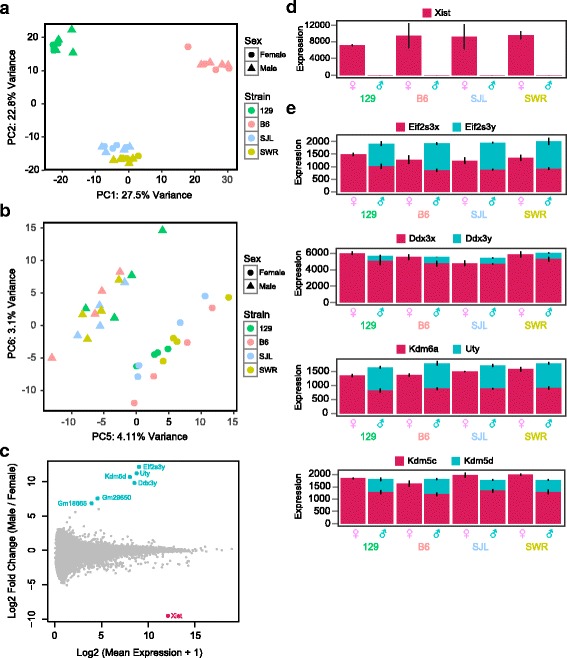
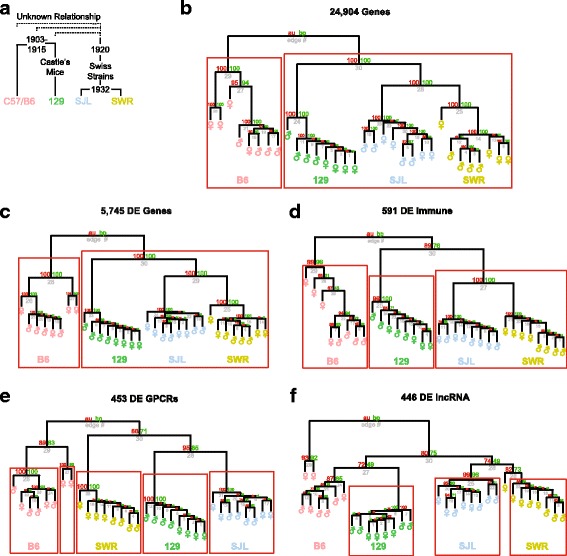
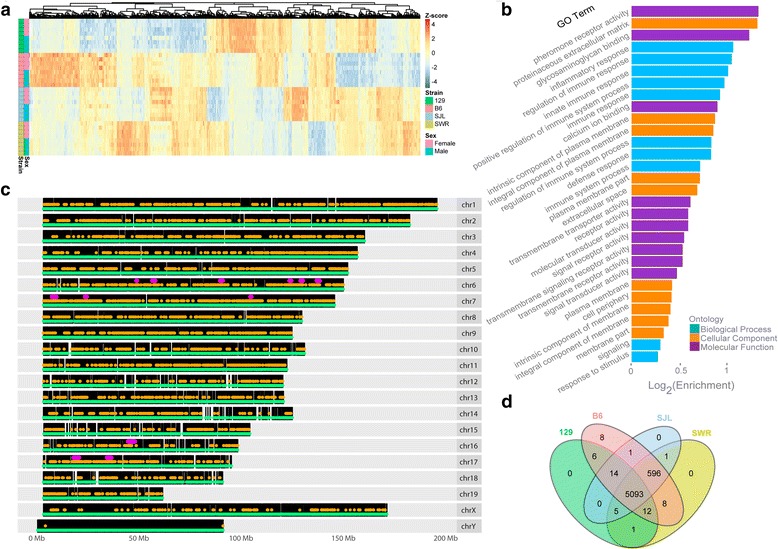
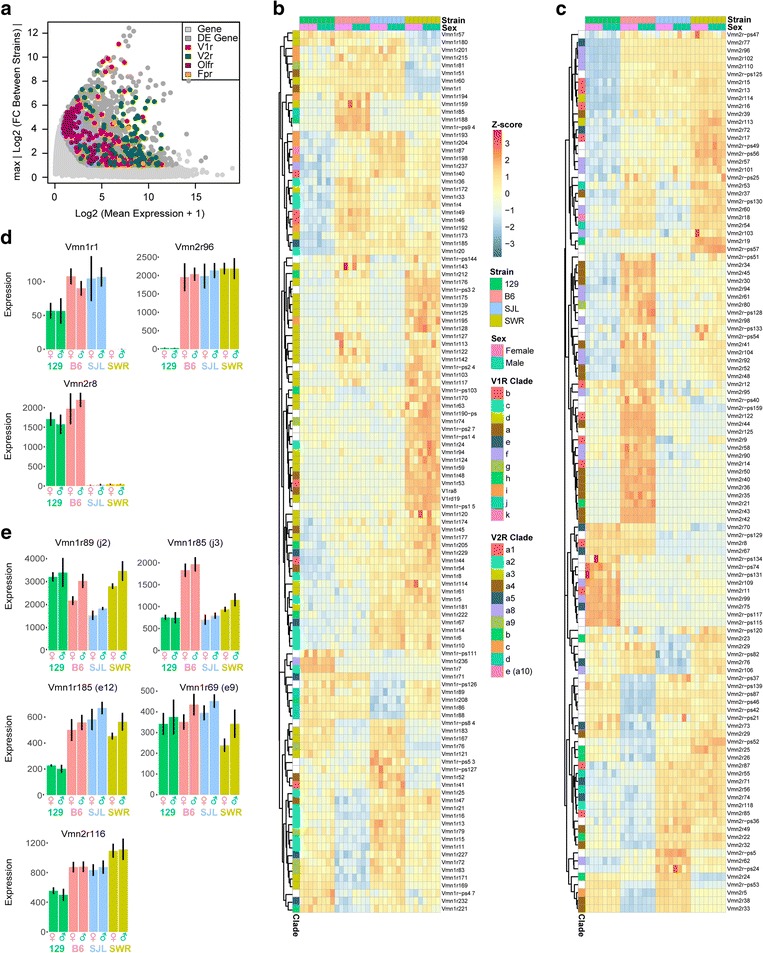
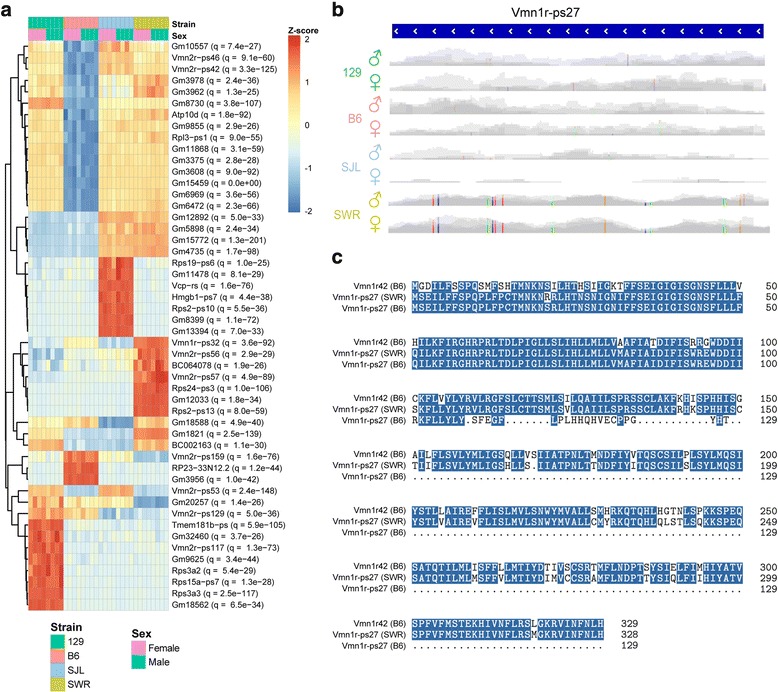
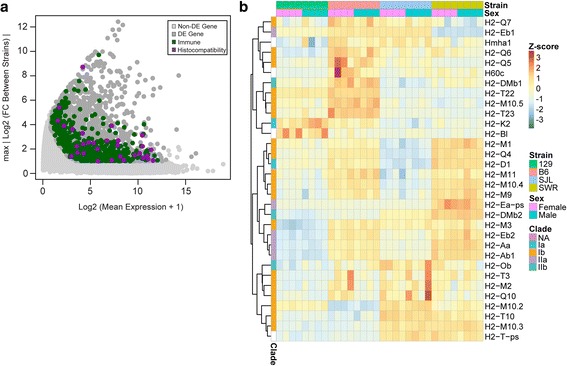
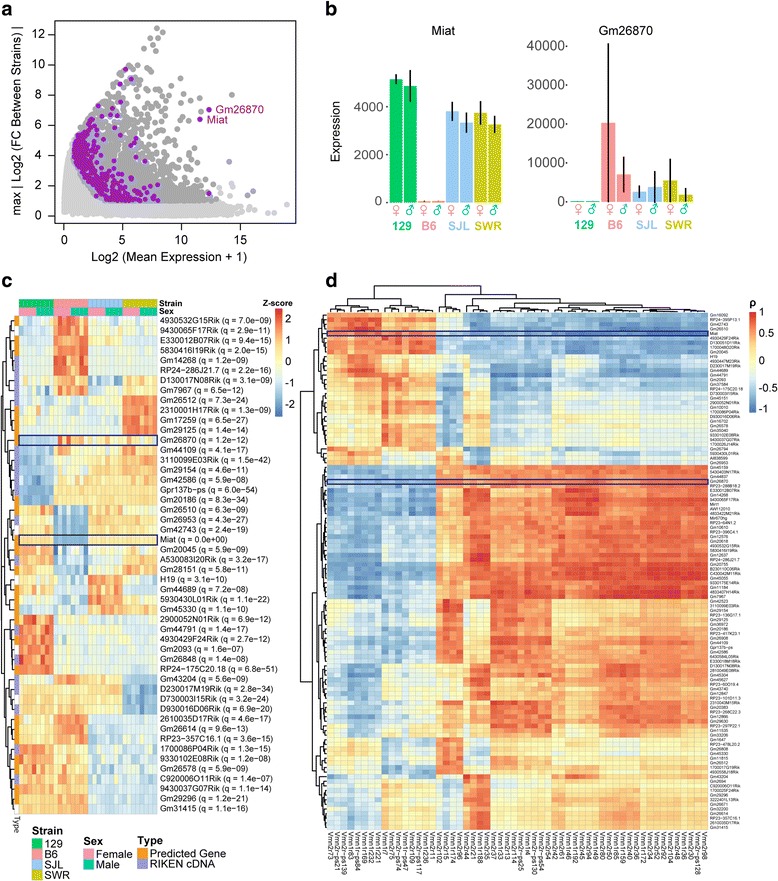
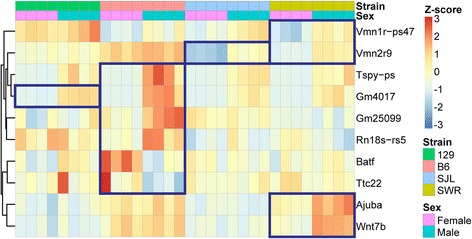
We have performed transcriptome analyses of the mouse vomeronasal organ, a sensory organ recognizing pheromones and interspecies cues. We find little evidence of sexual dimorphism in gene expression except for Xist, an essential gene for X-linked gene inactivation. Variations in gene expression are found mainly among strains, with genes from immune response and chemosensory receptor classes dominating the list. Differentially expressed genes are concentrated in genomic hotspots enriched in these families of genes. Some chemosensory receptors show exclusive patterns of expression in different strains. We find high levels of single nucleotide polymorphism in chemosensory receptor pseudogenes, some of which lead to functionalized receptors. Moreover, we identify a number of differentially expressed long noncoding RNA species showing strong correlation or anti-correlation with chemoreceptor genes.
Our analyses provide little evidence supporting sexually dimorphic gene expression in the vomeronasal organ that may underlie dimorphic pheromone responses. In contrast, we find pronounced variations in the expression of immune response related genes, vomeronasal and G-protein coupled receptor genes among different mouse strains. These findings raised the possibility that diverse strains of mouse perceive pheromone cues differently and behavioral difference among strains in response to pheromone may first arise from differential detection of pheromones. On the other hand, sexually dimorphic responses to pheromones more likely originate from dimorphic neural circuits in the brain than from differential detection. Moreover, noncoding RNA may offer a potential regulatory mechanism controlling the differential expression patterns.
化学感觉系统在调节哺乳动物的性行为方面起着重要作用。信息素引发性别二态性行为,不同的小鼠品系对信息素刺激表现出不同的反应。有人推测,在感知信息素的感觉器官中差异表达的基因可能是导致对信息素线索的性别二态和品系特异性反应的基础。
我们对识别信息素和种间线索的嗅觉器官——小鼠犁鼻器进行了转录组分析。我们发现,除了 Xist(X 连锁基因失活的必需基因)外,基因表达几乎没有性别二态性。基因表达的变化主要存在于不同的品系之间,免疫反应和化学感觉受体类别的基因占据主导地位。差异表达的基因主要集中在富含这些基因家族的基因组热点中。一些化学感觉受体在不同的品系中表现出独特的表达模式。我们发现化学感觉受体假基因中的单核苷酸多态性水平较高,其中一些导致功能化受体。此外,我们还鉴定了一些差异表达的长非编码 RNA 物种,它们与化学感受器基因表现出强相关性或反相关性。
我们的分析结果几乎没有支持犁鼻器中性别二态基因表达的证据,而这种表达可能是性别二态性信息素反应的基础。相反,我们发现不同的小鼠品系之间,免疫反应相关基因、犁鼻器和 G 蛋白偶联受体基因的表达存在明显差异。这些发现提出了一种可能性,即不同的小鼠品系可能以不同的方式感知信息素线索,而对信息素的反应的品系差异可能首先源于对信息素的差异检测。另一方面,对信息素的性别二态反应更可能源自大脑中的性别二态神经回路,而不是源于差异检测。此外,非编码 RNA 可能提供了一种潜在的调节机制,控制着差异表达模式。