School of Biomedical Engineering and Instrumental Science, Zhejiang University, Hangzhou, China.
School of Industrial Engineering, Eindhoven University of Technology, Eindhoven, The Netherlands.
BMC Med Inform Decis Mak. 2017 Dec 12;17(1):170. doi: 10.1186/s12911-017-0551-0.
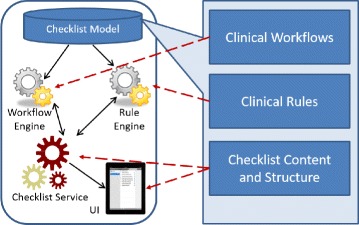
Safety checklist is a type of cognitive tool enforcing short term memory of medical workers with the purpose of reducing medical errors caused by overlook and ignorance. To facilitate the daily use of safety checklists, computerized systems embedded in the clinical workflow and adapted to patient-context are increasingly developed. However, the current hard-coded approach of implementing checklists in these systems increase the cognitive efforts of clinical experts and coding efforts for informaticists. This is due to the lack of a formal representation format that is both understandable by clinical experts and executable by computer programs.
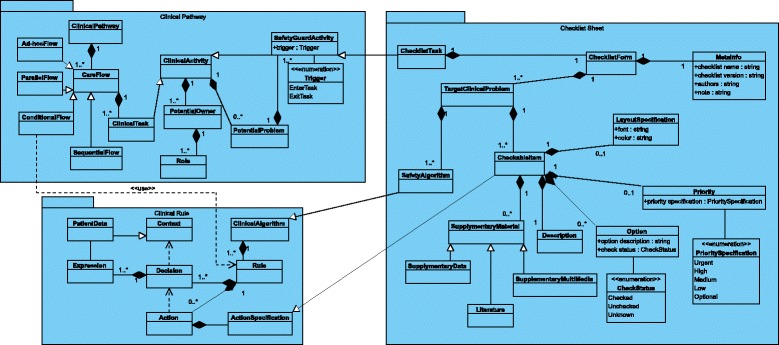
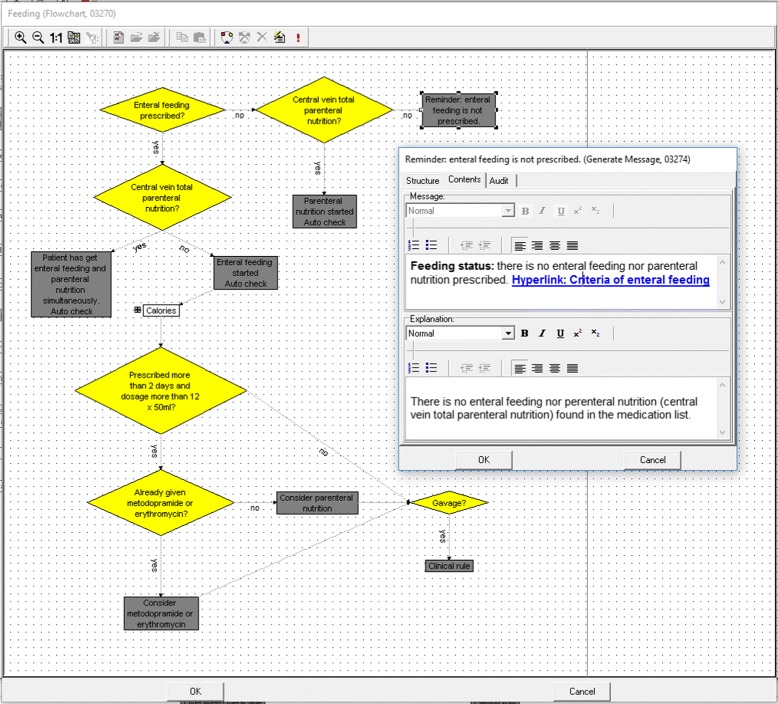
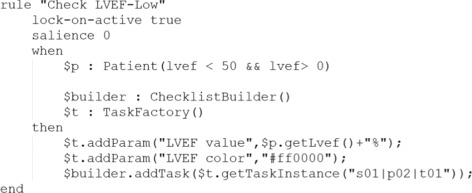
We developed a dynamic checklist meta-model with a three-step approach. Dynamic checklist modeling requirements were extracted by performing a domain analysis. Then, existing modeling approaches and tools were investigated with the purpose of reusing these languages. Finally, the meta-model was developed by eliciting domain concepts and their hierarchies. The feasibility of using the meta-model was validated by two case studies. The meta-model was mapped to specific modeling languages according to the requirements of hospitals.
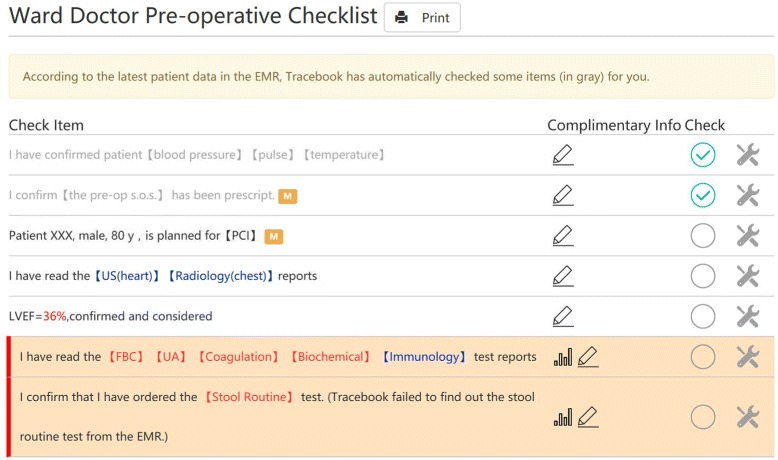
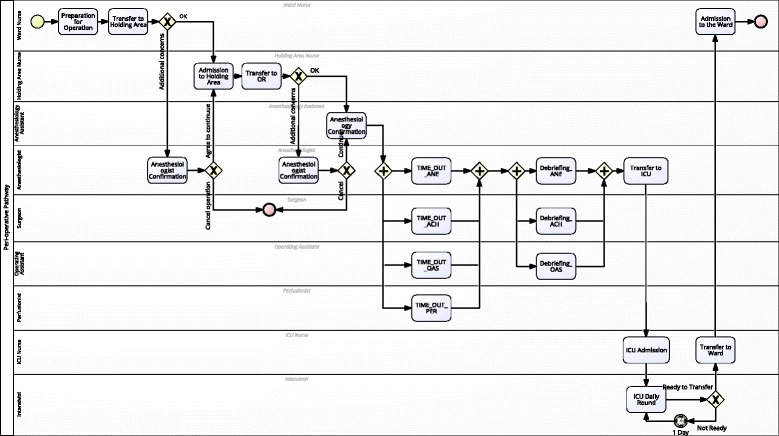
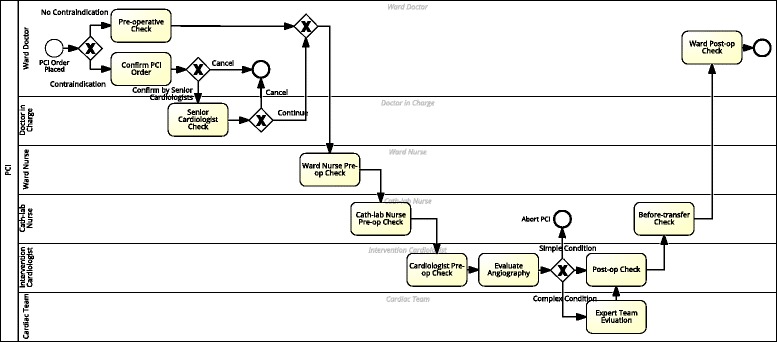
Using the proposed meta-model, a comprehensive coronary artery bypass graft peri-operative checklist set and a percutaneous coronary intervention peri-operative checklist set have been developed in a Dutch hospital and a Chinese hospital, respectively. The result shows that it is feasible to use the meta-model to facilitate the modeling and execution of dynamic checklists.
We proposed a novel meta-model for the dynamic checklist with the purpose of facilitating creating dynamic checklists. The meta-model is a framework of reusing existing modeling languages and tools to model dynamic checklists. The feasibility of using the meta-model is validated by implementing a use case in the system.
安全检查表是一种认知工具,旨在强化医务人员的短期记忆,从而减少因疏忽和无知而导致的医疗差错。为了便于日常使用安全检查表,越来越多的临床工作流程中嵌入并适应患者情境的计算机系统被开发出来。然而,当前在这些系统中实现检查表的硬编码方法增加了临床专家的认知负担和信息专家的编码工作。这是因为缺乏一种既为临床专家所理解又可由计算机程序执行的正式表示格式。
我们采用三步法开发了一个动态检查表元模型。通过执行领域分析提取动态检查表建模需求。然后,研究了现有的建模方法和工具,以达到重用这些语言的目的。最后,通过引出领域概念及其层次结构来开发元模型。通过两个案例研究验证了使用元模型的可行性。根据医院的要求,将元模型映射到特定的建模语言。
使用所提出的元模型,分别在一家荷兰医院和一家中国医院开发了全面的冠状动脉旁路移植术围手术期检查表集和经皮冠状动脉介入术围手术期检查表集。结果表明,使用元模型来促进动态检查表的建模和执行是可行的。
我们提出了一种新颖的动态检查表元模型,旨在促进动态检查表的创建。该元模型是一种重用现有建模语言和工具来建模动态检查表的框架。通过在系统中实现用例验证了使用元模型的可行性。