Zhang Xuejun C, Liu Min, Han Lei
National Laboratory of Biomacromolecules, CAS Center for Excellence in Biomacromolecules, Institute of Biophysics, Chinese Academy of Sciences, Beijing, 100101 China.
College of Life Science, University of Chinese Academy of Sciences, Beijing, 100049 China.
Biophys Rep. 2017;3(4):73-84. doi: 10.1007/s41048-017-0042-y. Epub 2017 Sep 25.
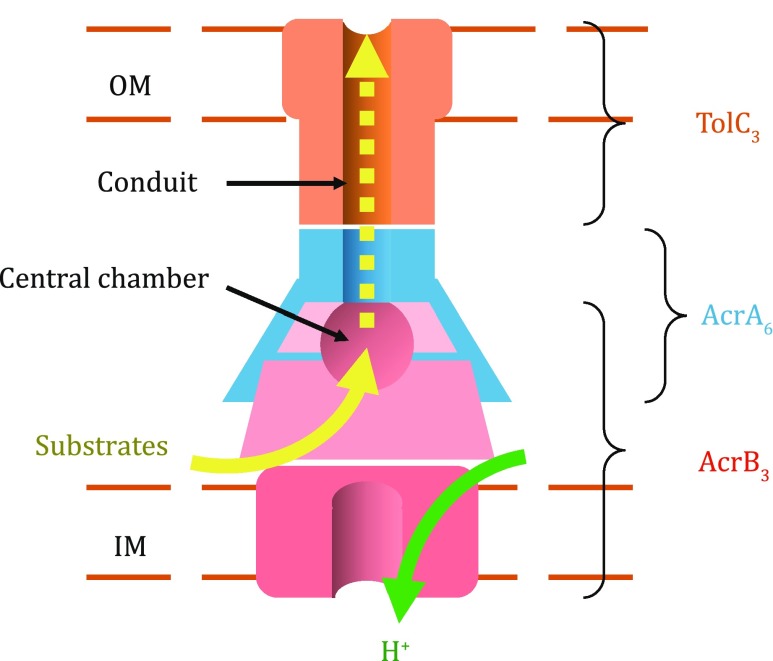
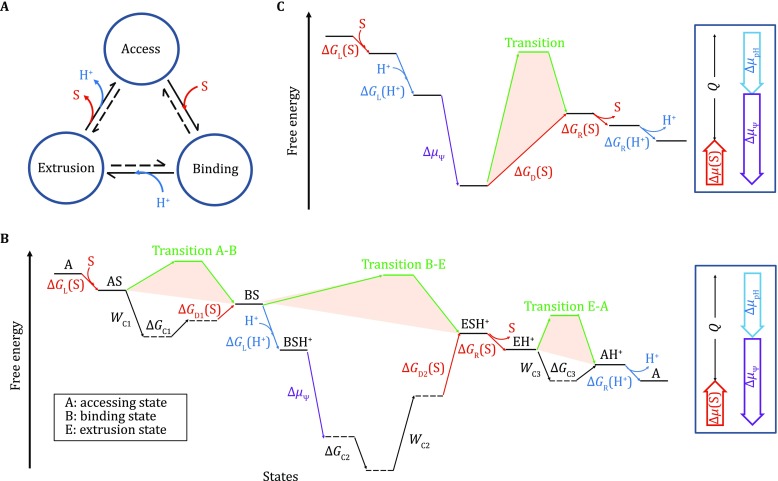
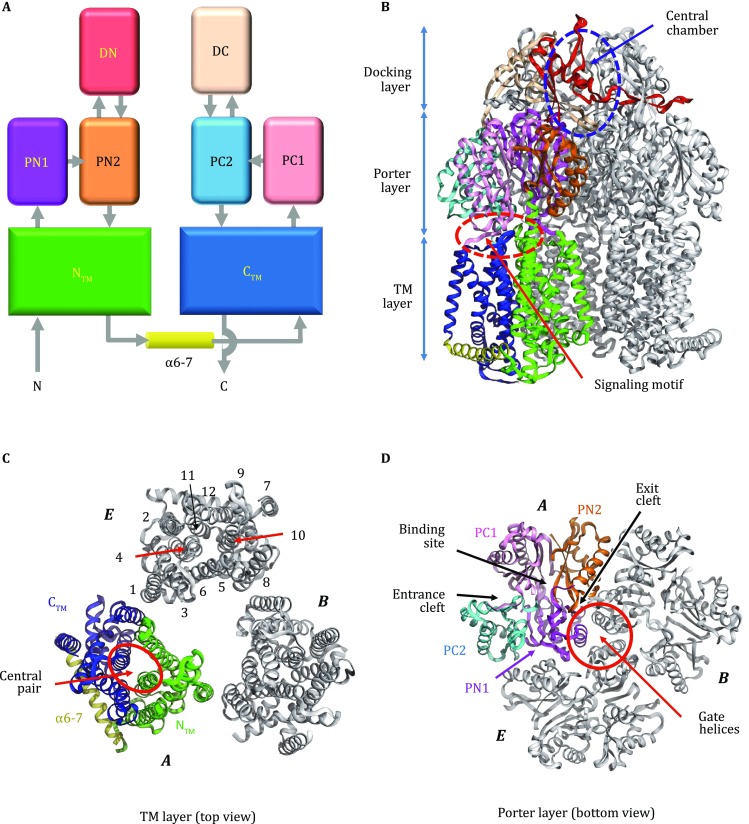
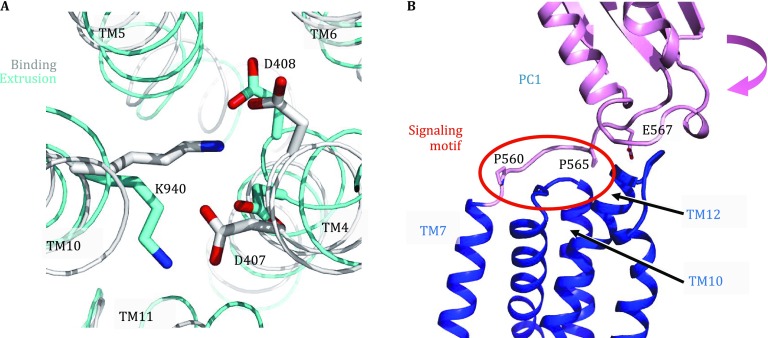
Prokaryotic AcrB-like proteins belong to a family of transporters of the RND superfamily, and as main contributing factor to multidrug resistance pose a tremendous threat to future human health. A unique feature of AcrB transporters is the presence of two separate domains responsible for carrying substrate and generating energy. Significant progress has been made in elucidating the three-dimensional structures of the homo-trimer complexes of AcrB-like transporters, and a three-step functional rotation was identified for this class of transporters. However, the detailed mechanisms for the transduction of the substrate binding signal, as well as the energy coupling processes between the functionally distinct domains remain to be established. Here, we propose a model for the interdomain communication in AcrB that explains how the substrate binding signal from the substrate-carrier domain triggers protonation in the transmembrane domain. Our model further provides a plausible mechanism that explains how protonation induces conformational changes in the substrate-carrier domain. We summarize the thermodynamic principles that govern the functional cycle of the AcrB trimer complex.
原核生物中类似AcrB的蛋白质属于RND超家族转运蛋白家族,作为多药耐药性的主要促成因素,对未来人类健康构成巨大威胁。AcrB转运蛋白的一个独特特征是存在两个负责携带底物和产生能量的独立结构域。在阐明类似AcrB转运蛋白的同三聚体复合物的三维结构方面取得了重大进展,并确定了这类转运蛋白的三步功能旋转。然而,底物结合信号转导的详细机制以及功能不同结构域之间的能量偶联过程仍有待确定。在此,我们提出了一个AcrB结构域间通讯模型,该模型解释了来自底物载体结构域的底物结合信号如何触发跨膜结构域中的质子化。我们的模型进一步提供了一个合理的机制,解释了质子化如何诱导底物载体结构域中的构象变化。我们总结了支配AcrB三聚体复合物功能循环的热力学原理。