1 Department of Biomedical Physiology and Kinesiology, Simon Fraser University , Burnaby, British Columbia, Canada .
2 International Collaboration On Repair Discoveries (ICORD), University of British Columbia , Vancouver, British Columbia, Canada .
J Neurotrauma. 2018 May 1;35(9):1091-1105. doi: 10.1089/neu.2017.5343. Epub 2018 Feb 9.
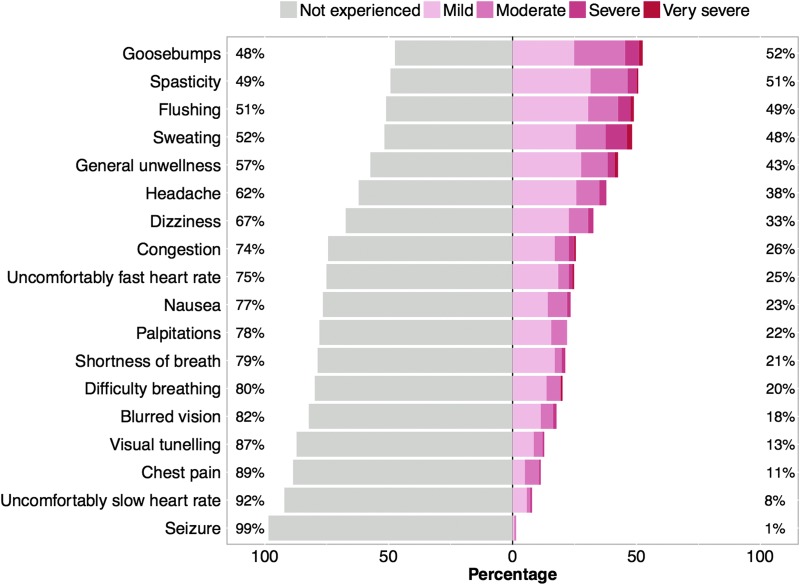
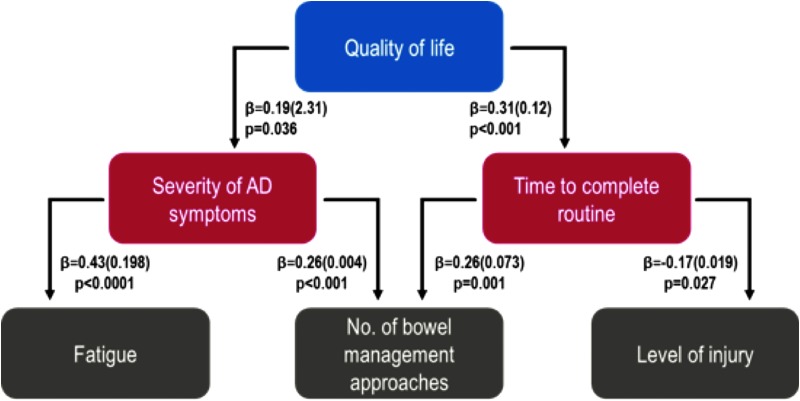
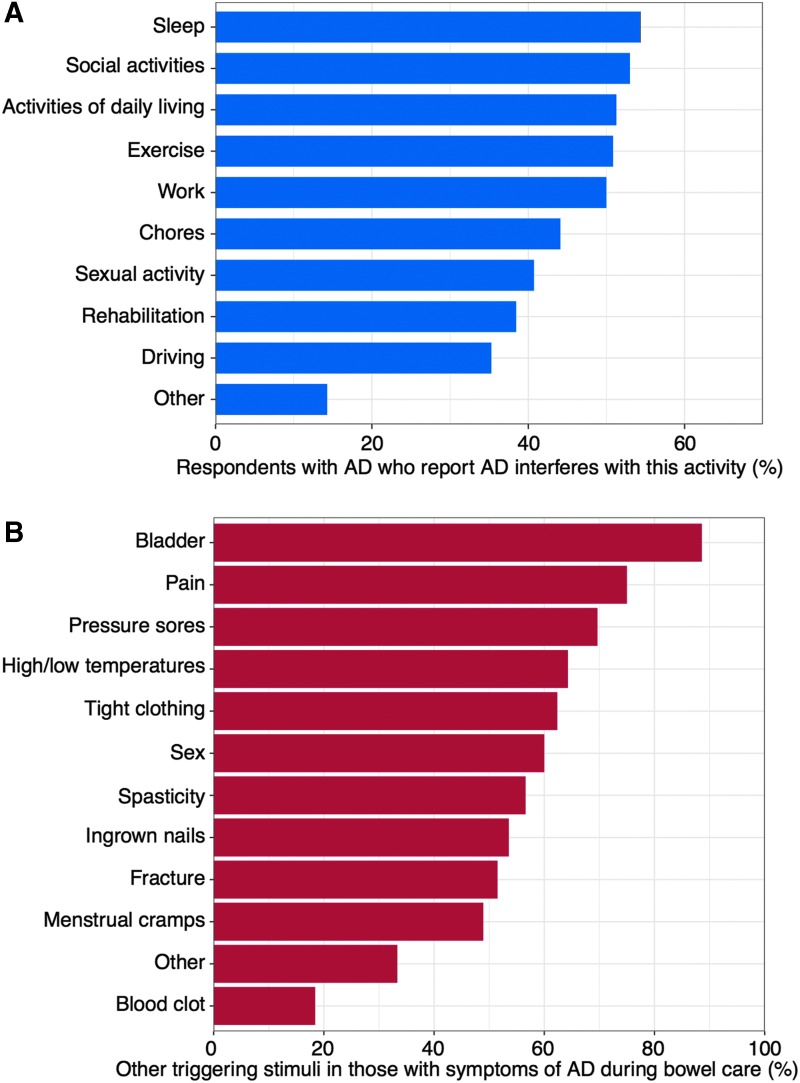
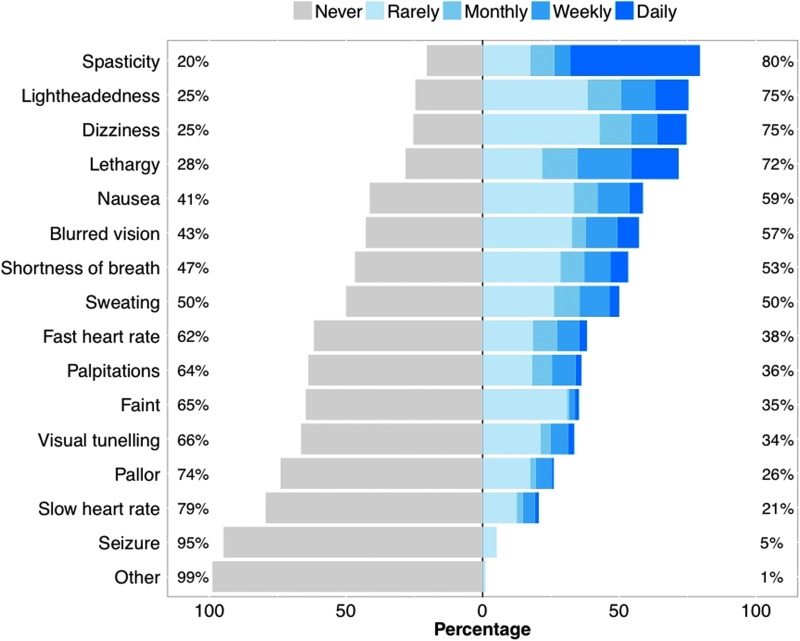
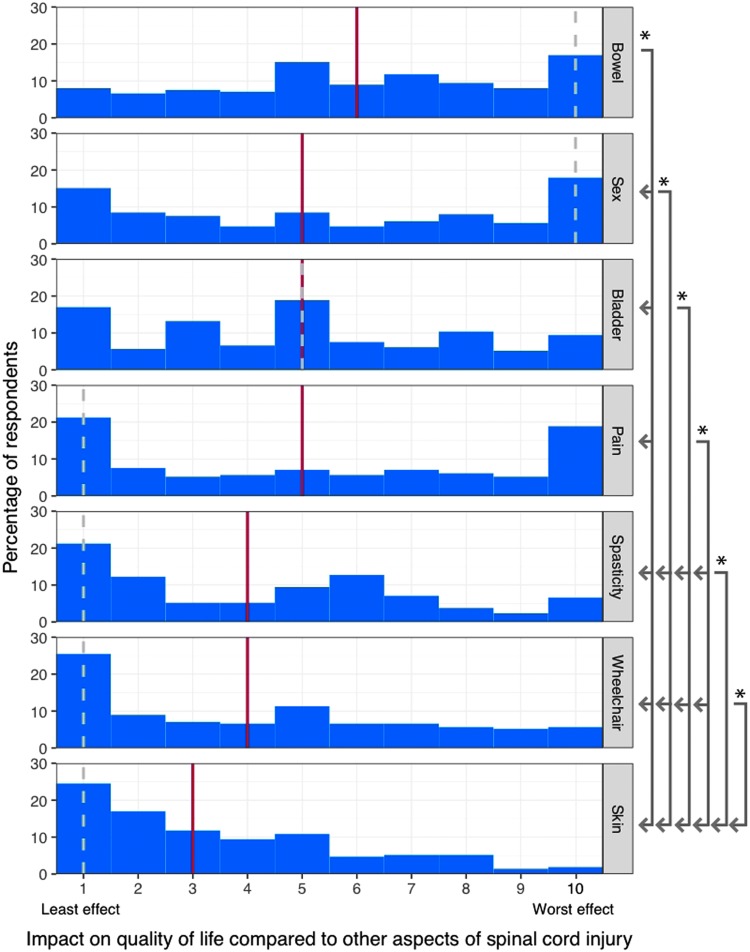
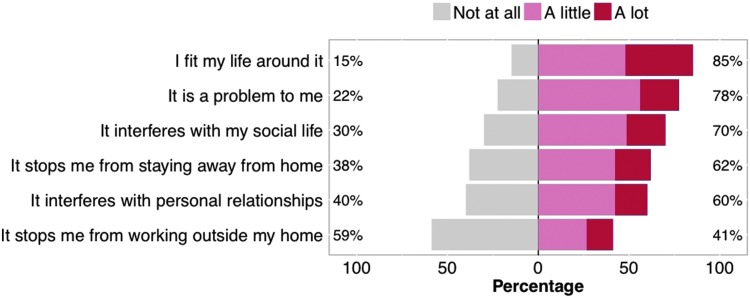
Autonomic dysfunction is common in individuals with spinal cord injury (SCI) and leads to numerous abnormalities, including profound cardiovascular and bowel dysfunction. In those with high-level lesions, bowel management is a common trigger for autonomic dysreflexia (AD; hypertension provoked by sensory stimuli below the injury level). Improving bowel care is integral for enhancing quality of life (QoL). We aimed to describe the relationships between bowel care, AD, and QoL in individuals with SCI. We performed an online community survey of individuals with SCI. Those with injury at or above T7 were considered at risk for AD. Responses were received from 287 individuals with SCI (injury levels C1-sacral and average duration of injury 17.1 ± 12.9 [standard deviation] years). Survey completion rate was 73% (n = 210). Bowel management was a problem for 78%: it interfered with personal relationships (60%) and prevented staying (62%) and working (41%) away from home. The normal bowel care duration was >60 min in 24% and most used digital rectal stimulation (59%); 33% reported bowel incontinence at least monthly. Of those at risk for AD (n = 163), 74% had AD symptoms during bowel care; 32% described palpitations. AD interfered with activities of daily living in 51%. Longer durations of bowel care (p < 0.001) and more severe AD (p = 0.04) were associated with lower QoL. Bowel management is a key concern for individuals with SCI and is commonly associated with symptoms of AD. Further studies should explore ways to manage bowel dysfunction, increase self-efficacy, and ameliorate the impact of AD to improve QoL.
自主功能障碍在脊髓损伤 (SCI) 患者中很常见,导致许多异常,包括严重的心血管和肠道功能障碍。在高位损伤患者中,肠道管理是自主反射异常 (AD;损伤水平以下的感觉刺激引起的高血压) 的常见触发因素。改善肠道护理是提高生活质量 (QoL) 的关键。我们旨在描述 SCI 患者的肠道护理、AD 和 QoL 之间的关系。我们对 SCI 患者进行了在线社区调查。那些 T7 或以上损伤的人被认为有发生 AD 的风险。共收到 287 名 SCI 患者 (损伤水平 C1 至骶骨,平均损伤持续时间 17.1±12.9 [标准差]) 的回复。调查完成率为 73% (n=210)。肠道管理存在问题的占 78%:它干扰人际关系 (60%),并阻止人们(62%)离家居住和(41%)离家工作。24%的人正常肠道护理时间超过 60 分钟,大多数人使用直肠刺激法(59%);33%的人每月至少有一次大便失禁。在有 AD 风险的患者中(n=163),74%的人在肠道护理时出现 AD 症状;32%的人描述有心悸。AD 影响 51%的日常生活活动。肠道护理时间更长(p<0.001)和 AD 更严重(p=0.04)与 QoL 较低相关。肠道管理是 SCI 患者的一个关键关注点,通常与 AD 症状相关。进一步的研究应该探索管理肠道功能障碍、增加自我效能和改善 AD 影响的方法,以提高 QoL。