Kolovskaya Olga S, Zamay Tatiana N, Belyanina Irina V, Karlova Elena, Garanzha Irina, Aleksandrovsky Aleksandr S, Kirichenko Andrey, Dubynina Anna V, Sokolov Alexey E, Zamay Galina S, Glazyrin Yury E, Zamay Sergey, Ivanchenko Tatiana, Chanchikova Natalia, Tokarev Nikolay, Shepelevich Nikolay, Ozerskaya Anastasia, Badrin Evgeniy, Belugin Kirill, Belkin Simon, Zabluda Vladimir, Gargaun Ana, Berezovski Maxim V, Kichkailo Anna S
Krasnoyarsk State Medical University named after Professor V.F. Voyno-Yasenetskii, Krasnoyarsk, Russia; Kirensky Institute of Physics, Federal Research Center KSC SB RAS, Krasnoyarsk, Russia.
Krasnoyarsk State Medical University named after Professor V.F. Voyno-Yasenetskii, Krasnoyarsk, Russia; Siberian Federal University, Krasnoyarsk, Russia.
Mol Ther Nucleic Acids. 2017 Dec 15;9:12-21. doi: 10.1016/j.omtn.2017.08.007. Epub 2017 Aug 16.
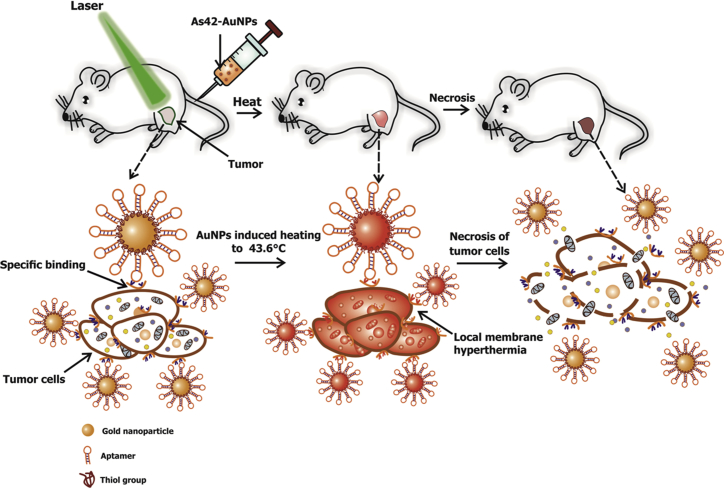
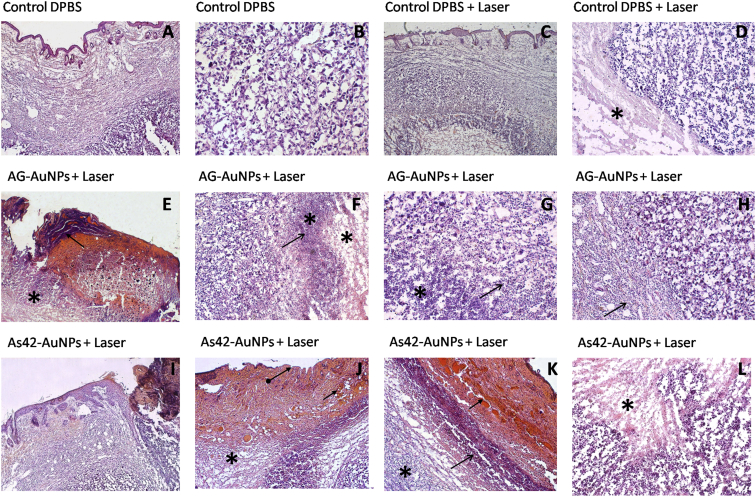
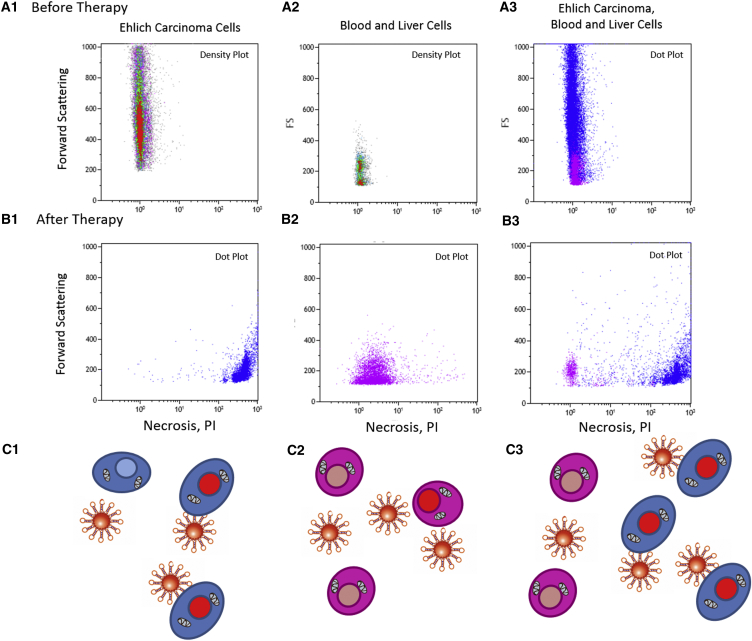
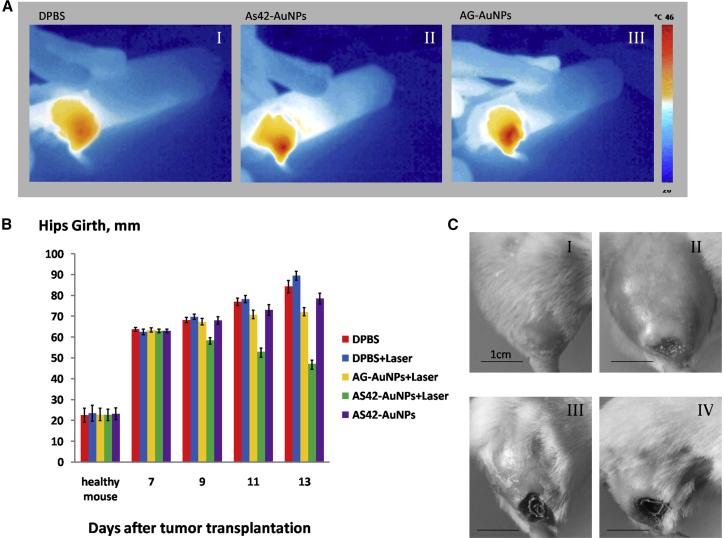
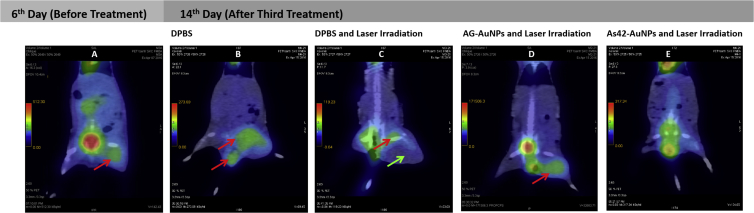
Novel nanoscale bioconjugates combining unique plasmonic photothermal properties of gold nanoparticles (AuNPs) with targeted delivery using cell-specific DNA aptamers have a tremendous potential for medical diagnostics and therapy of many cell-based diseases. In this study, we demonstrate the high anti-cancer activity of aptamer-conjugated, 37-nm spherical gold nanoparticles toward Ehrlich carcinoma in tumor-bearing mice after photothermal treatment. The synthetic anti-tumor aptamers bring the nanoparticles precisely to the desired cells and selectively eliminate cancer cells after the subsequent laser treatment. To prove tumor eradication, we used positron emission tomography (PET) utilizing radioactive glucose and computer tomography, followed by histological analysis of cancer tissue. Three injections of aptamer-conjugated AuNPs and 5 min of laser irradiations are enough to make the tumor undetectable by PET. Histological analysis proves PET results and shows lower damage of healthy tissue in addition to a higher treatment efficiency and selectivity of the gold nanoparticles functionalized with aptamers in comparison to control experiments using free unconjugated nanoparticles.
将金纳米颗粒(AuNPs)独特的等离子体光热特性与使用细胞特异性DNA适配体进行靶向递送相结合的新型纳米级生物共轭物,在许多基于细胞的疾病的医学诊断和治疗方面具有巨大潜力。在本研究中,我们展示了经适配体共轭的37纳米球形金纳米颗粒在光热处理后,对荷瘤小鼠体内艾氏癌具有高抗癌活性。合成的抗肿瘤适配体将纳米颗粒精确地带到所需细胞,并在随后的激光处理后选择性地消除癌细胞。为了证明肿瘤被根除,我们使用了利用放射性葡萄糖的正电子发射断层扫描(PET)和计算机断层扫描,随后对癌组织进行组织学分析。三次注射经适配体共轭的AuNPs并进行5分钟激光照射,足以使PET检测不到肿瘤。组织学分析证实了PET结果,并显示与使用游离未共轭纳米颗粒的对照实验相比,经适配体功能化的金纳米颗粒对健康组织的损伤更小,同时具有更高的治疗效率和选择性。