de Sousa Alexandra, AbdElgawad Hamada, Asard Han, Pinto Ana, Soares Cristiano, Branco-Neves Simão, Braga Teresa, Azenha Manuel, Selim Samy, Al Jaouni Soad, Fidalgo Fernanda, Teixeira Jorge
BioSystems and Integrative Sciences Institute, Departamento de Biologia, Faculdade de Ciências, Universidade do Porto, Porto, Portugal.
Laboratory for Molecular Plant Physiology and Biotechnology, Department of Biology, University of Antwerp, Antwerp, Belgium.
Front Plant Sci. 2017 Nov 30;8:1967. doi: 10.3389/fpls.2017.01967. eCollection 2017.
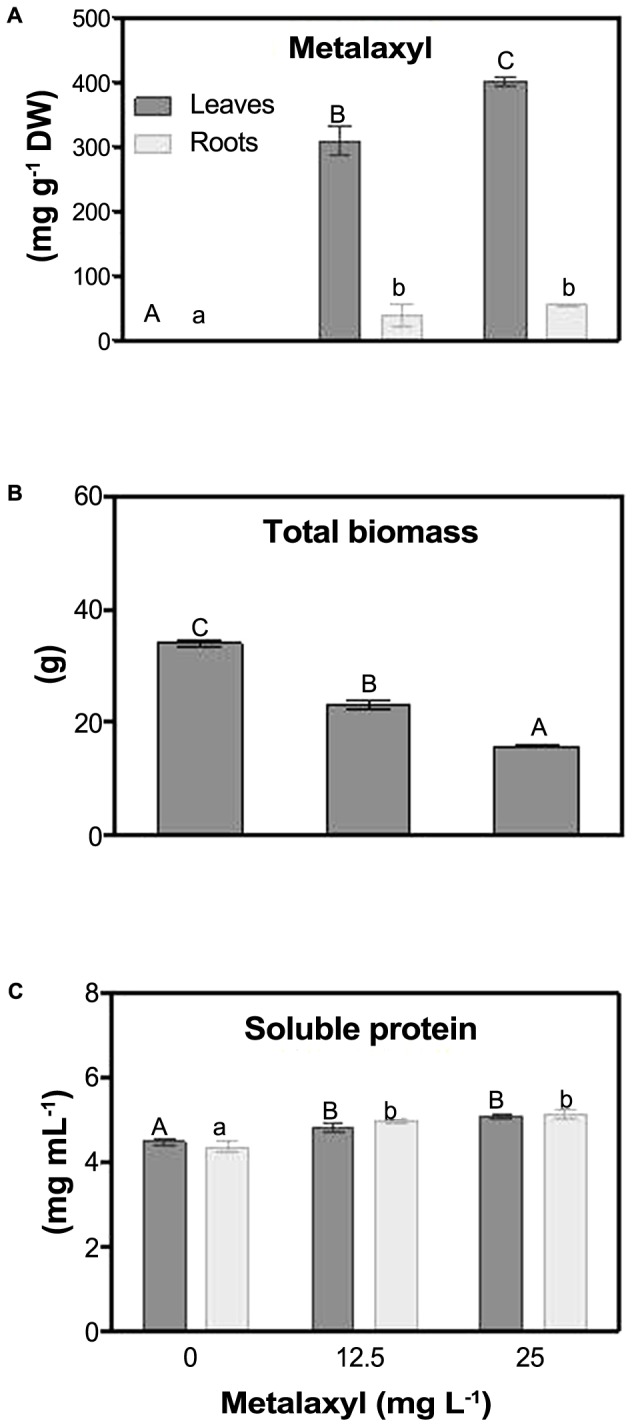
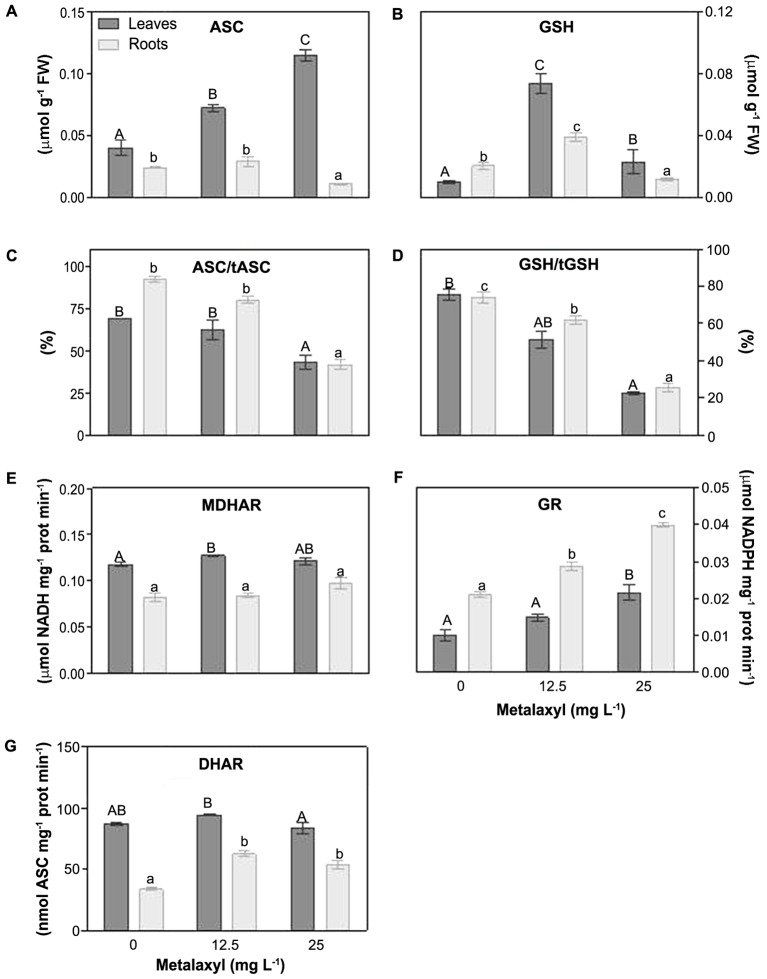
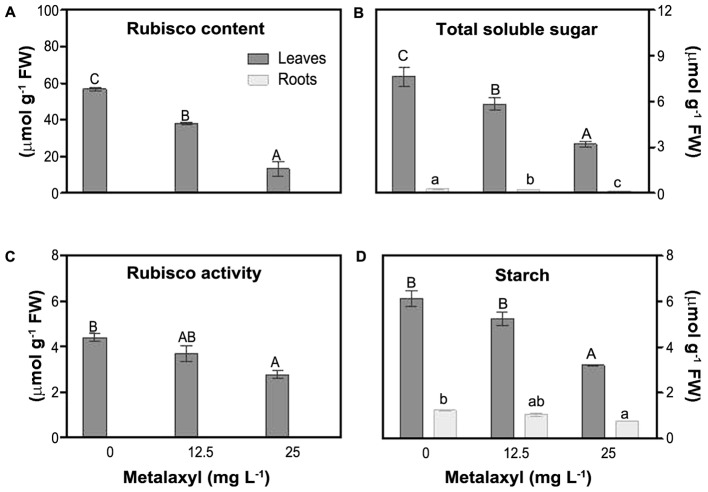
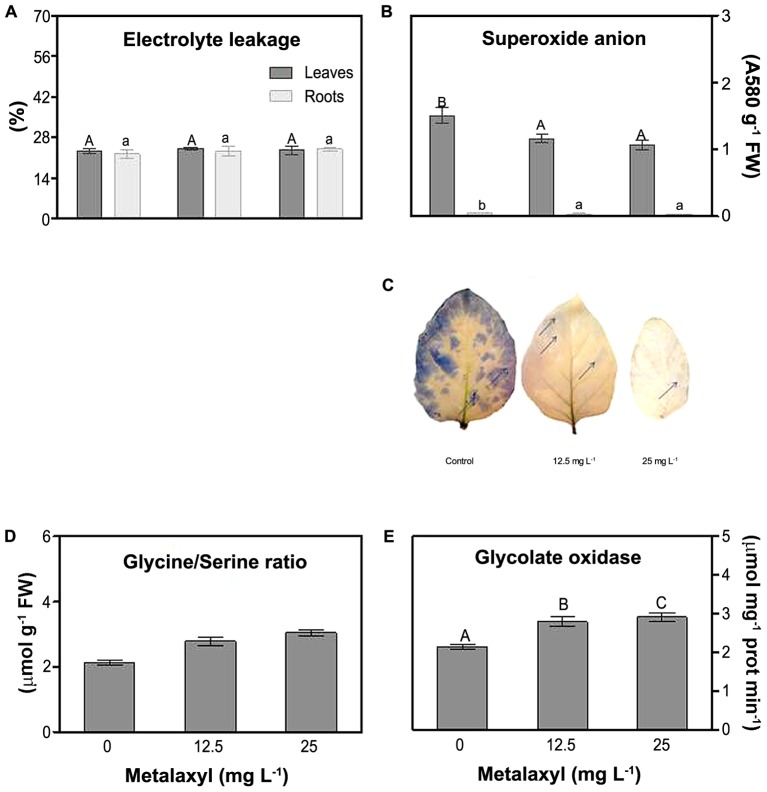
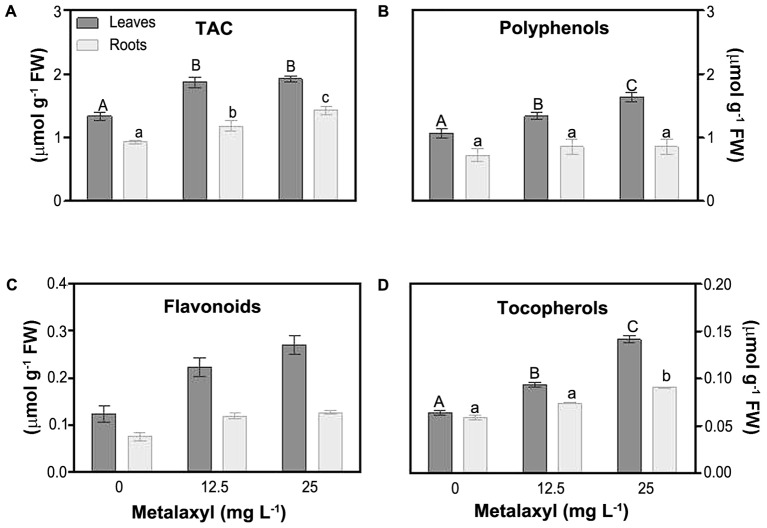
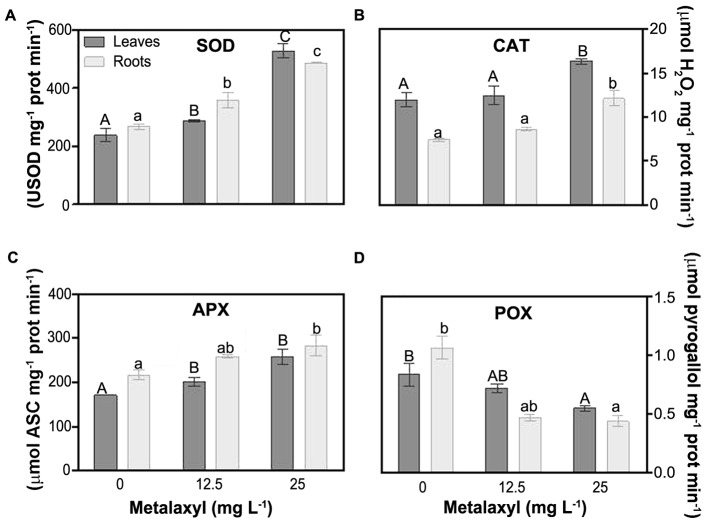
Overuse of pesticides has resulted in environmental problems, threating public health through accumulation in food chains. Phytoremediation is a powerful technique to clean up contaminated environments. However, it is necessary to unravel the metabolic mechanisms underlying phytoremediation in order to increase the efficiency of this process. Therefore, growth, physiological and biochemical responses in leaves and roots of L. exposed to the commonly used fungicide metalaxyl were investigated. This species shows characteristics that make it valuable as a potential tool for the remediation of organic pollutants. We found that once inside the plant, metalaxyl altered carbon metabolism, which resulted in a reduction of growth and lower biomass accumulation due to impairment of carbohydrate production (total soluble sugar, starch, rubisco) and increased photorespiration (glycolate oxidase, Gly/Ser ratio). A significant increase of antioxidant defenses (polyphenols, flavonoids, tocopherols, ascorbate, glutathione, superoxide dismutase, catalase, peroxidases, monodehydroascorbate- and dehydroascorbate reductase, gluthatione reductase) kept reactive oxygen species (ROS) levels under control (superoxide anion) leaving cell membranes undamaged. The results suggest that enhancing carbon assimilation and antioxidant capacity may be target parameters to improve this species' phytoremediation capacities. s • Metalaxyl inhibits growth by reducing photosynthesis and inducing photorespiration • Elevated antioxidant defenses protect metalaxyl-treated plants from oxidative damage • Ascorbate and glutathione are key antioxidants in metalaxyl tolerance.
农药的过度使用已导致环境问题,通过在食物链中的积累威胁公众健康。植物修复是一种用于清理受污染环境的有力技术。然而,有必要阐明植物修复背后的代谢机制,以提高这一过程的效率。因此,研究了暴露于常用杀菌剂甲霜灵的L.植物叶片和根系的生长、生理和生化反应。该物种具有一些特性,使其作为一种潜在的有机污染物修复工具具有价值。我们发现,甲霜灵一旦进入植物体内,就会改变碳代谢,由于碳水化合物生成(总可溶性糖、淀粉、核酮糖-1,5-二磷酸羧化酶)受损以及光呼吸增加(乙醇酸氧化酶、甘氨酸/丝氨酸比率),导致生长减少和生物量积累降低。抗氧化防御(多酚、黄酮类化合物、生育酚、抗坏血酸、谷胱甘肽、超氧化物歧化酶、过氧化氢酶、过氧化物酶、单脱氢抗坏血酸还原酶和脱氢抗坏血酸还原酶、谷胱甘肽还原酶)的显著增加使活性氧(ROS)水平得到控制(超氧阴离子),从而使细胞膜未受损伤。结果表明,增强碳同化和抗氧化能力可能是提高该物种植物修复能力的目标参数。• 甲霜灵通过降低光合作用和诱导光呼吸来抑制生长 • 增强的抗氧化防御保护经甲霜灵处理的植物免受氧化损伤 • 抗坏血酸和谷胱甘肽是甲霜灵耐受性的关键抗氧化剂。