Ngufor Corine, Fongnikin Augustin, Rowland Mark, N'Guessan Raphael
London School of Hygiene and Tropical Medicine (LSHTM), London, United Kingdom.
Centre de Recherches Entomologiques de Cotonou (CREC), Cotonou, Benin.
PLoS One. 2017 Dec 18;12(12):e0189575. doi: 10.1371/journal.pone.0189575. eCollection 2017.
There is an urgent need for new insecticides for indoor residual spraying (IRS) which can provide improved and prolonged control of malaria vectors that have developed resistance to existing insecticides. The neonicotinoid, clothianidin represents a class of chemistry new to public health. Clothianidin acts as an agonist on nicotinic acetyl choline receptors. IRS with a mixture of Clothianidin and another WHO approved insecticide such as deltamethrin could provide improved control of insecticide resistant malaria vector populations and serve as a tool for insecticide resistance management.
The efficacy and residual activity of a novel IRS mixture of deltamethrin and clothianidin was evaluated against wild pyrethroid resistant An. gambiae sl in experimental huts in Cove, Benin. Two application rates of the mixture were tested and comparison was made with clothianidin and deltamethrin applied alone. To assess the residual efficacy of the treatments on different local wall substrates, the inner walls of the experimental huts were covered with either cement, mud or plywood.
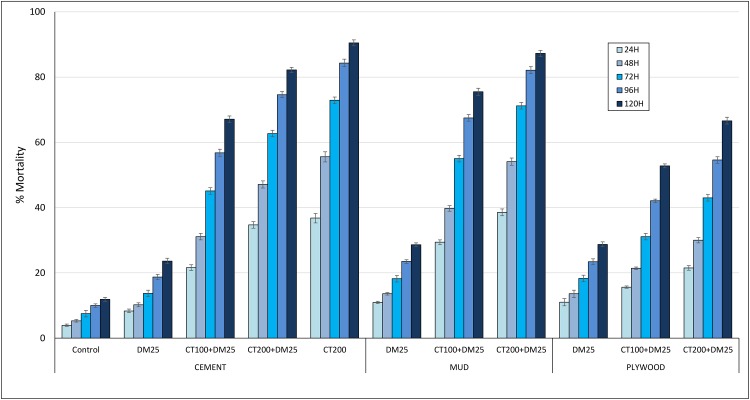
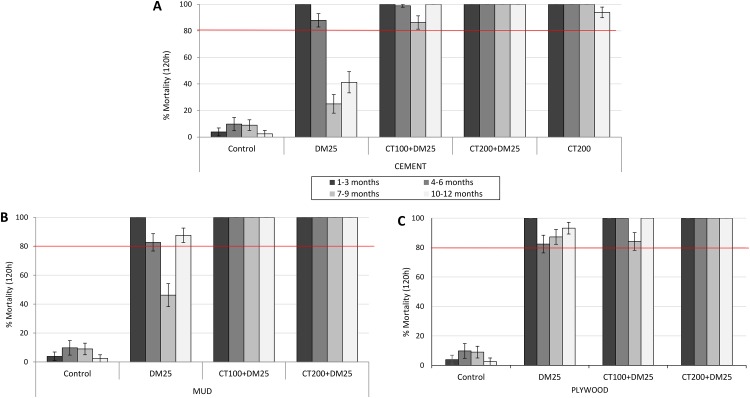
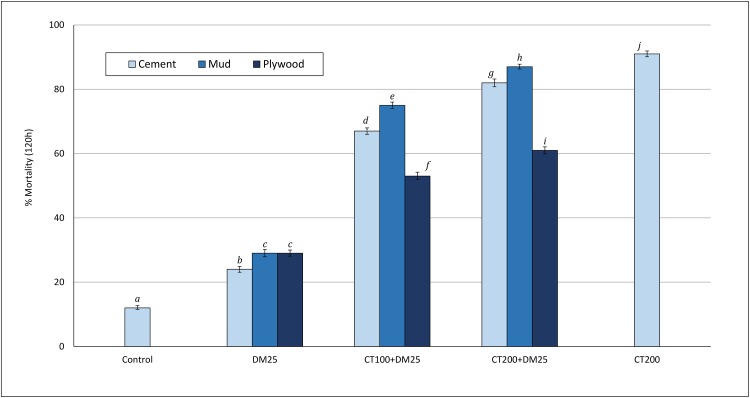
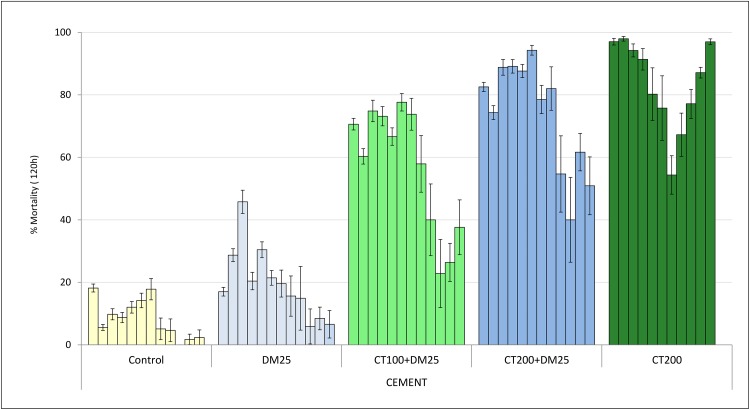
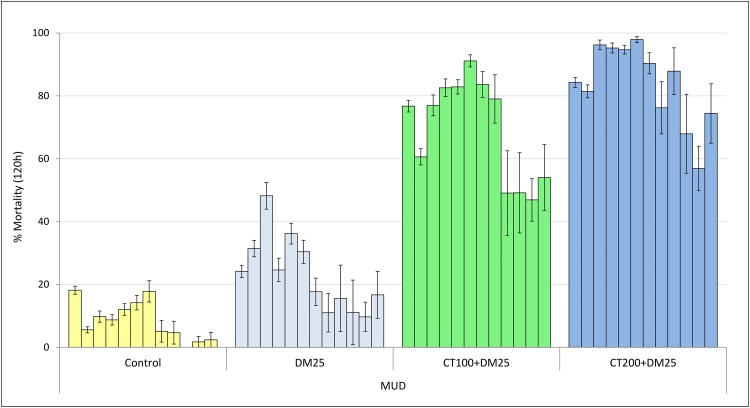
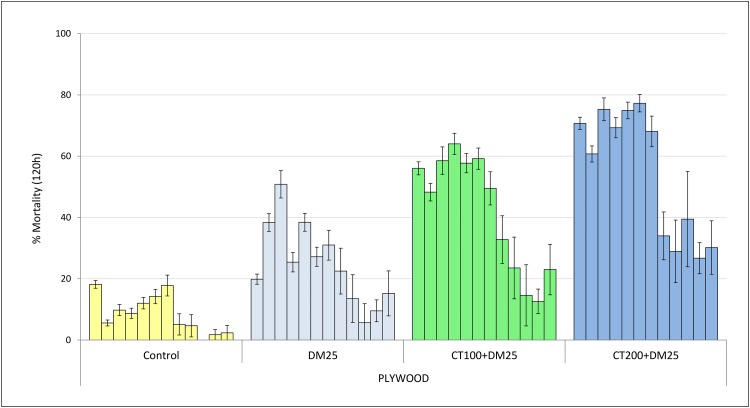
Clothianidin demonstrated a clear delayed expression in mortality of wild pyrethroid resistant An. gambiae sl in the experimental huts which reached its full effect 120 hours after exposure. Overall mortality over the 12-month hut trial was 15% in the control hut and 24-29% in the deltamethrin-treated huts. The mixture of clothianidin 200mg/m2 and deltamethrin 25mg/m2 induced high overall hut mortality rates (87% on mud walls, 82% on cement walls and 61% on wooden walls) largely due to the clothianidin component and high hut exiting rates (67-76%) mostly due to the deltamethrin component. Mortality rates remained >80% for 8-9 months on mud and cement walls. The residual activity trend was confirmed by results from monthly in situ cone bioassays with laboratory susceptible An. gambiae Kisumu strain.
IRS campaigns with the mixture of clothianidin plus deltamethrin have the potential to provide prolonged control of malaria transmitted by pyrethroid resistant mosquito populations.
迫切需要用于室内滞留喷洒(IRS)的新型杀虫剂,以更好地长期控制已对现有杀虫剂产生抗性的疟疾媒介。新烟碱类杀虫剂噻虫胺代表了一类对公共卫生来说全新的化学物质。噻虫胺作为烟碱型乙酰胆碱受体的激动剂。将噻虫胺与另一种世界卫生组织批准的杀虫剂(如溴氰菊酯)混合进行室内滞留喷洒,可更好地控制对杀虫剂产生抗性的疟疾媒介种群,并作为杀虫剂抗性管理的一种手段。
在贝宁科夫的实验小屋中,评估了一种新型溴氰菊酯与噻虫胺混合的室内滞留喷洒剂对野生拟除虫菊酯抗性冈比亚按蚊s.l.的效果和残留活性。测试了该混合物的两种施用量,并与单独使用的噻虫胺和溴氰菊酯进行比较。为评估处理在不同当地墙壁基质上的残留效果,实验小屋的内墙用水泥、泥浆或胶合板覆盖。
噻虫胺在实验小屋中对野生拟除虫菊酯抗性冈比亚按蚊s.l.的死亡率表现出明显的延迟表达,在接触后120小时达到最大效果。在为期12个月的小屋试验中,对照小屋的总体死亡率为15%,溴氰菊酯处理的小屋为24 - 29%。噻虫胺200mg/m²与溴氰菊酯25mg/m²的混合物导致小屋总体死亡率较高(泥墙为87%,水泥墙为82%,木墙为61%),这主要归因于噻虫胺成分,而较高的小屋逃离率(67 - 76%)主要归因于溴氰菊酯成分。在泥墙和水泥墙上,死亡率在8 - 9个月内保持>80%。每月用实验室易感的冈比亚按蚊基苏木菌株进行的现场锥形生物测定结果证实了残留活性趋势。
噻虫胺加溴氰菊酯混合物的室内滞留喷洒运动有潜力长期控制由拟除虫菊酯抗性蚊虫种群传播的疟疾。