Groningen Research Institute of Pharmacy, University of Groningen, Groningen, The Netherlands.
Institute of Cardiovascular Science, University College London, London, UK.
Int J Epidemiol. 2018 Aug 1;47(4):1217-1228. doi: 10.1093/ije/dyx254.
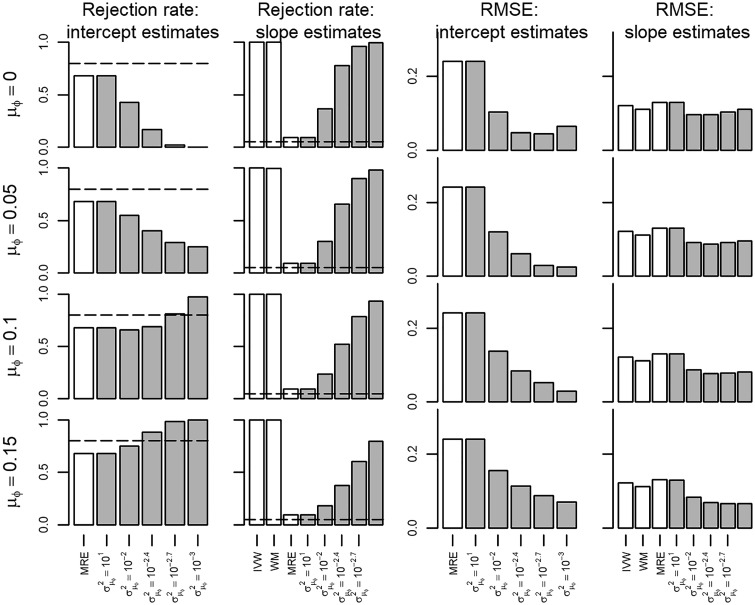
The MR-Egger (MRE) estimator has been proposed to correct for directional pleiotropic effects of genetic instruments in an instrumental variable (IV) analysis. The power of this method is considerably lower than that of conventional estimators, limiting its applicability. Here we propose a novel Bayesian implementation of the MR-Egger estimator (BMRE) and explore the utility of applying weakly informative priors on the intercept term (the pleiotropy estimate) to increase power of the IV (slope) estimate.
This was a simulation study to compare the performance of different IV estimators. Scenarios differed in the presence of a causal effect, the presence of pleiotropy, the proportion of pleiotropic instruments and degree of 'Instrument Strength Independent of Direct Effect' (InSIDE) assumption violation. Based on empirical plasma urate data, we present an approach to elucidate a prior distribution for the amount of pleiotropy.
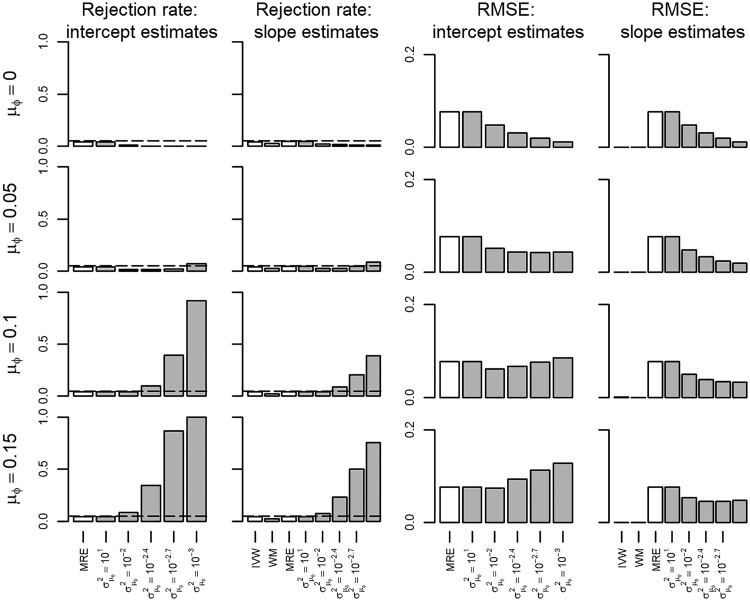
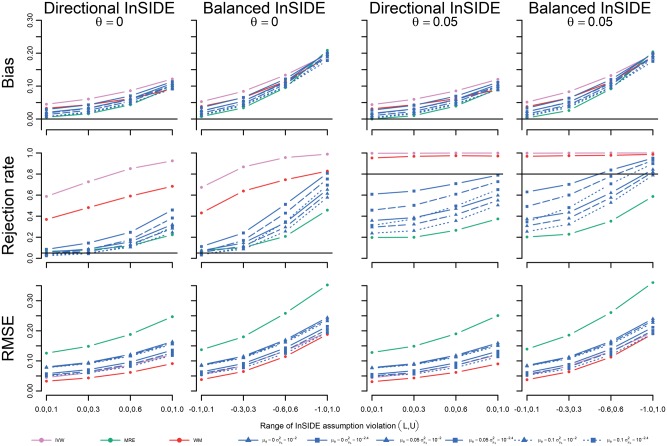
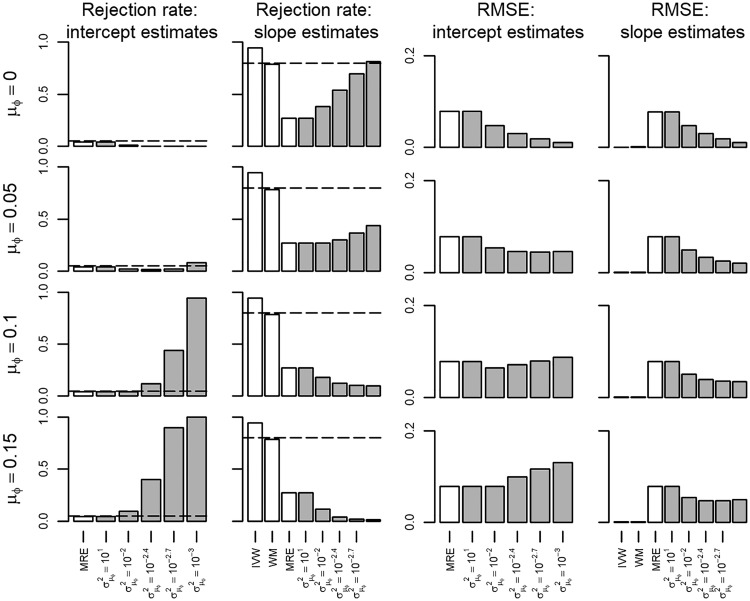
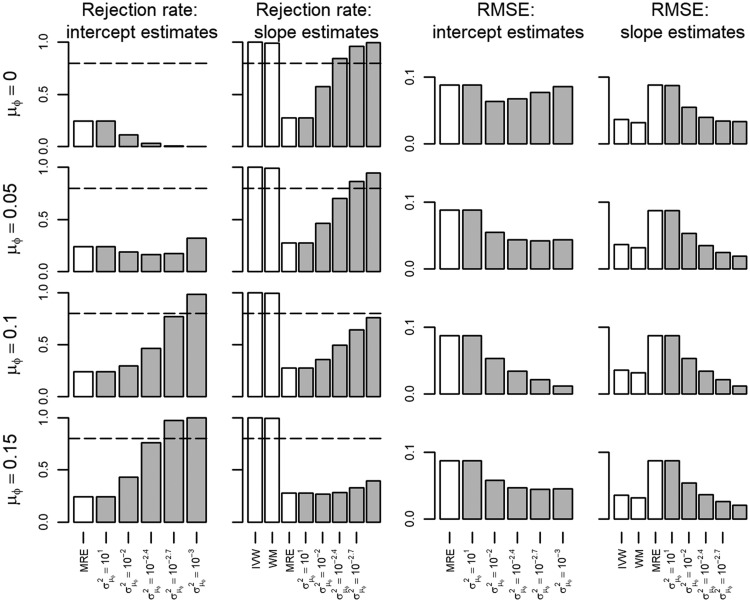
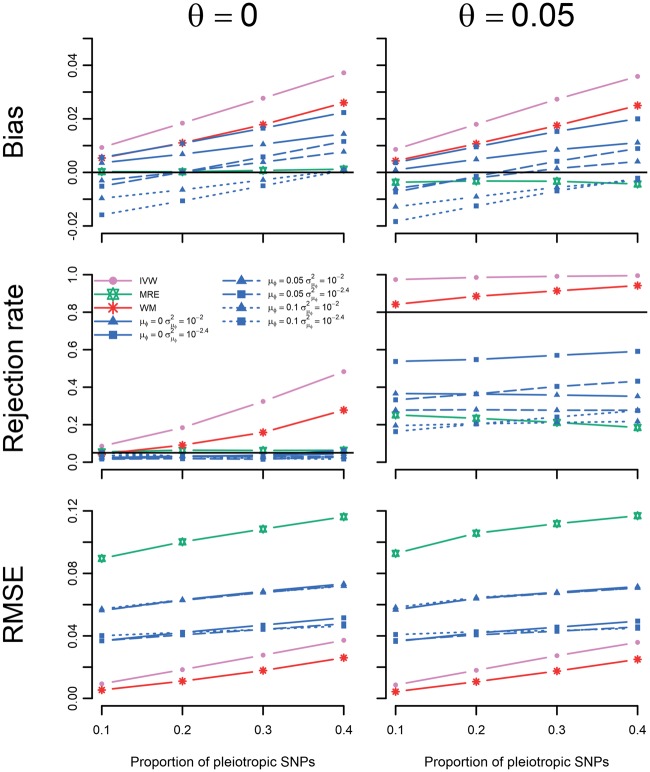
A weakly informative prior on the intercept term increased power of the slope estimate while maintaining type 1 error rates close to the nominal value of 0.05. Under the InSIDE assumption, performance was unaffected by the presence or absence of pleiotropy. Violation of the InSIDE assumption biased all estimators, affecting the BMRE more than the MRE method.
Depending on the prior distribution, the BMRE estimator has more power at the cost of an increased susceptibility to InSIDE assumption violations. As such the BMRE method is a compromise between the MRE and conventional IV estimators, and may be an especially useful approach to account for observed pleiotropy.
MR-Egger(MRE)估计量被提议用于校正工具变量(IV)分析中遗传工具的定向多效性效应。该方法的功效明显低于传统估计量,限制了其适用性。本文提出了一种新的贝叶斯 MRE 估计量(BMRE)方法,并探讨了在截距项(多效性估计值)上应用弱信息先验来提高 IV(斜率)估计量功效的有效性。
这是一项模拟研究,用于比较不同 IV 估计量的性能。不同场景的差异在于存在因果效应、多效性的存在、多效性工具的比例以及“独立于直接效应的工具强度”(InSIDE)假设违反的程度。基于经验性血浆尿酸数据,我们提出了一种阐明多效性程度的先验分布的方法。
截距项上的弱信息先验增加了斜率估计量的功效,同时保持了 1 型错误率接近 0.05 的名义值。在 InSIDE 假设下,多效性的存在与否对性能没有影响。InSIDE 假设的违反会使所有估计量产生偏差,对 BMRE 的影响比对 MRE 方法的影响更大。
根据先验分布,BMRE 估计量在成本增加的情况下具有更高的功效,并且更容易受到 InSIDE 假设违反的影响。因此,BMRE 方法是 MRE 和传统 IV 估计量之间的折衷,可能是一种特别有用的方法,用于解释观察到的多效性。