New York Genome Center, New York, NY, 10013, USA.
Broad Institute, Cambridge, MA, 02142, USA.
Nat Commun. 2017 Dec 19;8(1):2185. doi: 10.1038/s41467-017-02329-y.
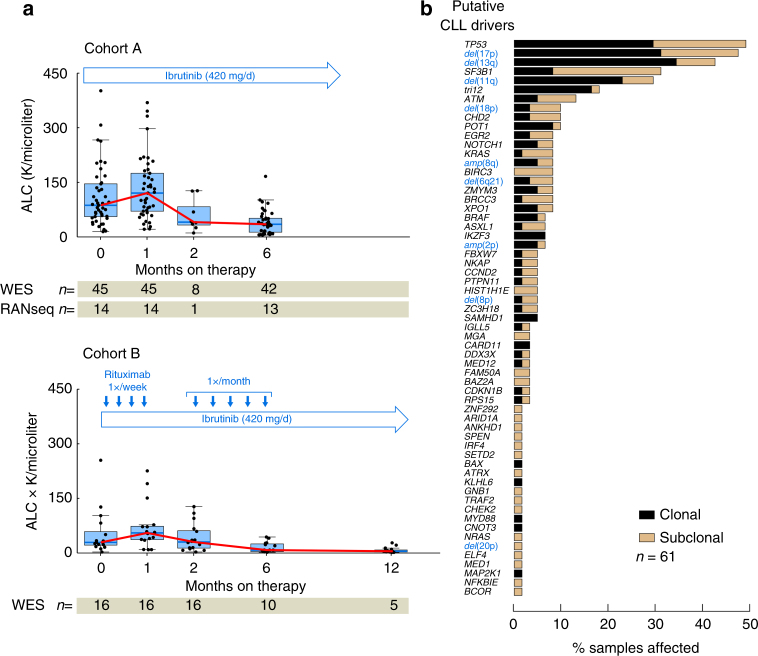
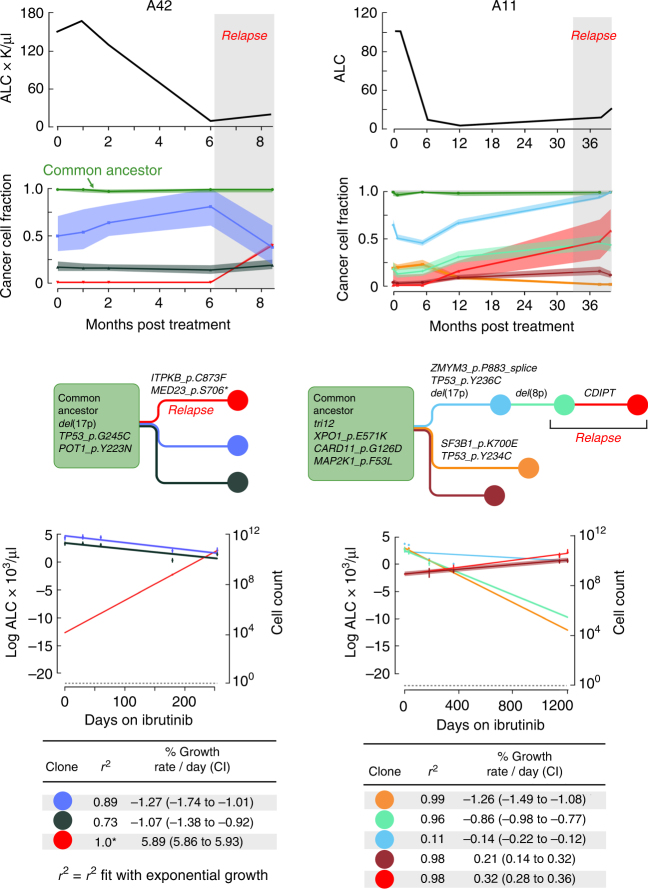
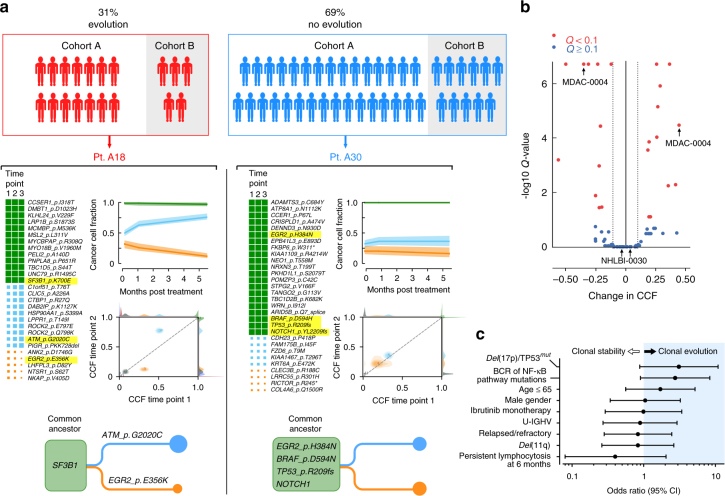
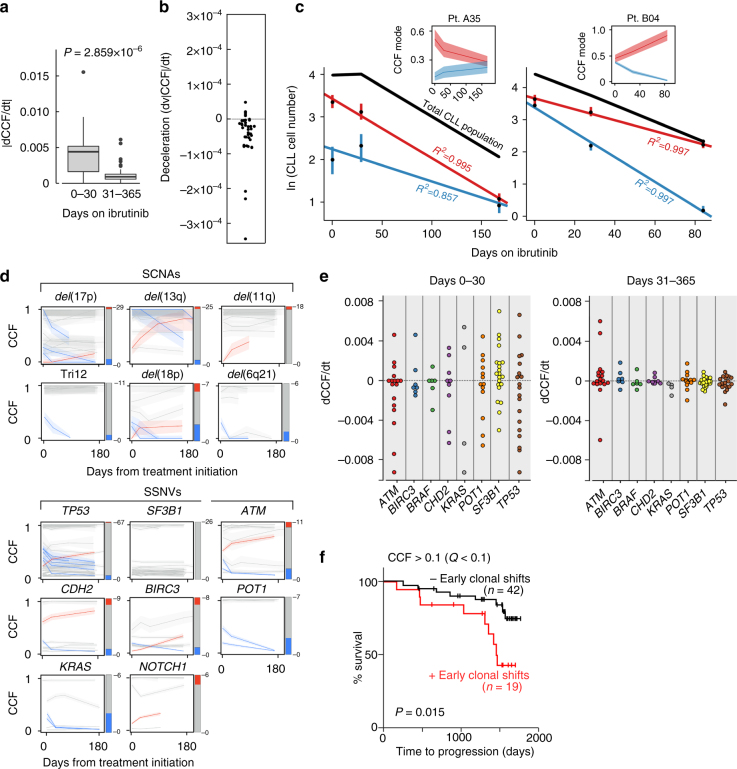
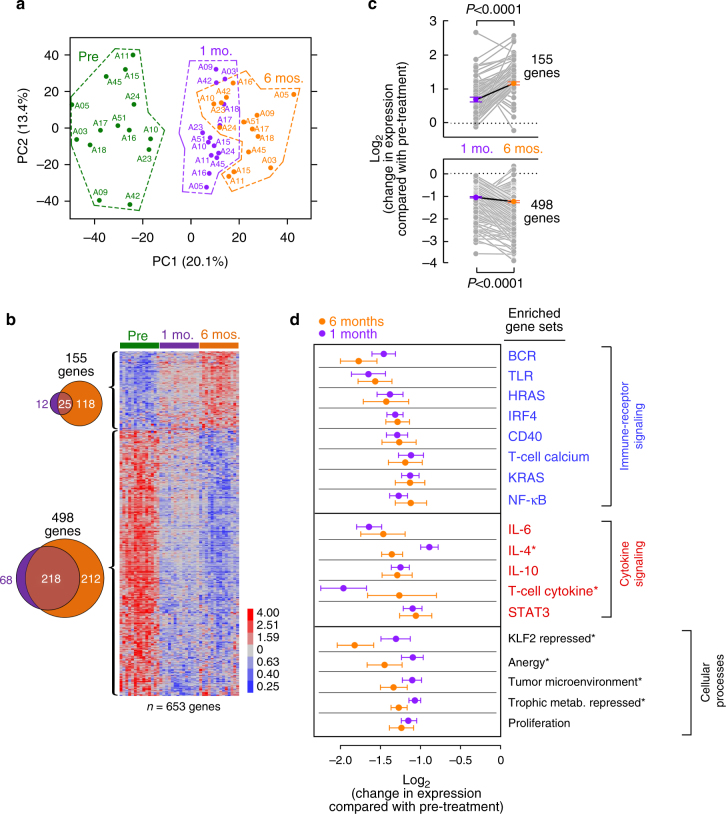
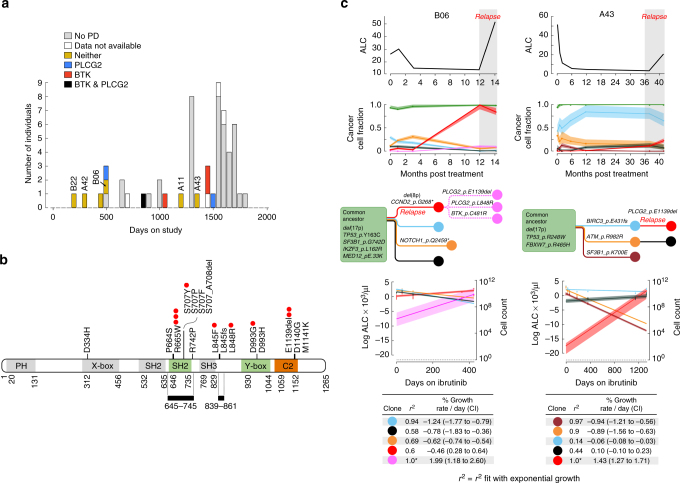
Treatment of chronic lymphocytic leukemia (CLL) has shifted from chemo-immunotherapy to targeted agents. To define the evolutionary dynamics induced by targeted therapy in CLL, we perform serial exome and transcriptome sequencing for 61 ibrutinib-treated CLLs. Here, we report clonal shifts (change >0.1 in clonal cancer cell fraction, Q < 0.1) in 31% of patients during the first year of therapy, associated with adverse outcome. We also observe transcriptional downregulation of pathways mediating energy metabolism, cell cycle, and B cell receptor signaling. Known and previously undescribed mutations in BTK and PLCG2, or uncommonly, other candidate alterations are present in seventeen subjects at the time of progression. Thus, the frequently observed clonal shifts during the early treatment period and its potential association with adverse outcome may reflect greater evolutionary capacity, heralding the emergence of drug-resistant clones.
慢性淋巴细胞白血病(CLL)的治疗已经从化疗免疫治疗转向了靶向治疗。为了确定靶向治疗在 CLL 中诱导的进化动态,我们对 61 例接受伊布替尼治疗的 CLL 进行了连续的外显子组和转录组测序。在这里,我们报告了在治疗的第一年中,31%的患者发生了克隆性转移(克隆性癌细胞分数的变化>0.1,Q<0.1),与不良预后相关。我们还观察到介导能量代谢、细胞周期和 B 细胞受体信号的途径的转录下调。在进展时的十七个患者中存在已知的和以前未描述的 BTK 和 PLCG2 突变,或者罕见地,其他候选改变。因此,在早期治疗期间经常观察到的克隆性转移及其与不良预后的潜在关联可能反映了更大的进化能力,预示着耐药克隆的出现。