Zhang Chong, Niu Yuequn, Yu Li, Lv Wang, Xu Haichao, Abuduwufuer Abudumailamu, Cao Jinlin, Hu Jian
Department of Thoracic Surgery, First Affiliated Hospital of Zhejiang University, No. 79 Qingchun Road, Zhejiang, Hangzhou, 310003, China.
J Cardiothorac Surg. 2017 Dec 20;12(1):119. doi: 10.1186/s13019-017-0673-6.
Many patients who receive lung transplantation (LT) operations develop varying degrees of bronchiolitis obliterans (BO) after the surgeries. Epithelial-mesenchymal transition (EMT) is considered to be related to the process of bronchiolitis obliterans. In this study we simulated the pathological process of post-lung transplantation bronchiolitis obliterans, and explored the correlation between BO and EMT of small airway epithelial cells.
We transplanted the left lungs of F344 rats to Lewis rats by the Tri-cuff anastomosis and established the allogeneic rat left lung orthotopic transplantation model. Cyclosporine and lipopolysaccharide were administrated appropriately after the surgery. The histological structure and the expression levels of the EMT markers was observed with the methods of HE staining, Masson staining and immunohistochemistry. The analysis of enumeration data was performed using Fisher's Exact test and Spearman's rank correlation was used for the correlation analysis.
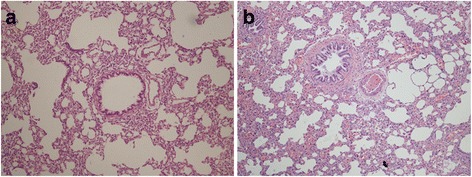
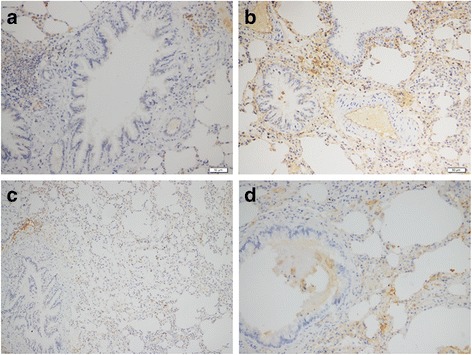
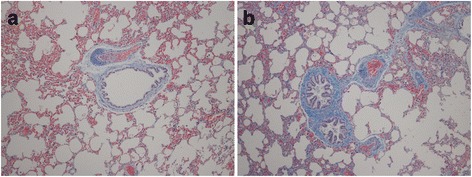
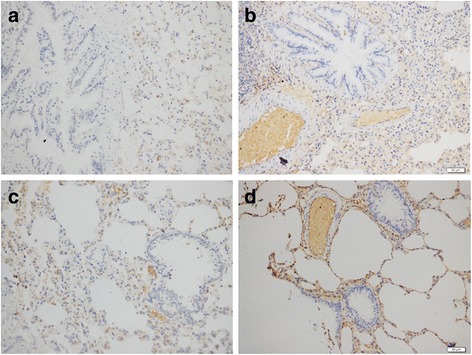
Inflammatory cell infiltration, fibroplasia of bronchiole walls and significant lumen stenosis were found in the pulmonary mesenchyme of the transplanted lungs. The positive expression rate of E-cadherin in the transplanted lungs was 38.50% (5/13), significantly lower than that in the normal lung tissues [87.50% (7/8)] (P < 0.05), while the positive expression rate of Vimentin was 76.92% (10/13) which is significantly higher than that in the normal lung tissues [25.00% (2/8)] (P < 0.05). And a negative correlation existed between the expression levels of E-cadherin and Vimentin (r = -0.750, P < 0.01).
In the disease model we established in this study, we found pathological changes that met BO characteristics happened in the transplanted lungs. Meanwhile, the small airway epithelial cells of transplanted lungs underwent an epithelial-mesenchymal transition, which indicated a role of EMT in the BO airway remodeling.
许多接受肺移植(LT)手术的患者在术后会发生不同程度的闭塞性细支气管炎(BO)。上皮-间质转化(EMT)被认为与闭塞性细支气管炎的发生过程有关。在本研究中,我们模拟了肺移植后闭塞性细支气管炎的病理过程,并探讨了BO与小气道上皮细胞EMT之间的相关性。
通过三袖套吻合术将F344大鼠的左肺移植到Lewis大鼠体内,建立同种异体大鼠左肺原位移植模型。术后适当给予环孢素和脂多糖。采用HE染色、Masson染色和免疫组织化学方法观察组织结构及EMT标志物的表达水平。计数资料分析采用Fisher确切概率法,相关性分析采用Spearman秩相关分析。
移植肺的肺间质出现炎性细胞浸润、细支气管壁纤维组织增生及明显的管腔狭窄。移植肺中E-钙黏蛋白的阳性表达率为38.50%(5/13),显著低于正常肺组织[87.50%(7/8)](P<0.05),而波形蛋白的阳性表达率为76.92%(10/13),显著高于正常肺组织[25.00%(2/8)](P<0.05)。E-钙黏蛋白与波形蛋白的表达水平呈负相关(r = -0.750,P<0.01)。
在本研究建立的疾病模型中,我们发现移植肺出现了符合BO特征的病理变化。同时,移植肺的小气道上皮细胞发生了上皮-间质转化,这表明EMT在BO气道重塑中发挥了作用。