Department of Genetics and Genomics, Icahn School of Medicine at Mount Sinai, New York, NY, 10029, USA.
Icahn Institute of Genomics and Multiscale Biology, Icahn School of Medicine at Mount Sinai, New York, NY, 10029, USA.
Nat Commun. 2017 Dec 20;8(1):2225. doi: 10.1038/s41467-017-02330-5.
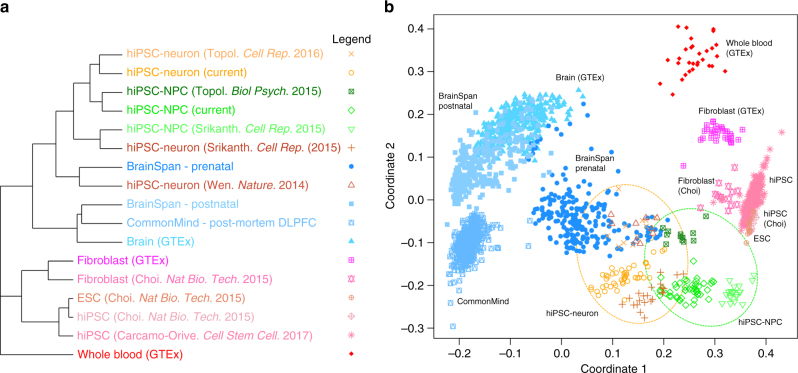
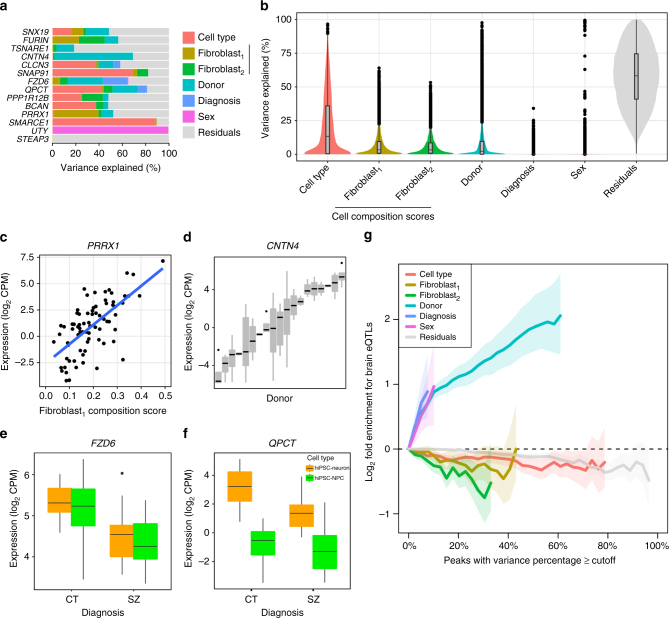
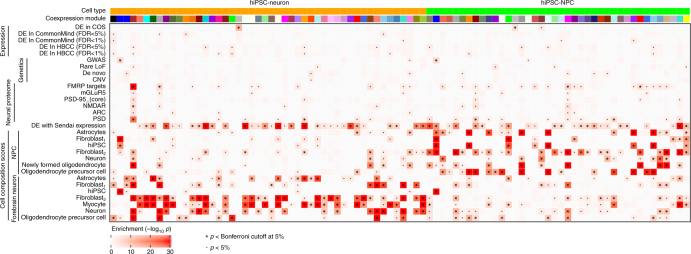
The power of human induced pluripotent stem cell (hiPSC)-based studies to resolve the smaller effects of common variants within the size of cohorts that can be realistically assembled remains uncertain. We identified and accounted for a variety of technical and biological sources of variation in a large case/control schizophrenia (SZ) hiPSC-derived cohort of neural progenitor cells and neurons. Reducing the stochastic effects of the differentiation process by correcting for cell type composition boosted the SZ signal and increased the concordance with post-mortem data sets. We predict a growing convergence between hiPSC and post-mortem studies as both approaches expand to larger cohort sizes. For studies of complex genetic disorders, to maximize the power of hiPSC cohorts currently feasible, in most cases and whenever possible, we recommend expanding the number of individuals even at the expense of the number of replicate hiPSC clones.
基于人类诱导多能干细胞(hiPSC)的研究在解决队列中常见变异的较小影响方面具有强大的作用,而这些常见变异的大小在现实中是可以组装的。我们在一个大型病例/对照精神分裂症(SZ)hiPSC 衍生的神经祖细胞和神经元队列中确定并解释了各种技术和生物学变异源。通过校正细胞类型组成来减少分化过程中的随机效应,增强了 SZ 信号,并提高了与死后数据集的一致性。我们预测随着这两种方法扩展到更大的队列规模,hiPSC 和死后研究之间的融合将越来越多。对于复杂遗传疾病的研究,为了最大限度地发挥当前可行的 hiPSC 队列的作用,在大多数情况下,并且只要有可能,我们建议即使以增加 hiPSC 克隆的数量为代价,也要增加个体数量。