Department of Pediatrics, Division of Pediatric Hematology-Oncology, King George's Medical University, Lucknow, India.
Department of Medical Genetics, Sanjay Gandhi Post Graduate Institute of Medical Sciences, Lucknow, India.
Indian J Med Res. 2017 Aug;146(2):163-174. doi: 10.4103/ijmr.IJMR_275_15.
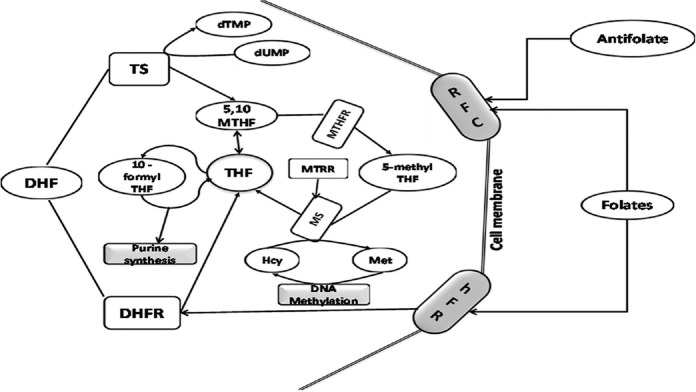
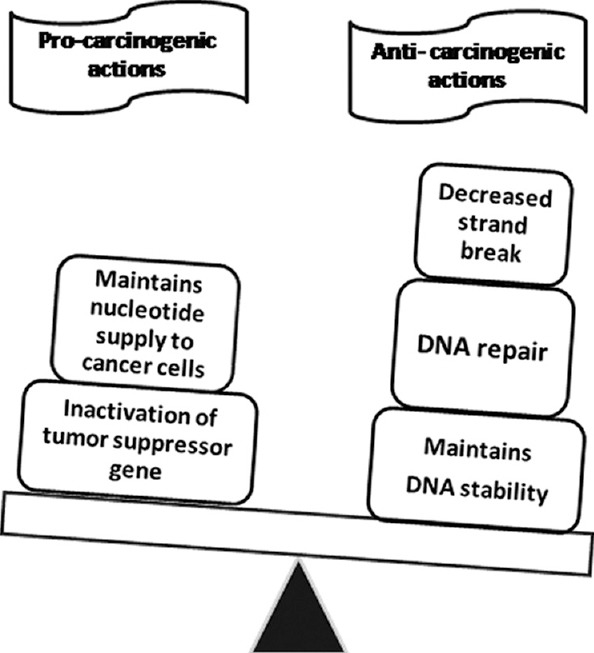
Folate has been studied in relation to many diseases, especially cancer. Although it has been postulated to exert a dual effect on development of cancer, its role remains to be clearly defined. Its effect on cancer is the result of gene-nutrient interaction between the genes in folate metabolic pathway and dietary folate availability; mutations in genes of folate metabolism have been shown to alter individual susceptibility to certain childhood cancers as well as response to cancer chemotherapy. Although mandatory fortification of food items with folate has been initiated in some countries, many countries are yet to adopt this due to concerns about undesired adverse effects of high folate levels on health, especially cancer. However, initial reports suggest that folate fortification has led to reduction in incidence of certain childhood cancers such as neuroblastoma, wilms tumour and leukaemias. Despite studies showing folate depletion during antifolate chemotherapy and higher toxicity of chemotherapy in folate-depleted individuals, folate supplementation during cancer chemotherapy is not routinely recommended. Studies investigating the precise effect of folate supplementation during chemotherapy on both short- and long-term outcomes of cancer are needed to arrive at a consensus guideline.
叶酸已被广泛研究于多种疾病,尤其是癌症。虽然其对癌症发展的双重作用已被推测,但它的作用仍有待明确界定。叶酸对癌症的影响是叶酸代谢途径中的基因与膳食叶酸可用性之间的基因-营养相互作用的结果;叶酸代谢基因的突变已被证明会改变个体对某些儿童癌症的易感性以及对癌症化疗的反应。虽然一些国家已经开始强制在食品中添加叶酸,但由于担心高水平叶酸对健康,特别是癌症的不良影响,许多国家尚未采用这种方法。然而,初步报告表明,叶酸强化已导致某些儿童癌症(如神经母细胞瘤、肾母细胞瘤和白血病)的发病率降低。尽管研究表明抗叶酸化疗期间叶酸耗竭以及叶酸耗竭个体中化疗毒性更高,但在癌症化疗期间不常规推荐补充叶酸。需要研究叶酸补充在化疗期间对癌症短期和长期结果的确切影响,以达成共识指南。