Department of Obstetrics and Gynecology, Okayama University Graduate School of Medicine, Dentistry and Pharmaceutical Sciences, Okayama, Japan.
Department of Obstetrics and Gynecology, Okayama City General Medical Center, Okayama, Japan.
J Diabetes Investig. 2018 Jul;9(4):959-966. doi: 10.1111/jdi.12795. Epub 2018 Feb 1.
AIMS/INTRODUCTION: To measure longitudinal changes in resting energy expenditure and body composition of Japanese pregnant women with or without diabetes.
The study population consisted of women who had delivered a live singleton neonate after 22 weeks' gestation at Okayama University Hospital from July 2013 to June 2017. Resting energy expenditure and body composition were measured in the first trimester, second trimester, third trimester and postpartum.
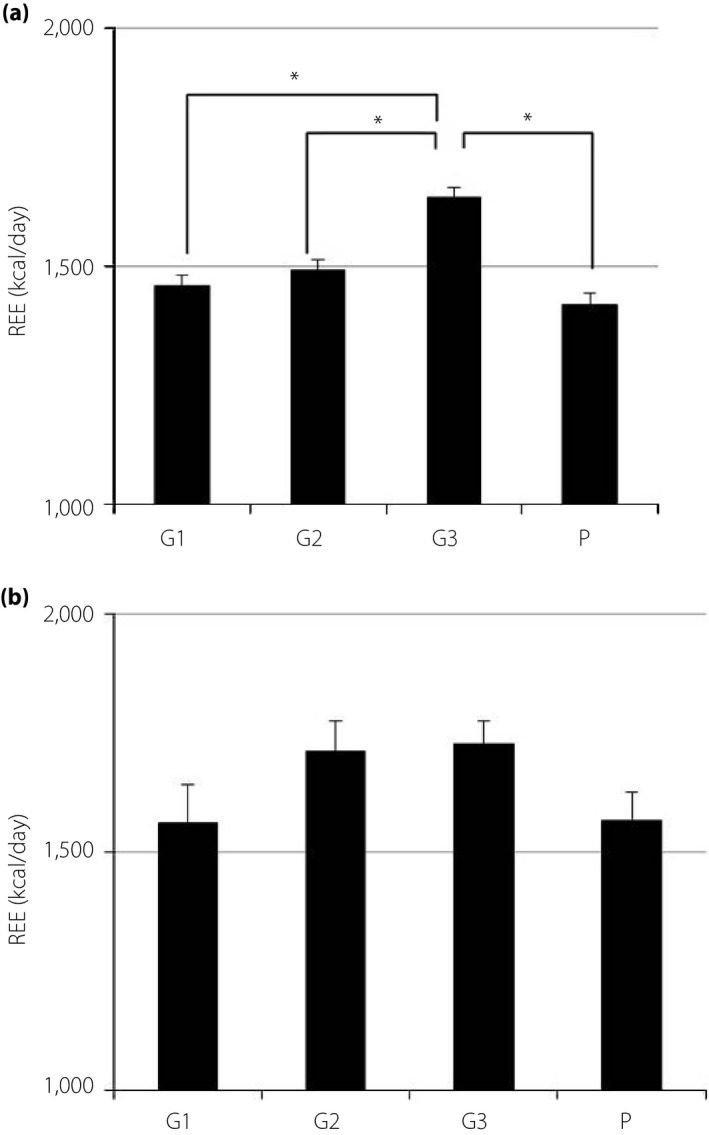
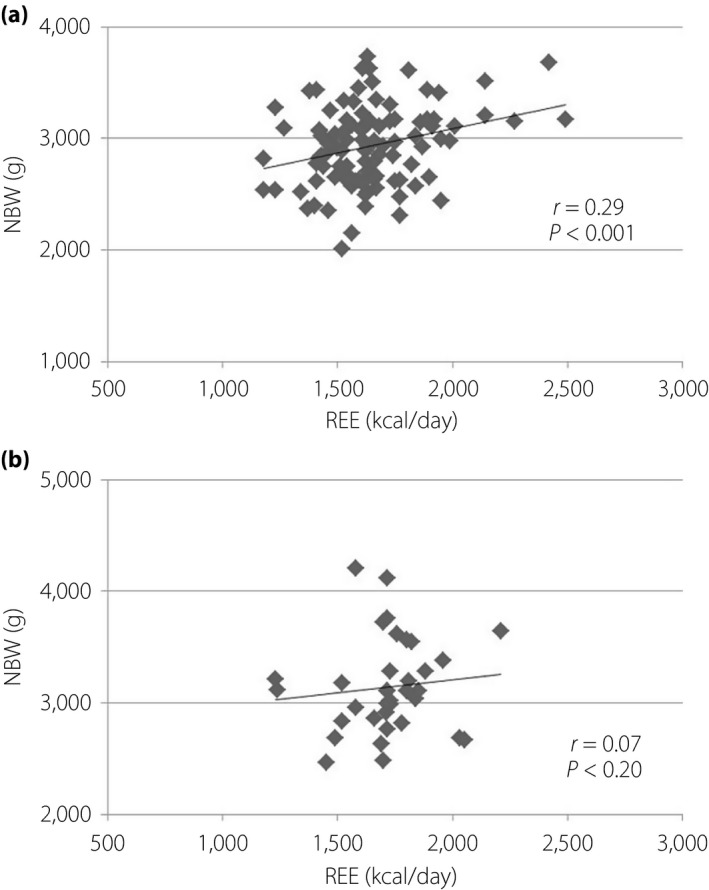
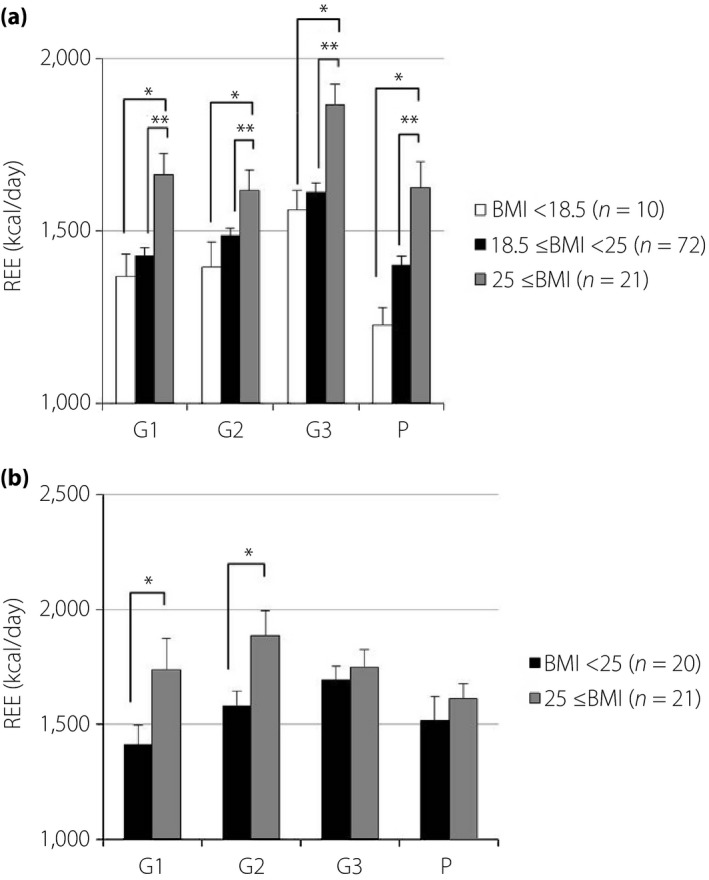
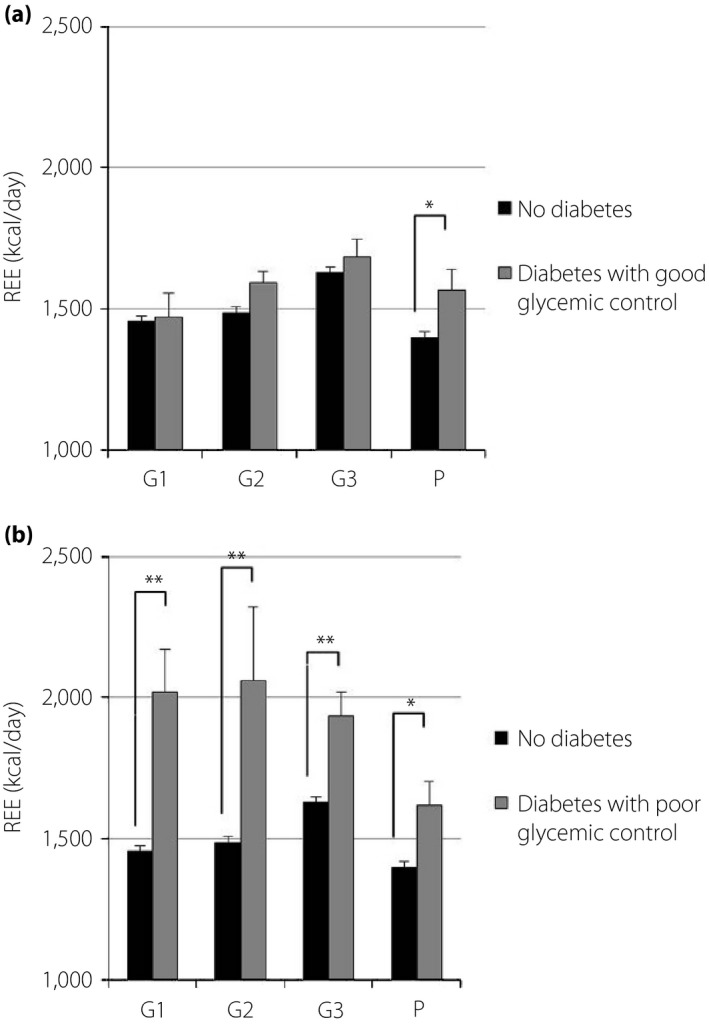
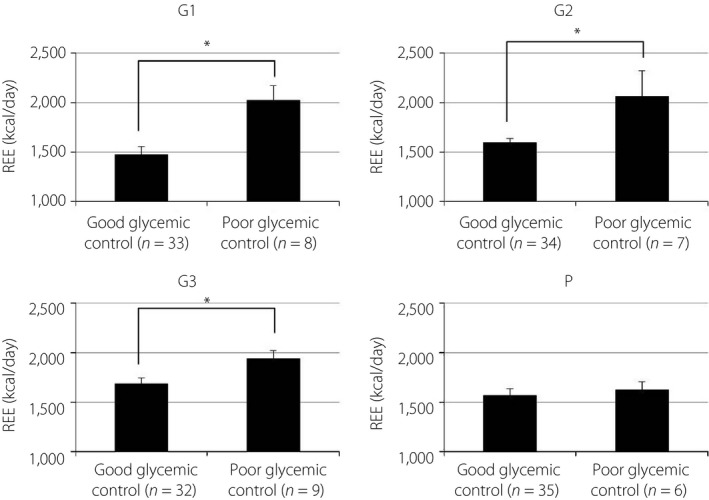
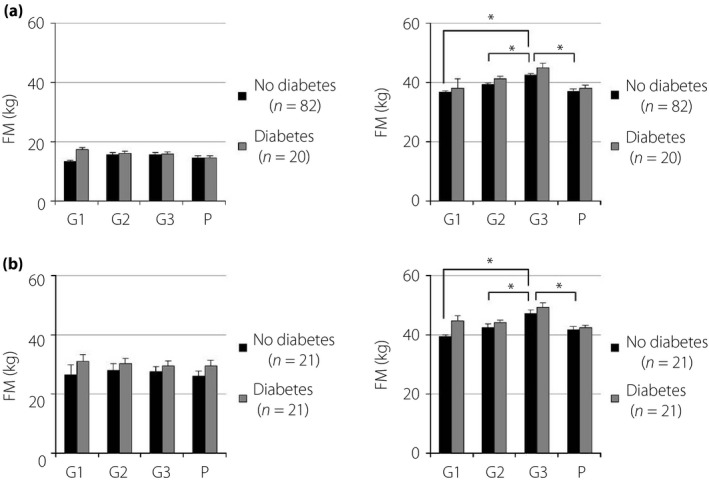
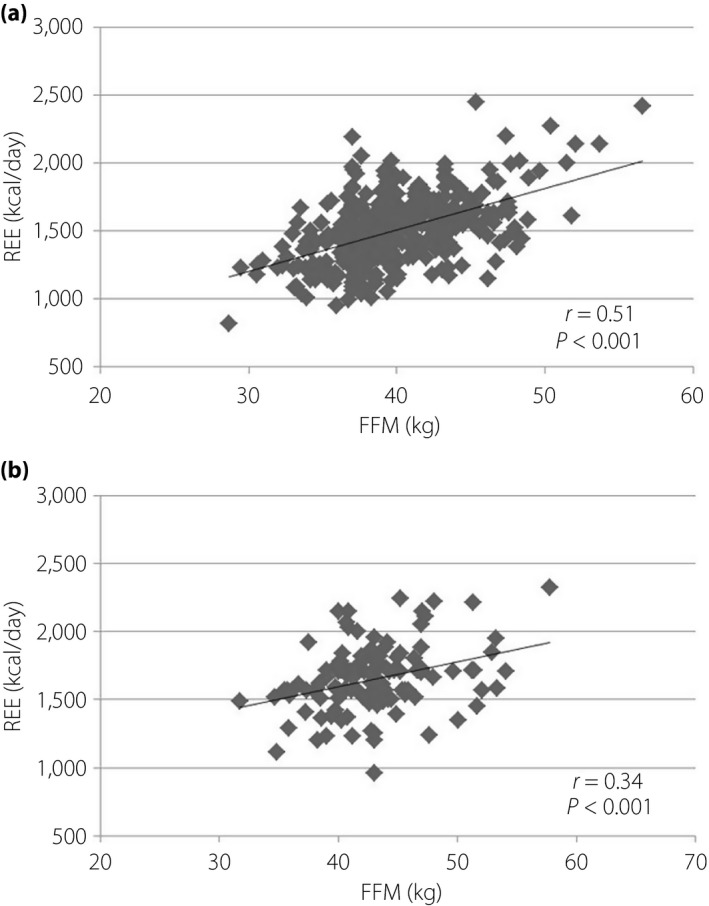
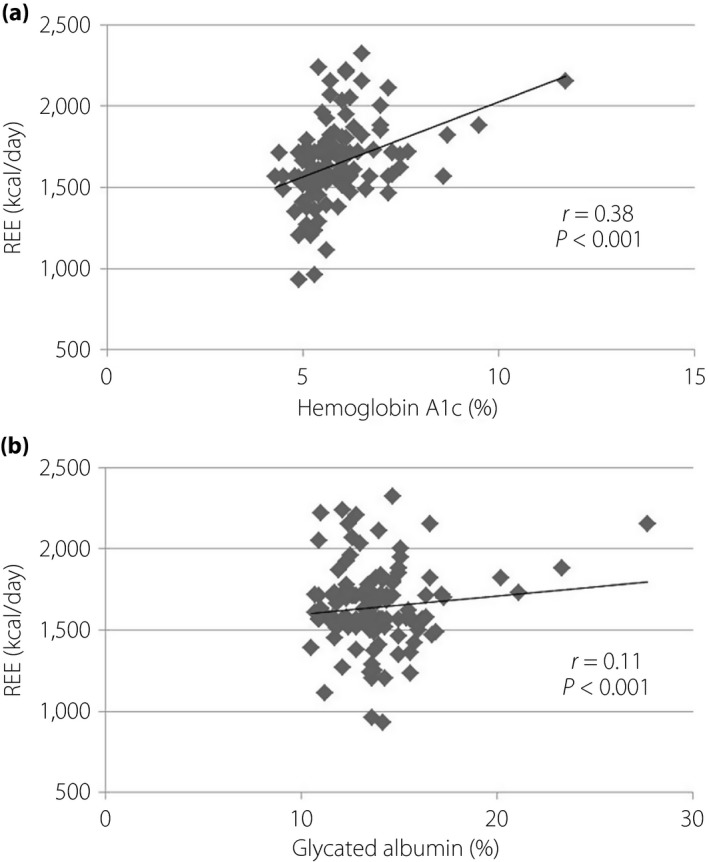
A total of 144 women participated in this study: 103 with normal glucose tolerance and 41 with diabetes. The resting energy expenditure (kcal/day) of pregnant women with normal glucose tolerance was significantly higher in the third trimester (1,644 ± 234) than in the first (1,461 ± 215) and second trimesters (1,491 ± 219), and postpartum (1,419 ± 254), whereas that of pregnant women with diabetes did not significantly change during all periods (1,568 ± 404, 1,710 ± 332, 1,716 ± 251, 1,567 ± 249). The resting energy expenditure of women with good glycemic control was lower than that of women with poor control. Fat-free mass was closely correlated with resting energy expenditure.
The resting energy expenditure of Japanese pregnant women with normal glucose tolerance was significantly increased in the third trimester. The resting energy expenditure of women with good glycemic control was lower than that of women with poor control. Resting energy expenditure and fat-free mass are potential indexes for medical nutrition therapy in pregnant women with diabetes.
目的/引言:测量日本患有或不患有糖尿病的孕妇静息能量消耗和身体成分的纵向变化。
研究人群包括 2013 年 7 月至 2017 年 6 月在冈山县大学医院分娩 22 周后存活单胎新生儿的女性。在孕早期、孕中期、孕晚期和产后测量静息能量消耗和身体成分。
共有 144 名女性参与了这项研究:103 名血糖正常,41 名患有糖尿病。血糖正常孕妇的静息能量消耗(千卡/天)在孕晚期(1644±234)明显高于孕早期(1461±215)和孕中期(1491±219),以及产后(1419±254),而糖尿病孕妇在所有时期均无明显变化(1568±404、1710±332、1716±251、1567±249)。血糖控制良好的孕妇的静息能量消耗低于血糖控制不佳的孕妇。去脂体重与静息能量消耗密切相关。
血糖正常的日本孕妇在孕晚期静息能量消耗明显增加。血糖控制良好的孕妇的静息能量消耗低于血糖控制不佳的孕妇。静息能量消耗和去脂体重是糖尿病孕妇医学营养治疗的潜在指标。