Department of Medicine, University of California San Francisco, San Francisco, CA, USA.
Infectious Diseases Research Collaboration, Kampala, Uganda.
Malar J. 2017 Dec 29;16(1):499. doi: 10.1186/s12936-017-2148-6.
Young children are at greatest risk for malaria-associated morbidity and mortality. The immune response of young children differs in fundamental ways from that of adults, and these differences likely contribute to the increased susceptibility of children to severe malaria and to their delayed development of immunity. Elevated levels of pro-inflammatory cytokines and chemokines in the peripheral blood during acute infection contribute to the control of parasitaemia, but are also responsible for much of the immunopathology seen during symptomatic disease. Clinical immunity to malaria may depend upon the ability to regulate these pro-inflammatory responses, possibly through mechanisms of immunologic tolerance. In order to explore the effect of age on the immune response to malaria and the development of clinical immunity, cytokines and chemokines were measured in the plasma of children at day 0 of an acute malaria episode and during convalescence.
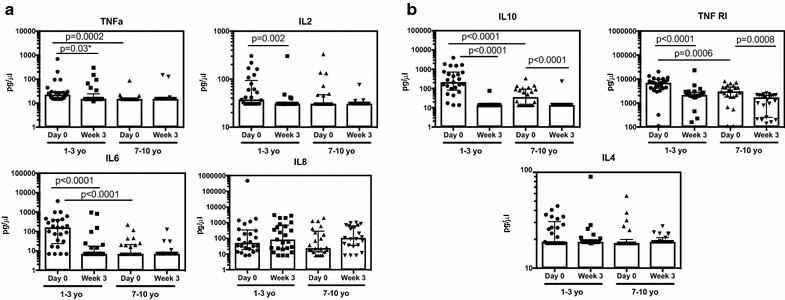
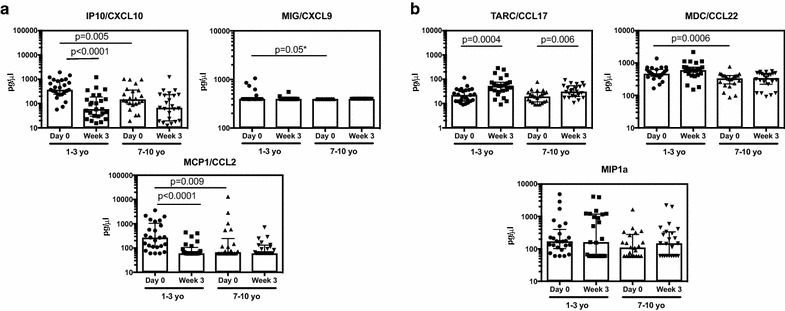
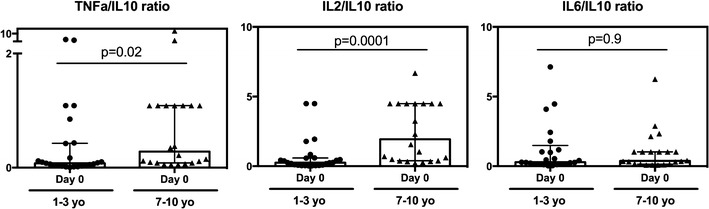
Younger children presenting with acute malaria exhibited much higher levels of TNF, IL2, and IL6, as well as increased Th1 associated chemokines IP10, MIG, and MCP1, compared to older children with acute malaria. Additionally, the regulatory cytokines IL10 and TNFRI were dramatically elevated in younger children compared to older children during acute infection, indicating that regulatory as well as pro-inflammatory cytokine responses are dampened in later childhood.
Together these data suggest that there is a profound blunting of the cytokine and chemokine response to malaria among older children residing in endemic settings, which may be due to repeated malaria exposure, intrinsic age-based differences in the immune response, or both.
幼儿面临着疟疾相关发病率和死亡率的最大风险。幼儿的免疫反应与成人有根本的不同,这些差异可能导致儿童更容易受到严重疟疾的影响,也可能导致他们的免疫发育延迟。急性感染期间外周血中促炎细胞因子和趋化因子水平升高有助于控制寄生虫血症,但也是导致症状性疾病中出现大量免疫病理学的原因。对疟疾的临床免疫力可能取决于调节这些促炎反应的能力,可能通过免疫耐受的机制。为了探索年龄对疟疾免疫反应和临床免疫力发展的影响,在急性疟疾发作的第 0 天和恢复期测量了儿童血浆中的细胞因子和趋化因子。
与患有急性疟疾的年长儿童相比,患有急性疟疾的年幼儿童表现出更高水平的 TNF、IL2 和 IL6,以及更高水平的 Th1 相关趋化因子 IP10、MIG 和 MCP1。此外,在急性感染期间,年幼儿童的调节细胞因子 IL10 和 TNFRI 显著升高,表明调节性和促炎细胞因子反应在后期儿童中受到抑制。
这些数据表明,在流行地区居住的年长儿童对疟疾的细胞因子和趋化因子反应明显减弱,这可能是由于反复暴露于疟疾、基于年龄的免疫反应内在差异或两者兼而有之。