Malaria Infection Biology and Immunity Section, Laboratory of Immunogenetics, National Institute of Allergy and Infectious Diseases, National Institutes of Health, Rockville, MD, 20852, USA.
Malaria Research and Training Centre, Department of Epidemiology of Parasitic Diseases, International Center of Excellence in Research, University of Sciences, Technique, and Technology of Bamako, 91094, Bamako, Mali.
Malar J. 2021 Jan 6;20(1):9. doi: 10.1186/s12936-020-03533-w.
Plasmodium falciparum causes the majority of malaria cases worldwide and children in sub-Saharan Africa are the most vulnerable group affected. Non-sterile clinical immunity that protects from symptoms develops slowly and is relatively short-lived. Moreover, current malaria vaccine candidates fail to induce durable high-level protection in endemic settings, possibly due to the immunomodulatory effects of the malaria parasite itself. Because dendritic cells play a crucial role in initiating immune responses, the aim of this study was to better understand the impact of cumulative malaria exposure as well as concurrent P. falciparum infection on dendritic cell phenotype and function.
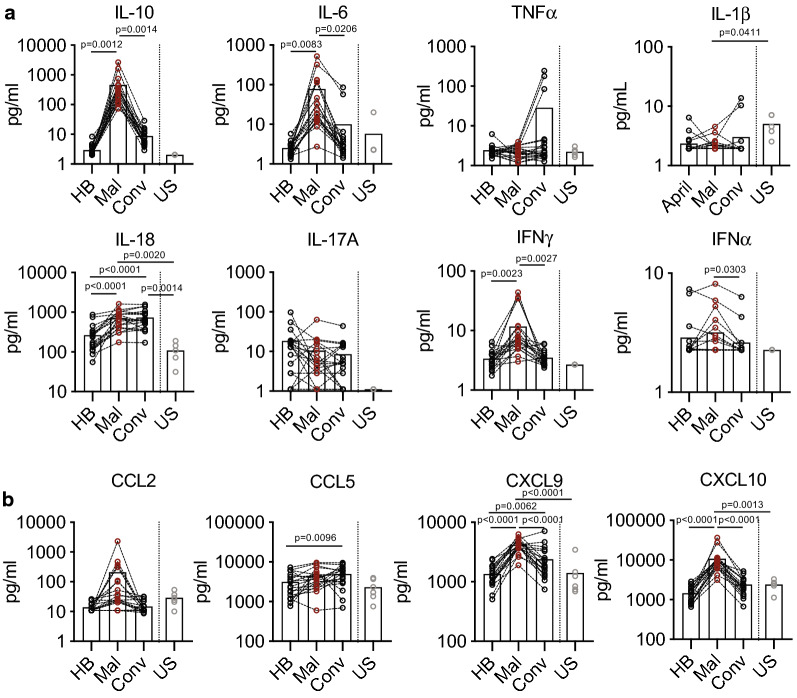
In this cross-sectional study, the phenotype and function of dendritic cells freshly isolated from peripheral blood samples of Malian adults with a lifelong history of malaria exposure who were either uninfected (n = 27) or asymptomatically infected with P. falciparum (n = 8) was assessed. Additionally, plasma cytokine and chemokine levels were measured in these adults and in Malian children (n = 19) with acute symptomatic malaria.
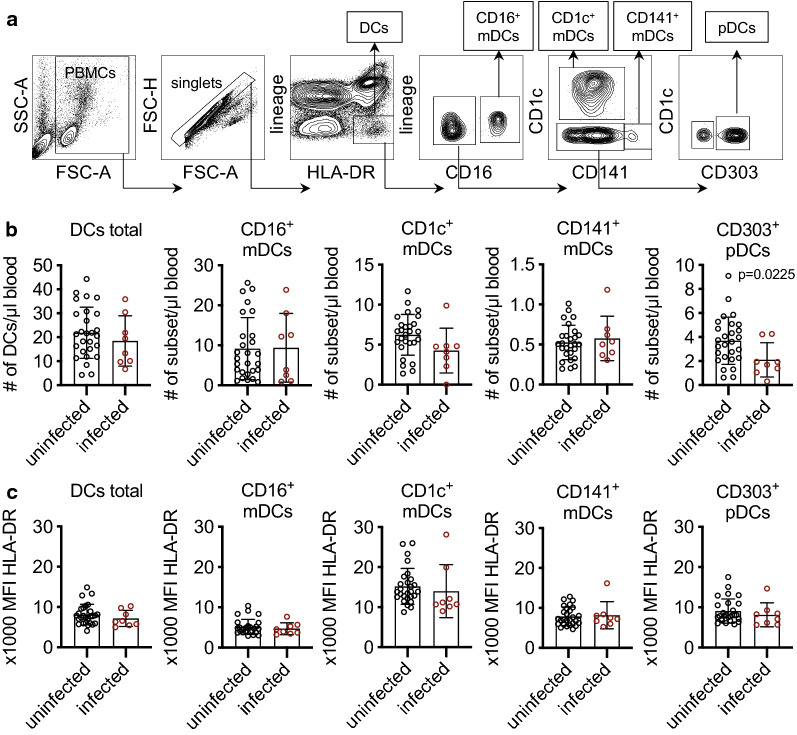
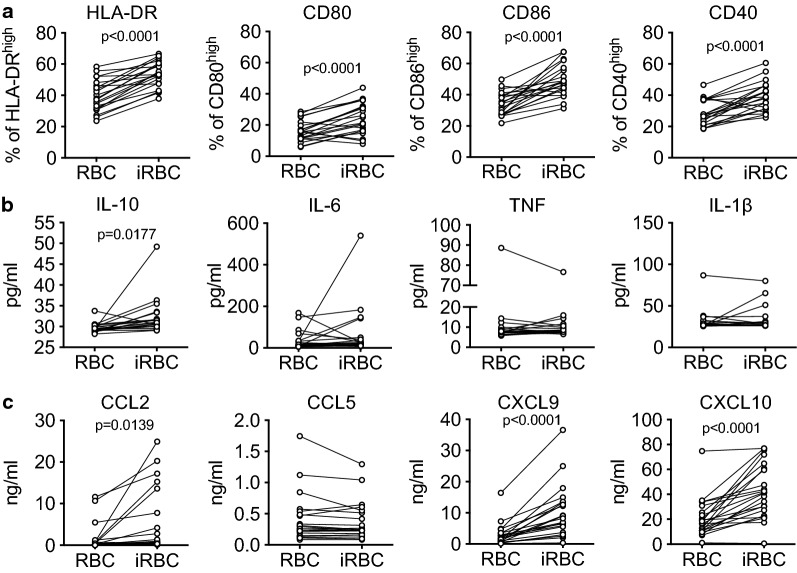
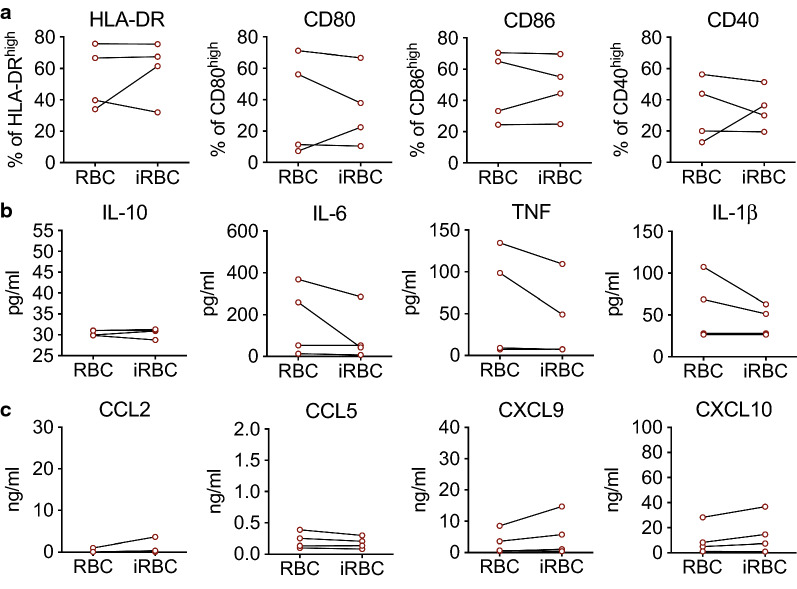
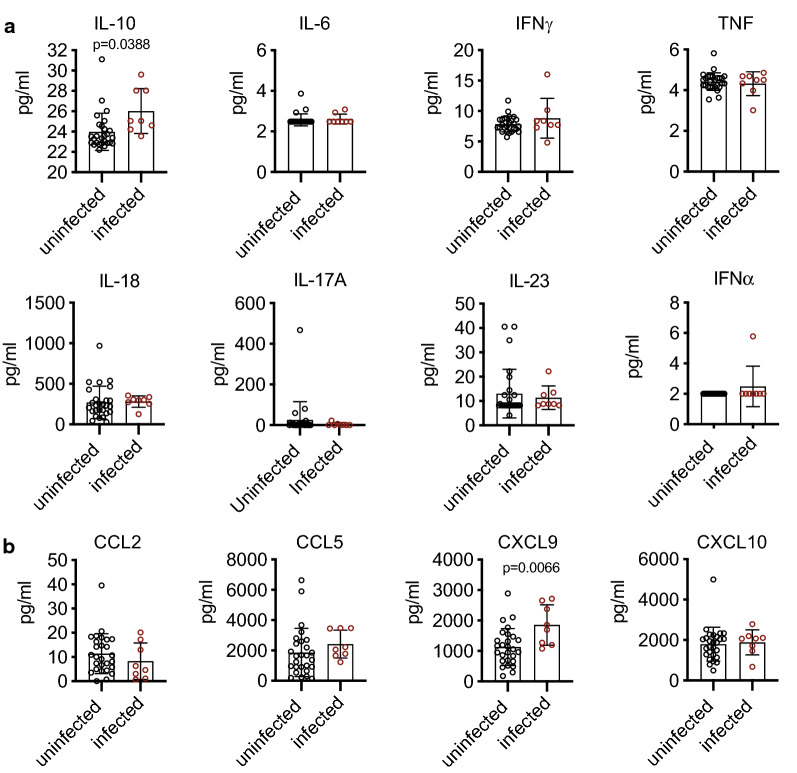
With the exception of lower plasmacytoid dendritic cell frequencies in asymptomatically infected Malian adults, peripheral blood dendritic cell subset frequencies and HLA-DR surface expression did not differ by infection status. Peripheral blood myeloid dendritic cells of uninfected Malian adults responded to in vitro stimulation with P. falciparum blood-stage parasites by up-regulating the costimulatory molecules HLA-DR, CD80, CD86 and CD40 and secreting IL-10, CXCL9 and CXCL10. In contrast, myeloid dendritic cells of asymptomatically infected Malian adults exhibited no significant responses above the uninfected red blood cell control. IL-10 and CXCL9 plasma levels were elevated in both asymptomatic adults and children with acute malaria.
The findings of this study indicate that myeloid dendritic cells of uninfected adults with a lifelong history of malaria exposure are able to up-regulate co-stimulatory molecules and produce cytokines. Whether mDCs of malaria-exposed individuals are efficient antigen-presenting cells capable of mounting an appropriate immune response remains to be determined. The data also highlights IL-10 and CXCL9 as important factors in both asymptomatic and acute malaria and add to the understanding of asymptomatic P. falciparum infections in malaria-endemic areas.
恶性疟原虫引起了全球大部分疟疾病例,撒哈拉以南非洲的儿童是受影响最脆弱的群体。非无菌临床免疫可以防止症状发生,但发展缓慢且持续时间相对较短。此外,目前的疟疾疫苗候选物未能在流行地区诱导持久的高水平保护,这可能是由于疟原虫本身的免疫调节作用。由于树突状细胞在启动免疫反应方面发挥着至关重要的作用,因此本研究旨在更好地了解累积疟疾暴露以及同时感染恶性疟原虫对树突状细胞表型和功能的影响。
在这项横断面研究中,评估了来自有终身疟疾暴露史且未感染(n=27)或无症状感染恶性疟原虫(n=8)的马里成年人外周血样本中新鲜分离的树突状细胞的表型和功能。此外,还测量了这些成年人和马里患有急性有症状疟疾的儿童(n=19)的血浆细胞因子和趋化因子水平。
除了无症状感染的马里成年人外周血浆细胞样树突状细胞频率较低外,感染状态对树突状细胞亚群频率和 HLA-DR 表面表达没有影响。未感染的马里成年人外周血髓样树突状细胞在体外受到恶性疟原虫血期寄生虫刺激后,通过上调共刺激分子 HLA-DR、CD80、CD86 和 CD40 并分泌 IL-10、CXCL9 和 CXCL10 来作出反应。相比之下,无症状感染的马里成年人的髓样树突状细胞没有表现出明显的反应超过未感染的红细胞对照。IL-10 和 CXCL9 的血浆水平在无症状成年人和急性疟疾儿童中均升高。
本研究的结果表明,有终身疟疾暴露史的未感染成年人的髓样树突状细胞能够上调共刺激分子并产生细胞因子。疟疾暴露个体的 mDC 是否是能够引发适当免疫反应的有效抗原呈递细胞还有待确定。该数据还强调了 IL-10 和 CXCL9 在无症状和急性疟疾中都是重要因素,并增加了对疟疾流行地区无症状恶性疟原虫感染的理解。