Agricultural and Animal Husbandry College of Tibet University, Nyingchi, 860000, People's Republic of China.
Key Laboratory of Ministry of Education for Genetics, Breeding and Multiple Utilization of Crops, College of Crop Science, Fujian Agriculture and Forestry University, Fuzhou, 350002, People's Republic of China.
Mol Genet Genomics. 2018 Jun;293(3):635-647. doi: 10.1007/s00438-017-1409-y. Epub 2017 Dec 28.
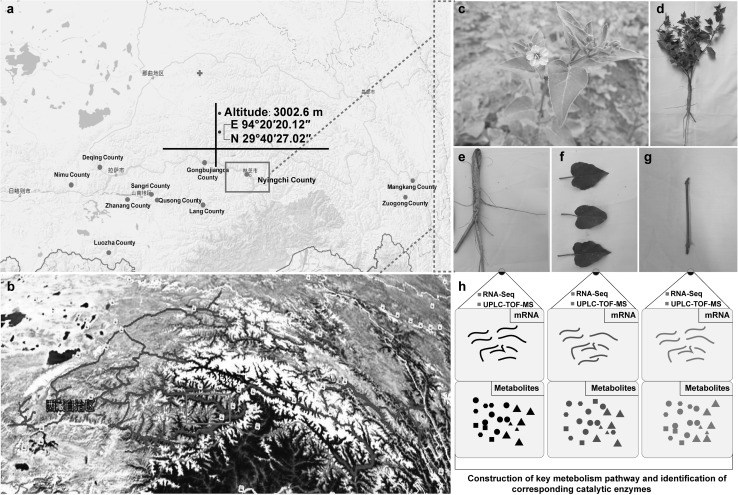
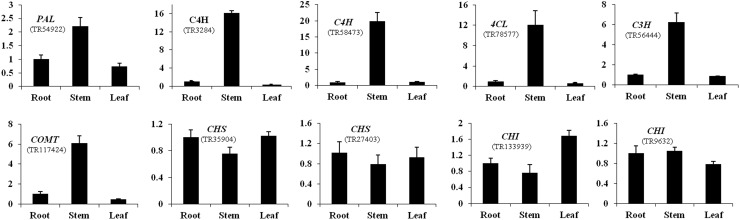
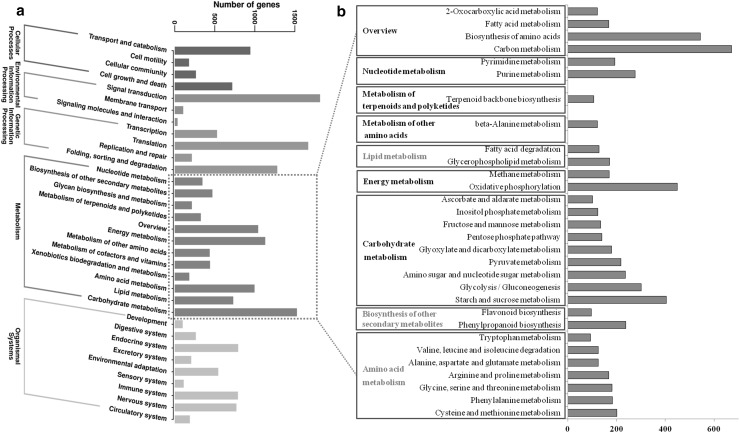
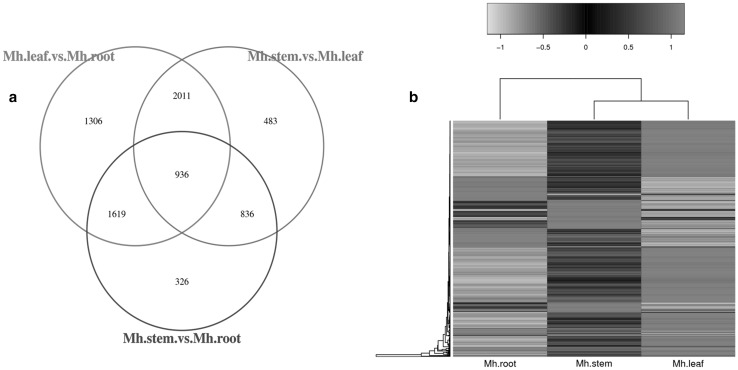
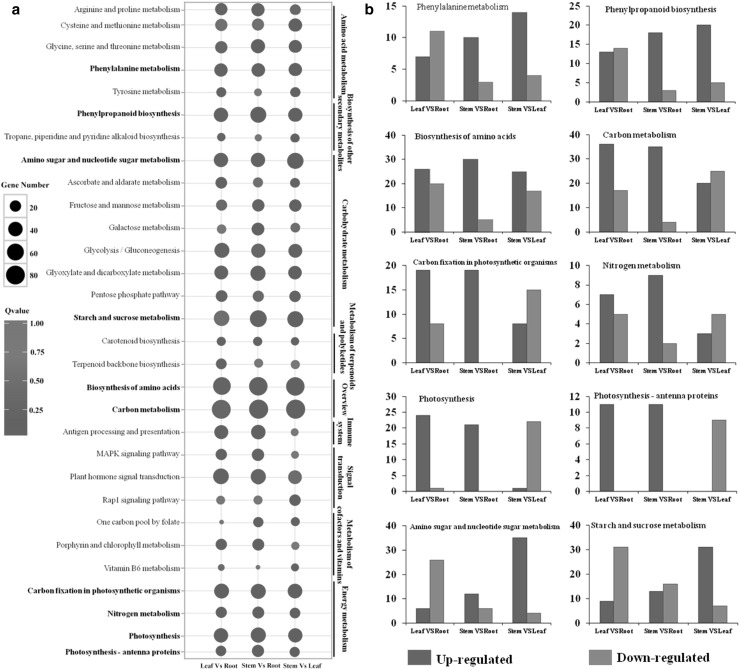
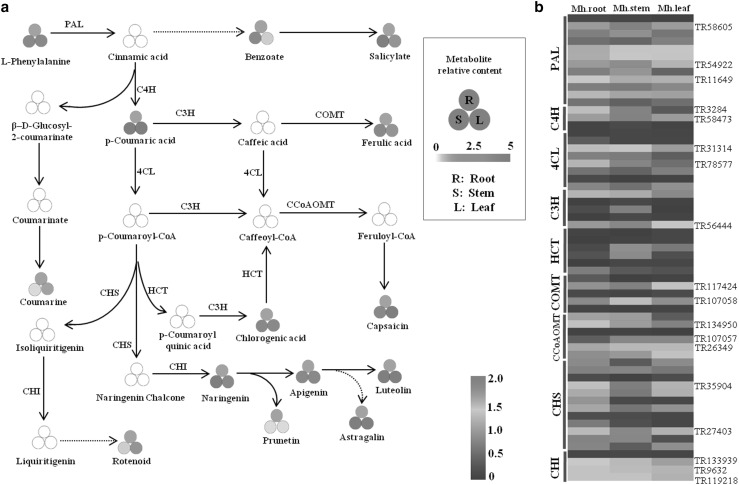
Mirabilis himalaica (Edgew.) Heimerl is among the most important genuine medicinal plants in Tibet. However, the biosynthesis mechanisms of the active compounds in this species are unclear, severely limiting its application. To clarify the molecular biosynthesis mechanism of the key representative active compounds, specifically rotenoid, which is of special medicinal value for M. himalaica, RNA sequencing and TOF-MS technologies were used to construct transcriptomic and metabolomic libraries from the roots, stems, and leaves of M. himalaica plants collected from their natural habitat. As a result, each of the transcriptomic libraries from the different tissues was sequenced, generating more than 10 Gb of clean data ultimately assembled into 147,142 unigenes. In the three tissues, metabolomic analysis identified 522 candidate compounds, of which 170 metabolites involved in 114 metabolic pathways were mapped to the KEGG. Of these genes, 61 encoding enzymes were identified to function at key steps of the pathways related to rotenoid biosynthesis, where 14 intermediate metabolites were also located. An integrated analysis of metabolic and transcriptomic data revealed that most of the intermediate metabolites and enzymes related to rotenoid biosynthesis were synthesized in the roots, stems and leaves of M. himalaica, which suggested that the use of non-medicinal tissues to extract compounds was feasible. In addition, the CHS and CHI genes were found to play important roles in rotenoid biosynthesis, especially, since CHS might be an important rate-limiting enzyme. This study provides a hypothetical basis for the screening of new active metabolites and the metabolic engineering of rotenoid in M. himalaica.
喜马拉雅山黧豆(Edgew.)Heimerl 是西藏最重要的药用植物之一。然而,该物种中活性化合物的生物合成机制尚不清楚,严重限制了其应用。为了阐明该物种中关键代表活性化合物,特别是对喜马拉雅山黧豆具有特殊药用价值的类柠檬素的分子生物合成机制,利用 RNA 测序和 TOF-MS 技术从该植物的根、茎和叶构建了转录组和代谢组文库,这些植物均采自其自然栖息地。结果,对来自不同组织的每个转录组文库进行了测序,共生成了超过 10 Gb 的清洁数据,最终组装成 147142 个基因。在这三种组织中,代谢组分析鉴定出 522 种候选化合物,其中涉及 114 条代谢途径的 170 种代谢物被映射到 KEGG。在这些基因中,有 61 个基因编码参与与类柠檬素生物合成相关途径的关键步骤的酶,其中还定位了 14 种中间代谢物。代谢组学和转录组学数据的综合分析表明,大多数与类柠檬素生物合成相关的中间代谢物和酶都在喜马拉雅山黧豆的根、茎和叶中合成,这表明可以使用非药用组织来提取化合物。此外,CHS 和 CHI 基因被发现对类柠檬素生物合成起着重要作用,特别是 CHS 可能是一个重要的限速酶。本研究为喜马拉雅山黧豆中新的活性代谢物的筛选和类柠檬素的代谢工程提供了一个假设基础。