Key Laboratory of Oral Medicine, Guangzhou Institute of Oral Disease, Stomatology Hospital of Guangzhou Medical University, Guangzhou, Guangdong 510140, P.R. China.
Oncol Rep. 2018 Mar;39(3):951-966. doi: 10.3892/or.2017.6174. Epub 2017 Dec 28.
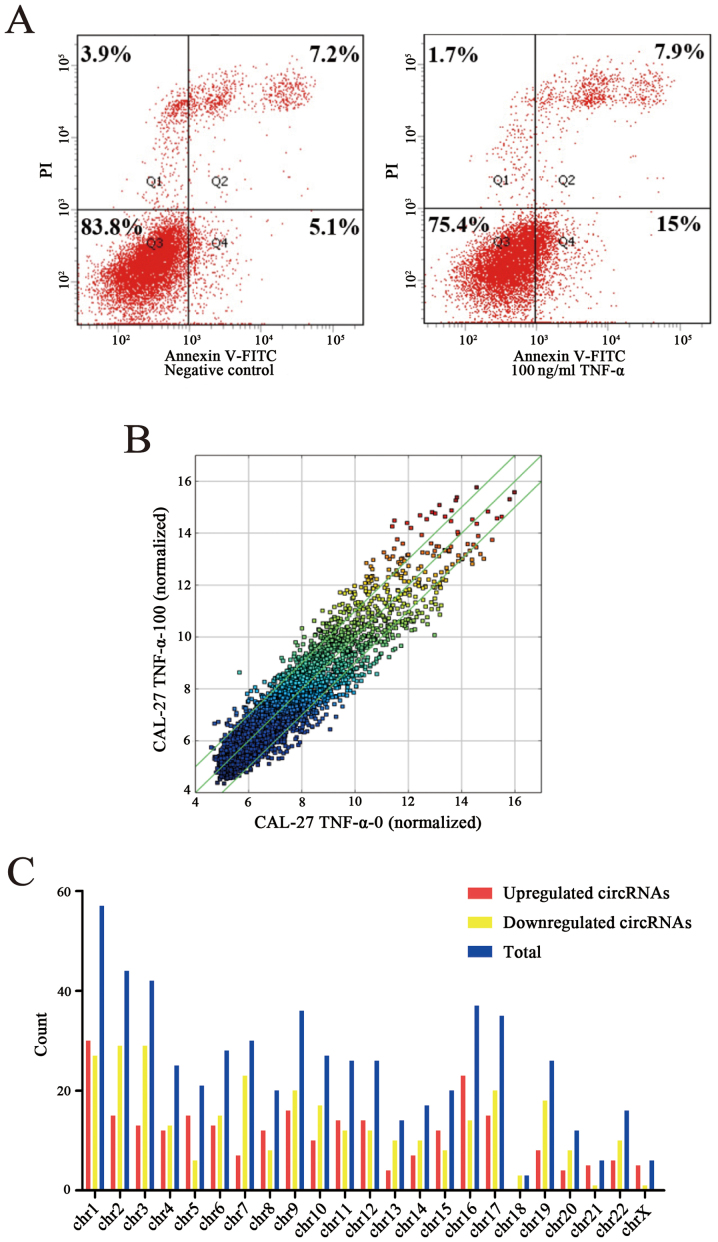
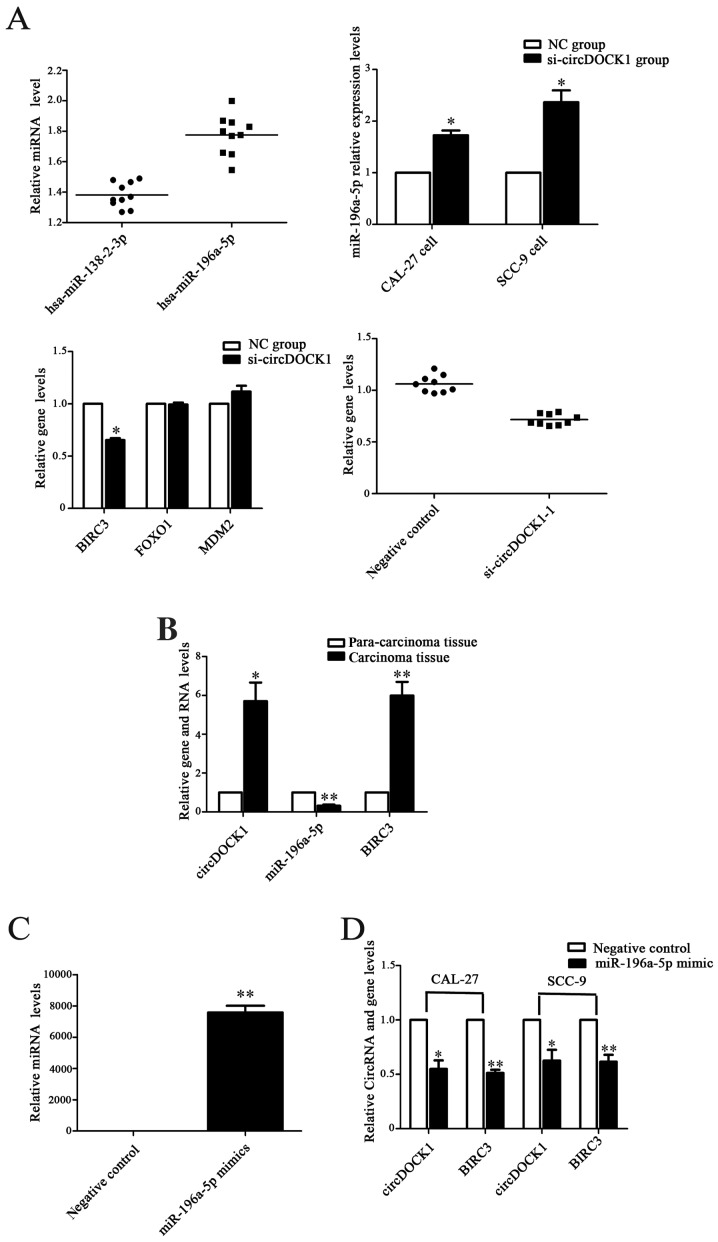
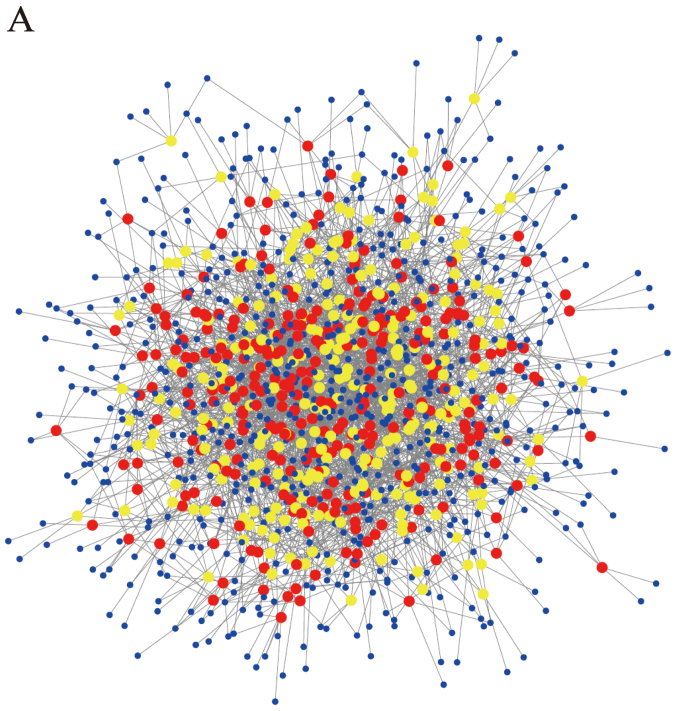
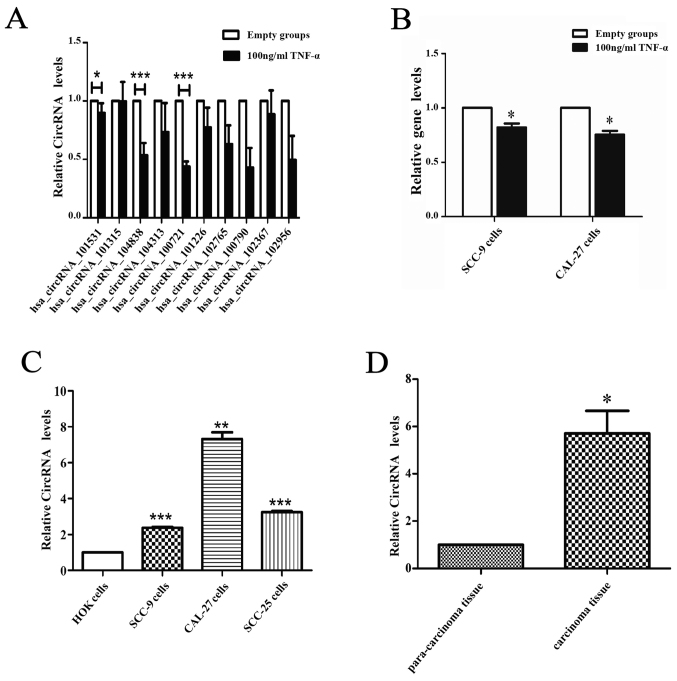
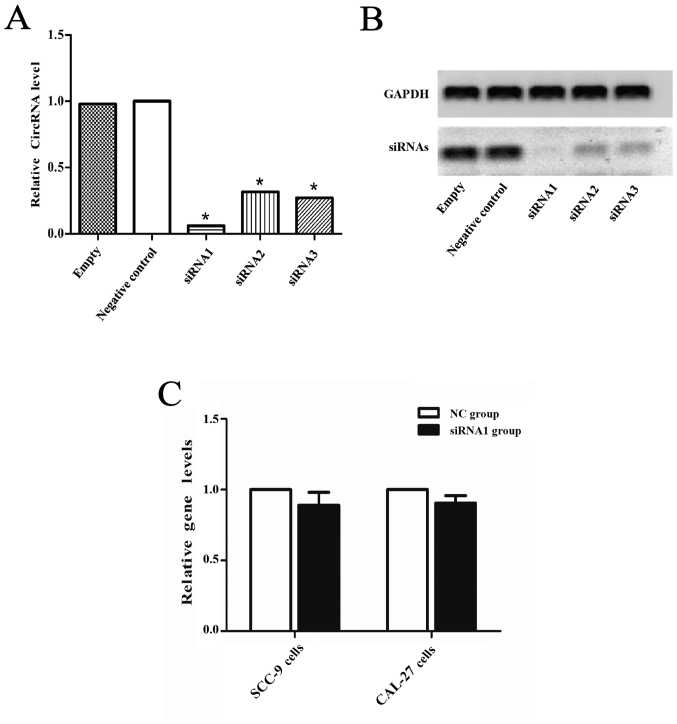
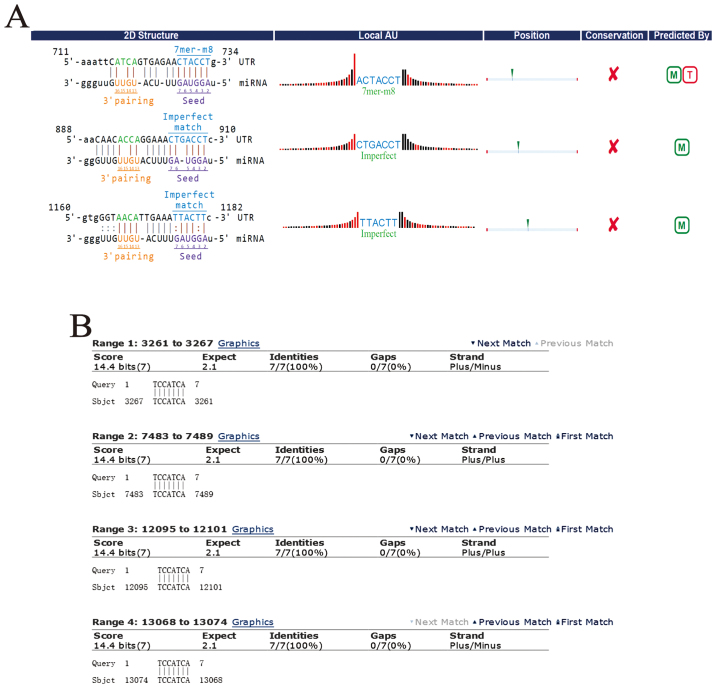
Oral squamous cell carcinoma (OSCC) is the most frequent oral cancer in the world, accounting for more than 90% of all oral cancer diagnosis. Circular RNAs (circRNAs) are large types of non-coding RNAs, demonstrating a great capacity of regulating the expression of genes. However, most of the functions of circRNAs are still unknown. Recent research revealed that circRNAs could serve as a miRNA-sponge, consequently regulating the expression of target genes indirectly, including oncogenes. In this study, we built an apoptotic model with TNF-α, and then we confirmed a circRNA associated with the apoptosis of OSCC cells, circDOCK1 by comparing the expression profile of circRNAs in an apoptotic model with that in untreated OSCC cells. We ascertained the presence of circDOCK1 with qRT‑PCR and circRNA sequencing. The knockdown of the expression of circDOCK1 led to the increase of apoptosis. Utilizing multiple bioinformatics methods, we predicted the interactions among circRNAs, miRNAs and genes, and built the circDOCK1/miR‑196a‑5p/BIRC3 axis. Both the silencing of circDOCK1 with small interfering RNA and the upregulation of the expression of miR‑196a‑5p with mimics led OSCC cells to increase apoptosis and decrease BIRC3 formation. We further confirmed this outcome by comparing the expression of circDOCK1, miR‑196a‑5p and BIRC3 in oral squamous carcinoma tissue with those in para‑carcinoma tissue, and examining the expression profile of circRNAs in oral squamous carcinoma tissue and para‑carcinoma tissue with microarray. Our results demonstrated that circDOCK1 regulated BIRC3 expression by functioning as a competing endogenous RNA (ceRNA) and participated in the process of OSCC apoptosis. Thus, we propose that circDOCK1 could represent a novel potential biomarker and therapeutic target of OSCC.
口腔鳞状细胞癌(OSCC)是世界上最常见的口腔癌,占所有口腔癌诊断的 90%以上。环状 RNA(circRNA)是一类大型非编码 RNA,具有很强的基因表达调控能力。然而,circRNA 的大多数功能仍然未知。最近的研究表明,circRNA 可以作为 miRNA 的海绵,从而间接调节靶基因的表达,包括癌基因。在本研究中,我们通过比较 TNF-α诱导的凋亡模型和未处理的 OSCC 细胞的 circRNA 表达谱,构建了一个凋亡模型,并鉴定出与 OSCC 细胞凋亡相关的 circRNA,即 circDOCK1。我们通过 qRT-PCR 和 circRNA 测序证实了 circDOCK1 的存在。circDOCK1 表达的下调导致细胞凋亡增加。利用多种生物信息学方法,我们预测了 circRNA、miRNA 和基因之间的相互作用,并构建了 circDOCK1/miR-196a-5p/BIRC3 轴。用小干扰 RNA 沉默 circDOCK1 和用 mimics 上调 miR-196a-5p 的表达都导致 OSCC 细胞凋亡增加和 BIRC3 形成减少。我们通过比较口腔鳞状细胞癌组织和癌旁组织中 circDOCK1、miR-196a-5p 和 BIRC3 的表达,以及通过微阵列比较口腔鳞状细胞癌组织和癌旁组织中 circRNAs 的表达谱,进一步证实了这一结果。我们的结果表明,circDOCK1 通过作为竞争性内源 RNA(ceRNA)调节 BIRC3 的表达,并参与 OSCC 凋亡过程。因此,我们提出 circDOCK1 可能代表 OSCC 的一种新的潜在生物标志物和治疗靶点。