Fredericks Gregory J, Hoffmann FuKun W, Hondal Robert J, Rozovsky Sharon, Urschitz Johann, Hoffmann Peter R
Department of Cell and Molecular Biology, John A. Burns School of Medicine, University of Hawaii, 651 Ilalo Street, Honolulu, HI 96813, USA.
Department of Biochemistry, University of Vermont, 89 Beaumont Ave, Given Building Room B413, Burlington, VT 05405, USA.
Antioxidants (Basel). 2017 Dec 29;7(1):4. doi: 10.3390/antiox7010004.
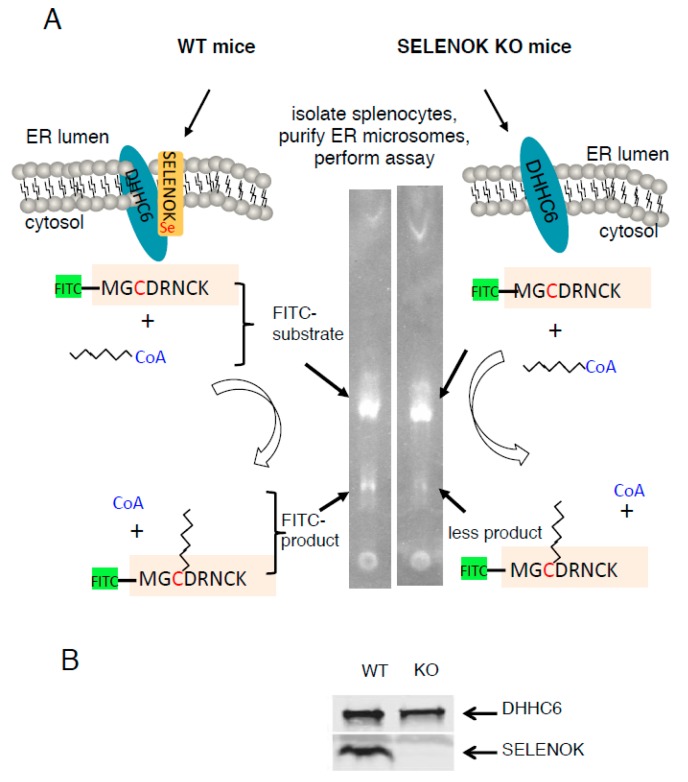
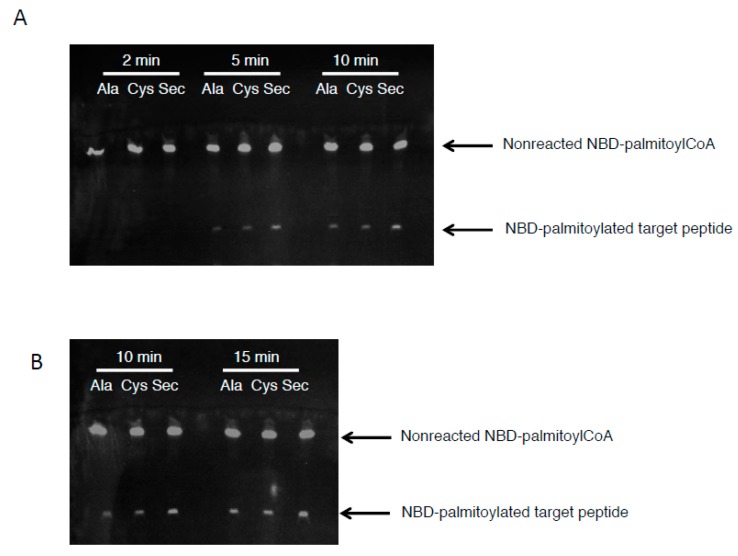
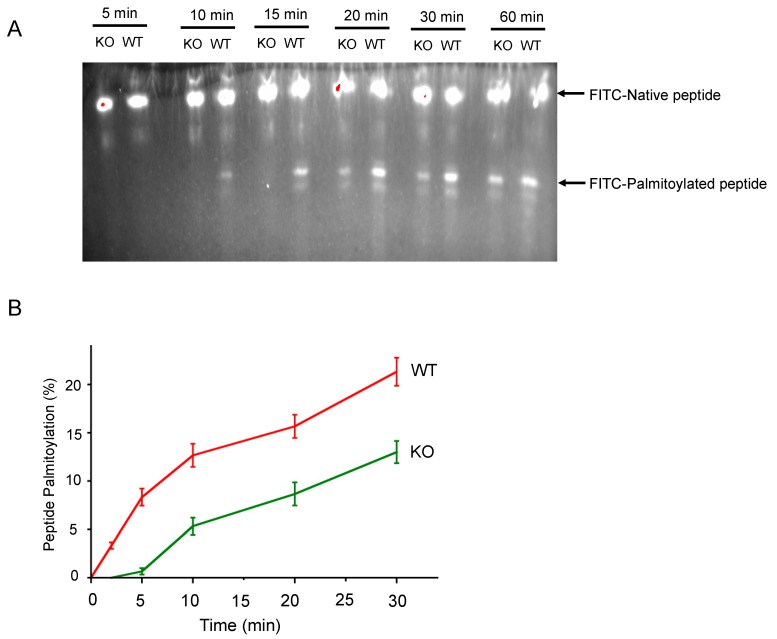
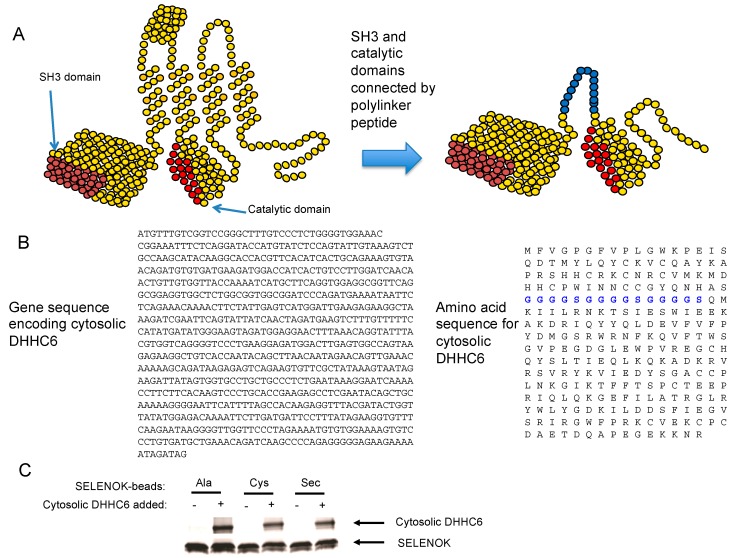
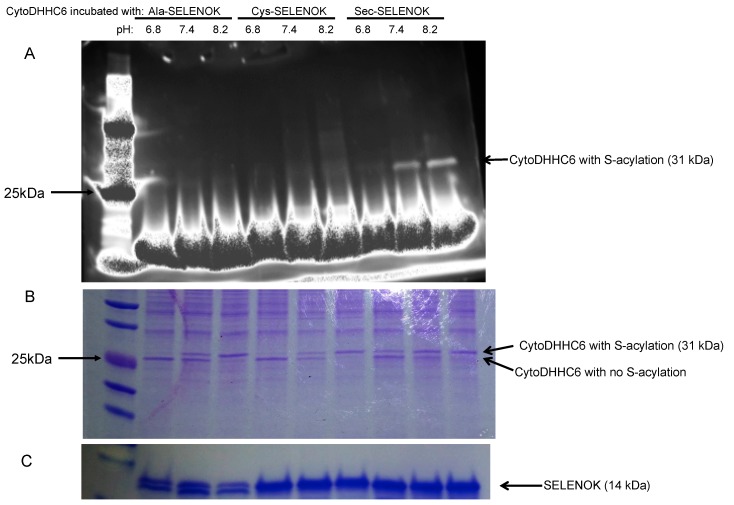
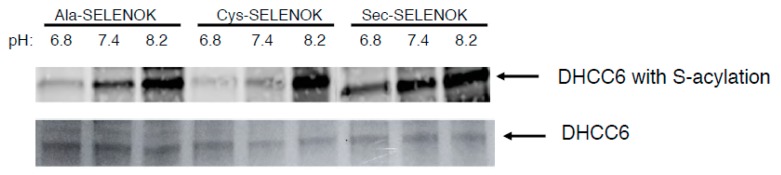
Selenoprotein K (SELENOK) is a selenocysteine (Sec)-containing protein localized in the endoplasmic reticulum (ER) membrane where it interacts with the DHHC6 (where single letter symbols represent Asp-His-His-Cys amino acids) enzyme to promote protein acyl transferase (PAT) reactions. PAT reactions involve the DHHC enzymatic capture of palmitate via a thioester bond to cysteine (Cys) residues that form an unstable palmitoyl-DHHC intermediate, followed by transfer of palmitate to Cys residues of target proteins. How SELENOK facilitates this reaction has not been determined. Splenocyte microsomal preparations from wild-type mice versus SELENOK knockout mice were used to establish PAT assays and showed decreased PAT activity (~50%) under conditions of SELENOK deficiency. Using recombinant, soluble versions of DHHC6 along with SELENOK containing Sec, Cys, or alanine (Ala), we evaluated the stability of the acyl-DHHC6 intermediate and its capacity to transfer the palmitate residue to Cys residues on target peptides. Versions of SELENOK containing either Ala or Cys residues in place of Sec were equivalently less effective than Sec at stabilizing the acyl-DHHC6 intermediate or promoting PAT activity. These data suggest that Sec in SELENOK serves to stabilize the palmitoyl-DHHC6 intermediate by reducing hydrolyzation of the thioester bond until transfer of the palmitoyl group to the Cys residue on the target protein can occur.
硒蛋白K(SELENOK)是一种含硒代半胱氨酸(Sec)的蛋白质,定位于内质网(ER)膜,在那里它与DHHC6(其中单字母符号代表天冬氨酸-组氨酸-组氨酸-半胱氨酸氨基酸)酶相互作用,以促进蛋白质酰基转移酶(PAT)反应。PAT反应包括DHHC酶通过硫酯键将棕榈酸捕获到形成不稳定棕榈酰-DHHC中间体的半胱氨酸(Cys)残基上,随后将棕榈酸转移到靶蛋白的Cys残基上。SELENOK如何促进这一反应尚未确定。使用来自野生型小鼠与SELENOK基因敲除小鼠的脾细胞微粒体制剂建立PAT测定,结果显示在SELENOK缺乏的条件下PAT活性降低(约50%)。使用重组的、可溶性的DHHC6版本以及含有Sec、Cys或丙氨酸(Ala)的SELENOK,我们评估了酰基-DHHC6中间体的稳定性及其将棕榈酸残基转移到靶肽上Cys残基的能力。用Ala或Cys残基取代Sec的SELENOK版本在稳定酰基-DHHC6中间体或促进PAT活性方面等效地不如Sec有效。这些数据表明,SELENOK中的Sec通过减少硫酯键的水解来稳定棕榈酰-DHHC6中间体,直到棕榈酰基团能够转移到靶蛋白上的Cys残基。