Melanoma Immunology and Oncology Unit, Centenary Institute, University of Sydney, Sydney, Australia.
Ramaciotti Facility for Human Systems Biology, Charles Perkins Centre, University of Sydney, Sydney, Australia.
Cancer Immunol Immunother. 2018 Apr;67(4):563-573. doi: 10.1007/s00262-017-2107-7. Epub 2017 Dec 30.
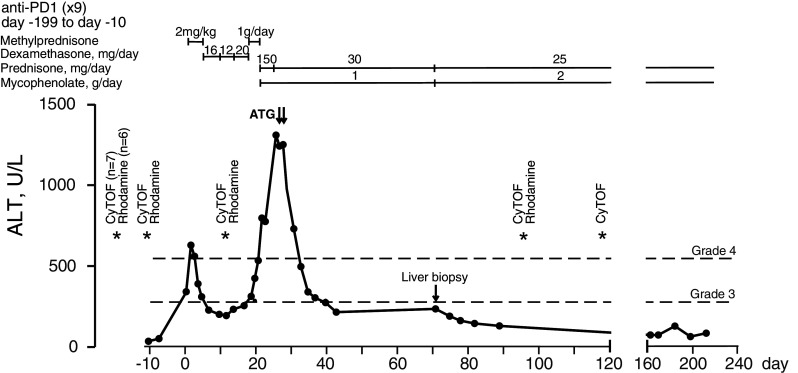
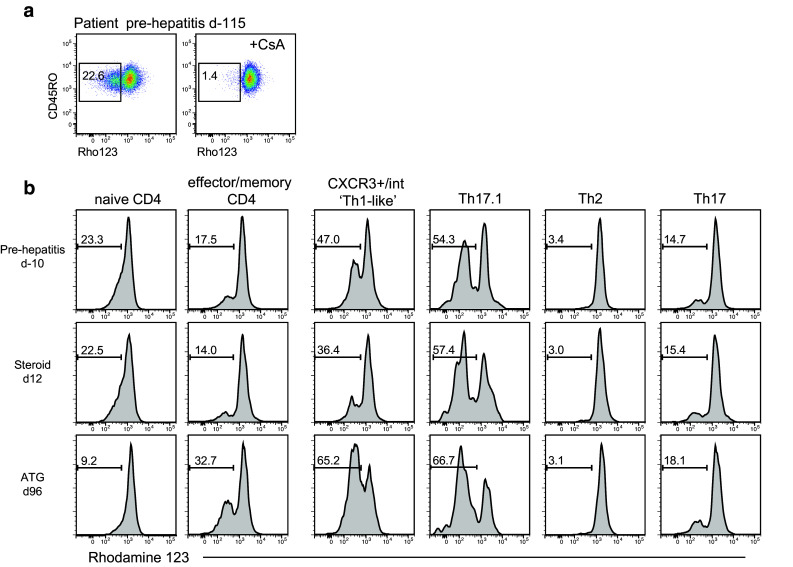
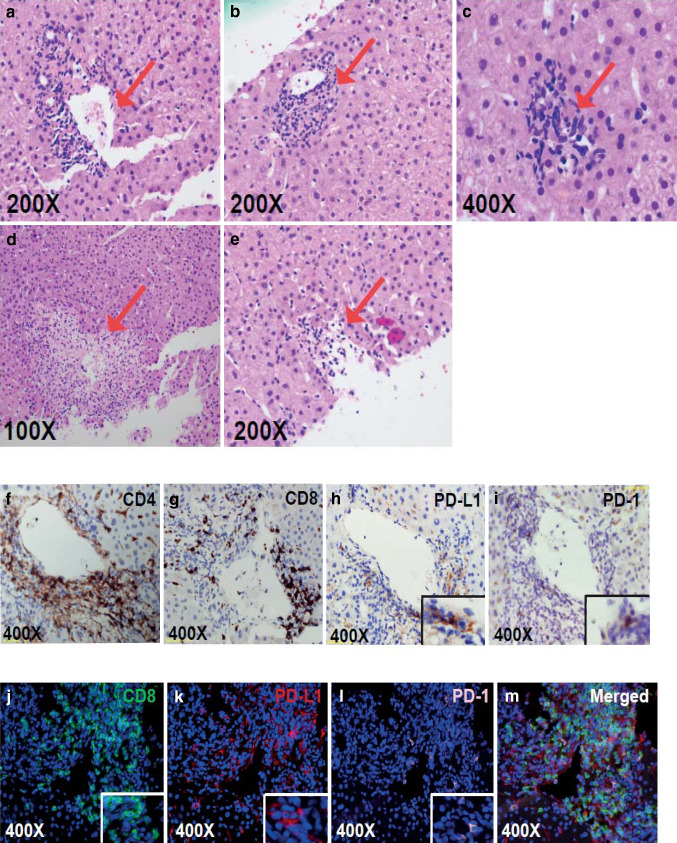
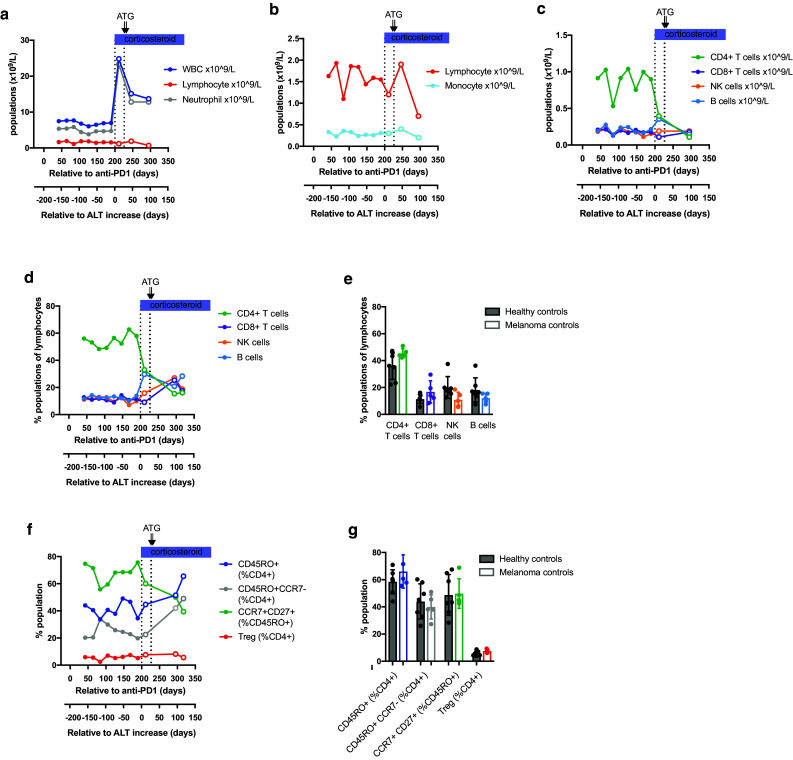
Effective treatment or prevention of immune side effects associated with checkpoint inhibitor therapy of cancer is an important goal in this new era of immunotherapy. Hepatitis due to immunotherapy with antibodies against PD-1 is uncommon and generally of low severity. We present an unusually severe case arising in a melanoma patient after more than 6 months uncomplicated treatment with anti-PD-1 in an adjuvant setting. The hepatitis rapidly developed resistance to high-dose steroids, requiring anti-thymocyte globulin (ATG) to achieve control. Mass cytometry allowed comprehensive phenotyping of circulating lymphocytes and revealed that CD4 T cells were profoundly depleted by ATG, while CD8 T cells, B cells, NK cells and monocytes were relatively spared. Multiple abnormalities in CD4 T cell phenotype were stably present in the patient before disease onset. These included a population of CCR4CCR6 effector/memory CD4 T cells expressing intermediate levels of the Th1-related chemokine receptor CXCR3 and abnormally high multi-drug resistance type 1 transporter (MDR1) activity as assessed by a rhodamine 123 excretion assay. Expression of MDR1 has been implicated in steroid resistance and may have contributed to the severity and lack of a sustained steroid response in this patient. The number of CD4 rhodamine 123-excreting cells was reduced > 3.5-fold after steroid and ATG treatment. This case illustrates the need to consider this form of steroid resistance in patients failing treatment with corticosteroids. It also highlights the need for both better identification of patients at risk and the development of treatments that involve more specific immune suppression.
有效治疗或预防与癌症的检查点抑制剂治疗相关的免疫副作用是免疫治疗新时代的一个重要目标。抗 PD-1 抗体免疫治疗引起的肝炎并不常见,通常严重程度较低。我们报告了一例在黑色素瘤患者中发生的异常严重病例,该患者在辅助治疗中接受抗 PD-1 治疗超过 6 个月后无并发症。该肝炎迅速对大剂量类固醇产生耐药性,需要使用抗胸腺细胞球蛋白 (ATG) 来控制。质谱流式细胞术允许对循环淋巴细胞进行全面表型分析,结果显示 ATG 使 CD4 T 细胞严重耗竭,而 CD8 T 细胞、B 细胞、NK 细胞和单核细胞相对不受影响。在疾病发作前,患者的 CD4 T 细胞表型存在多种异常,包括一群表达中等水平 Th1 相关趋化因子受体 CXCR3 的 CCR4+CCR6+效应/记忆 CD4 T 细胞,以及通过罗丹明 123 排泄测定法评估的异常高的多药耐药型 1 转运蛋白 (MDR1) 活性。MDR1 的表达与类固醇耐药有关,可能导致该患者病情严重且对类固醇治疗无持续反应。在接受类固醇和 ATG 治疗后,CD4 罗丹明 123 分泌细胞的数量减少了 3.5 倍以上。该病例说明了在接受皮质类固醇治疗失败的患者中需要考虑这种形式的类固醇耐药性。它还强调了需要更好地识别有风险的患者和开发更具特异性免疫抑制作用的治疗方法。